Tell us about the job
Takes about a minute. No obligation.
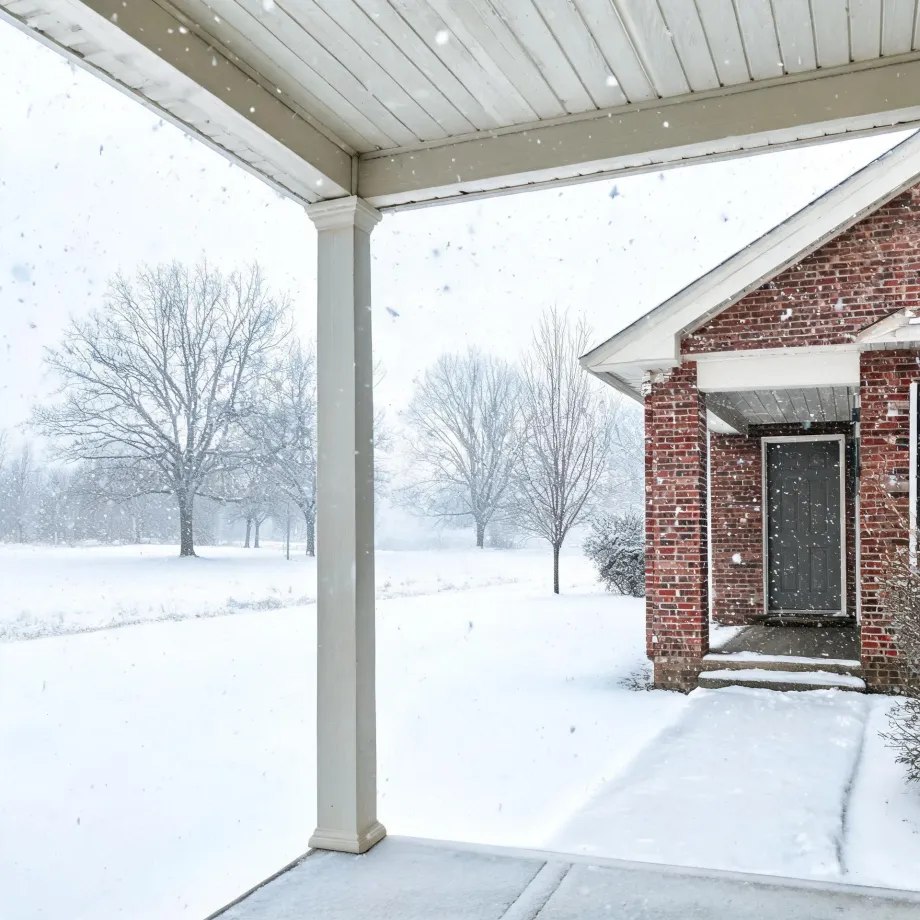
Sizing a boiler for this county means sizing it for a long commitment. Homes in Schoharie County, NY run heat about nine months a year, from September through May. The burner and ignition system cycle through most of the calendar year, and the heat exchanger takes that load without much idle time to offset wear. A unit that is undersized works harder to maintain temperature and shows fatigue in those components earlier than the equipment's age would suggest. Contractors working a quote here account for that before anything else, because a system that fits the load precisely is the one that holds up through a season this long.
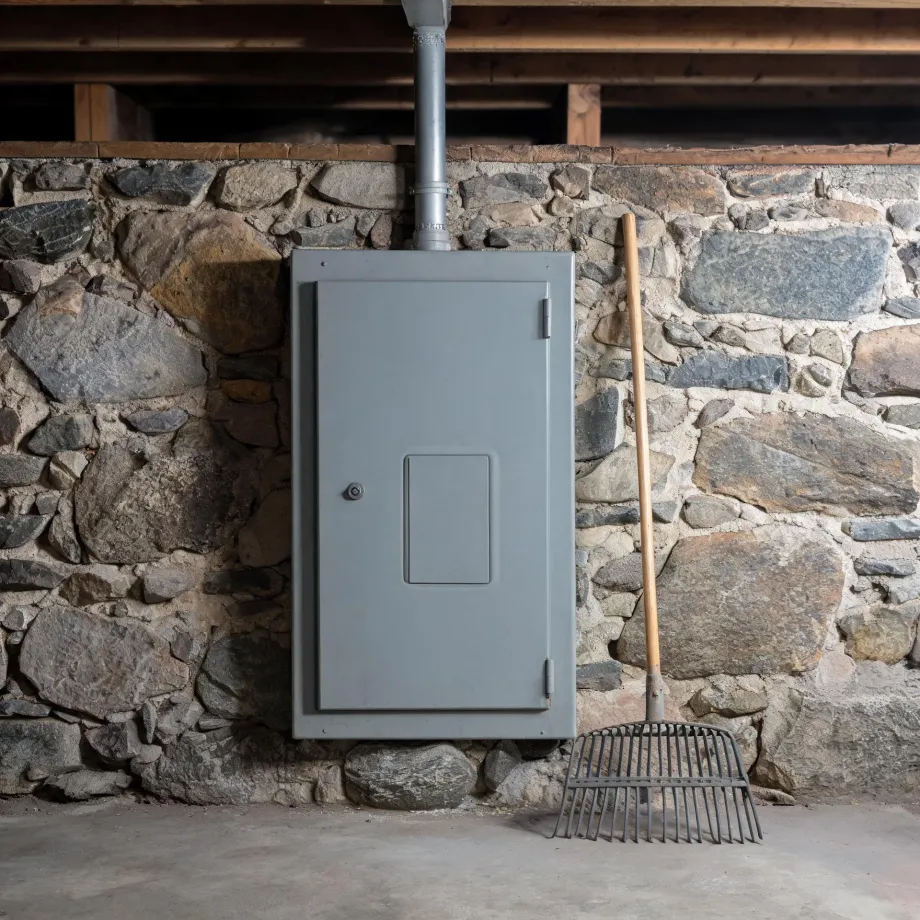
Ductwork laid down for one heating system rarely lines up cleanly with what replaces it. Half the homes in Schoharie County, New York were built in 1974 or earlier (2020-2024 ACS 5-year). A boiler going into a house from that era is working around pipe runs, clearances, and distribution layouts that were designed for something else. The contractor has to assess what is already there before the new equipment can be matched and priced, because the existing infrastructure sets the constraints the installation has to work within.
What a Boiler Installation Puts in Your Home
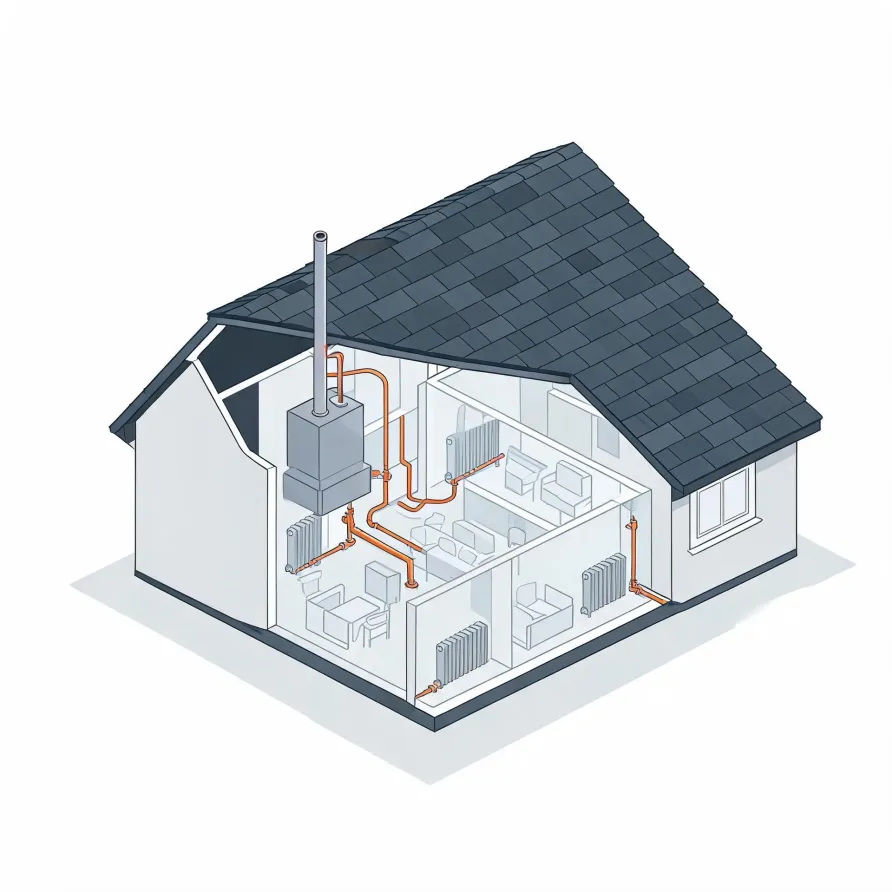
The boiler itself sits in a mechanical room, basement, or utility closet and is the unit that heats water for the whole system. Paired with it are the expansion tank, which absorbs pressure changes in the water as it heats, and the circulator pump, which moves the heated water out through the pipes.
Radiators or radiant floor loops sit at the delivery end, in each room, receiving that water and releasing its heat into the living space. The aquastat, pressure gauge, and relief valve mount on or near the boiler body and give the contractor the controls and safety devices the installation requires.
The drawing shows a representative layout, and a licensed contractor determines exactly which components apply to your home and how they will be configured.
Get matched in Schoharie CountySchoharie County, by the numbers
167 severe weather events were recorded in Schoharie County, New York between 2015 and 2024.
NOAA National Centers for Environmental Information, Storm Events Database, bulk CSV export, events 2015-01-01 through 2024-12-31.Half the homes in Schoharie County, New York were built in 1974 or earlier (2020-2024 ACS 5-year).
U.S. Census Bureau, 2020-2024 American Community Survey 5-Year EstimatesSchoharie County, New York holds 16,562 housing units (2020-2024 ACS 5-year).
U.S. Census Bureau, 2020-2024 American Community Survey 5-Year EstimatesOwners occupy 76.4% of the occupied homes in Schoharie County, New York (2020-2024 ACS 5-year).
U.S. Census Bureau, 2020-2024 American Community Survey 5-Year EstimatesSevere Weather Events in Schoharie County
Boiler systems in Schoharie County work against whatever the local climate delivers, and that workload shapes what a correctly sized, properly installed system needs to handle. Weather history is part of the installation picture here.
167 severe weather events, 2015–2024. Source: NOAA National Centers for Environmental Information, Storm Events Database.