Tell us about the job
Takes about a minute. No obligation.
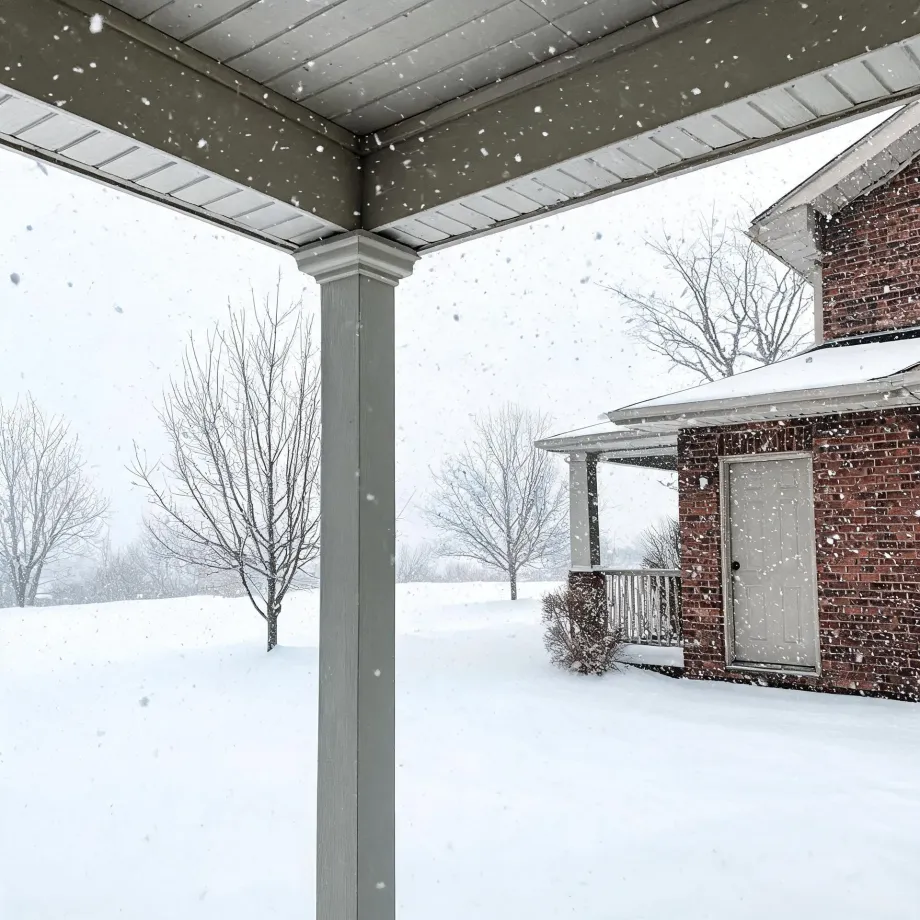
Sizing a boiler for this house means accounting for a long run of cold months, not a brief seasonal push. Homes in Albany County, NY run heat about eight months a year, from October through May. The burner and heat exchanger cycle repeatedly across that span, and a unit that was undersized at install carries that cycling harder than one matched to the actual load. A contractor quoting a replacement here establishes heat loss for the specific structure before recommending any equipment, because the install decision sets how hard those components work for years. Combustion sealing and proper flue sizing matter for the same reason: a small deficiency in the original installation compounds across a long heating season.
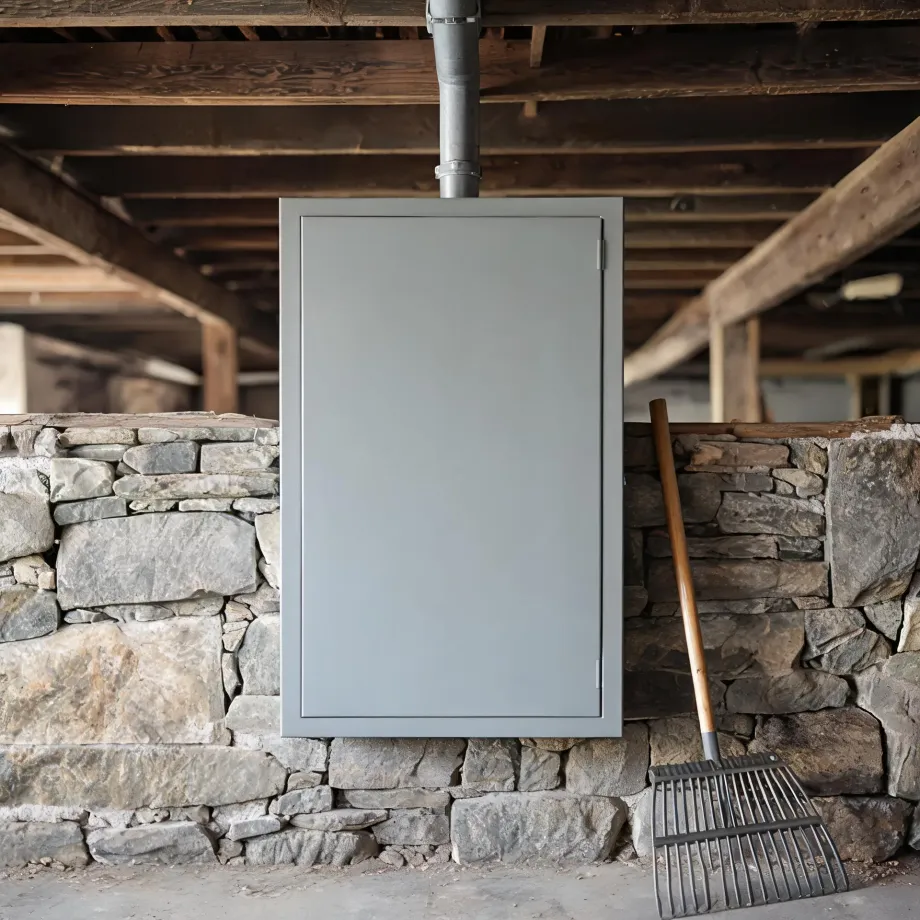
Ductwork laid down for a gravity furnace or a different boiler configuration carries assumptions about flow, sizing, and routing that a new system may not share. Half the homes in Albany County, New York were built in 1964 or earlier (2020-2024 ACS 5-year). A contractor quoting a boiler installation here has to open the distribution side first, because what the existing runs will and will not do determines the scope before the equipment choice does. The electrical is a secondary question for a boiler, but the existing pipe and duct layout is not.
What a Boiler Installation Covers
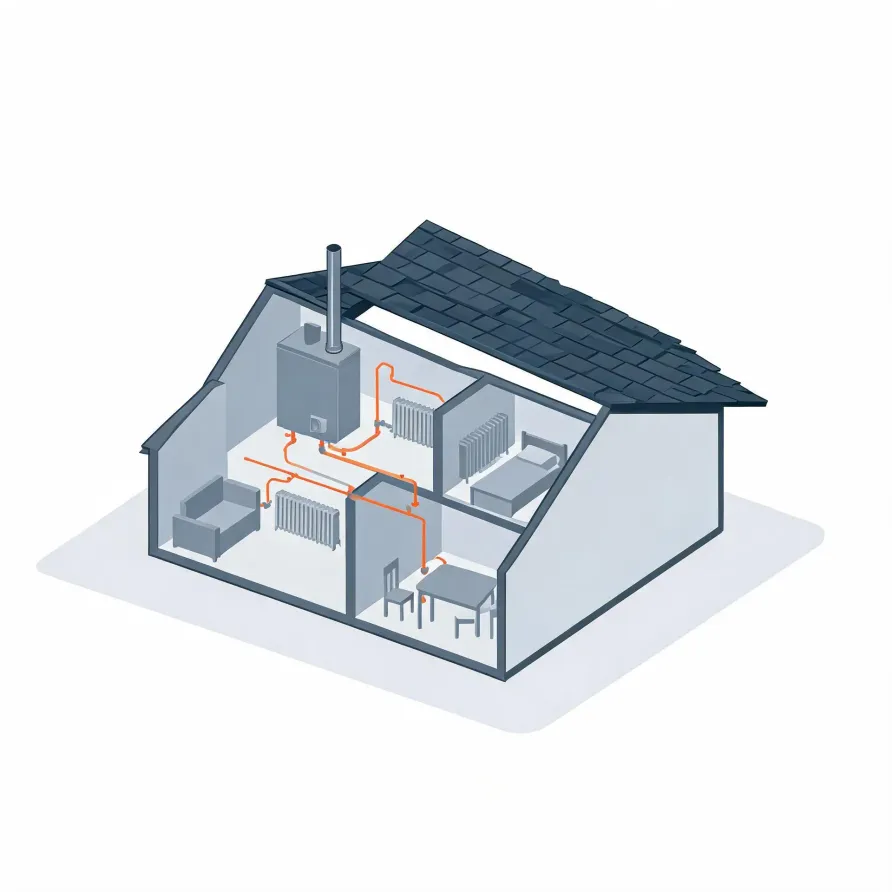
The boiler itself sits in the basement or a mechanical room and is the heart of the installation. A contractor sets it in place, connects it to the gas or oil supply, and ties it into the home's water lines. The expansion tank mounts nearby, keeping pressure in the system stable.
Radiators or baseboard convectors occupy the living spaces, one or more per room, and a contractor positions or repositions each to match the new boiler's output and the home's existing piping layout. The circulator pump, mounted close to the boiler, moves heated water through those pipes. A thermostat goes on a main-floor wall and gives the homeowner control over the whole system.
The drawing shows a representative layout, and a licensed contractor determines exactly what applies to this house.
Get matched in Albany CountyAlbany County, by the numbers
435 severe weather events were recorded in Albany County, New York between 2015 and 2024.
NOAA National Centers for Environmental Information, Storm Events Database, bulk CSV export, events 2015-01-01 through 2024-12-31.Half the homes in Albany County, New York were built in 1964 or earlier (2020-2024 ACS 5-year).
U.S. Census Bureau, 2020-2024 American Community Survey 5-Year EstimatesAlbany County, New York holds 147,662 housing units (2020-2024 ACS 5-year).
U.S. Census Bureau, 2020-2024 American Community Survey 5-Year EstimatesOwners occupy 56.6% of the occupied homes in Albany County, New York (2020-2024 ACS 5-year).
U.S. Census Bureau, 2020-2024 American Community Survey 5-Year EstimatesSevere Weather Events in Albany County
Albany County's weather puts real demands on heating equipment, and those demands shape what a boiler needs to handle over its working life. Sizing, installation, and equipment selection are all local decisions, and local conditions are part of that picture.
435 severe weather events, 2015–2024. Source: NOAA National Centers for Environmental Information, Storm Events Database.