Tell us about the job
Takes about a minute. No obligation.
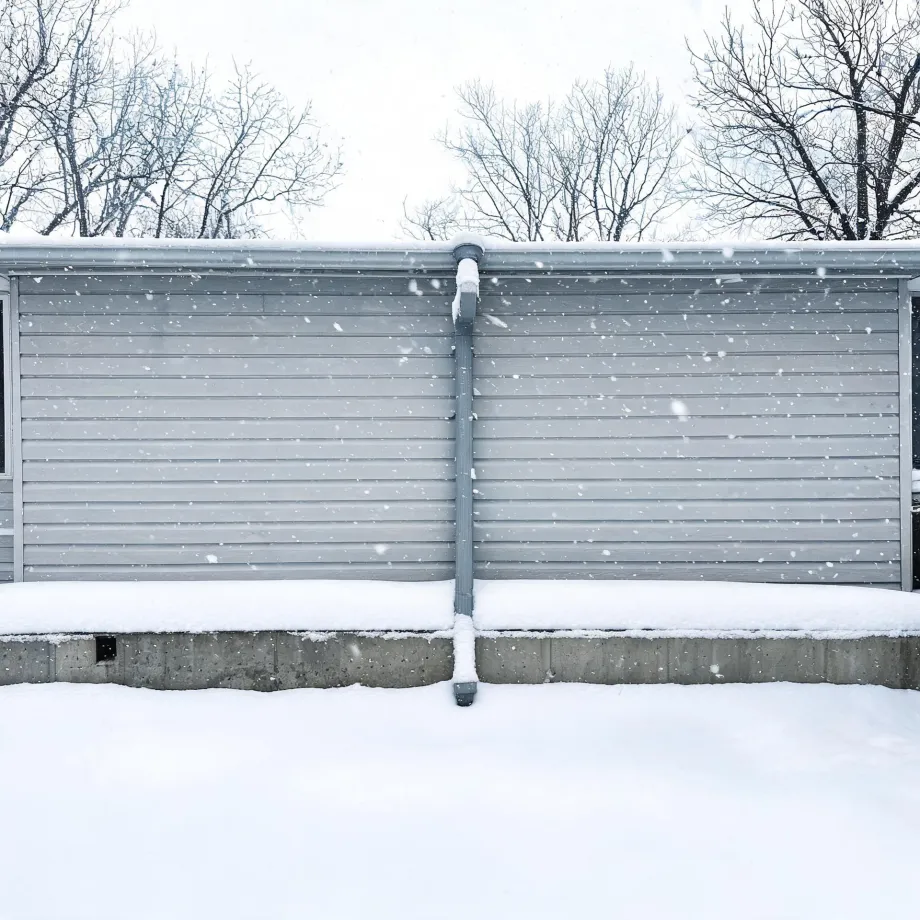
Sizing a boiler for this county is a local question, not a catalog exercise. Homes in Oswego County, NY run heat about eight months a year, from October through May. The burner and heat exchanger are cycling from the first cold snap through the last frost, and a unit that is even slightly undersized runs harder and longer each time to hold temperature. That extra load accumulates in the ignition system and at the heat exchanger seams, which are the first places a contractor checks when a system that looks young is already showing fatigue. A tight, well-matched install earns its cost here before the first season is out.
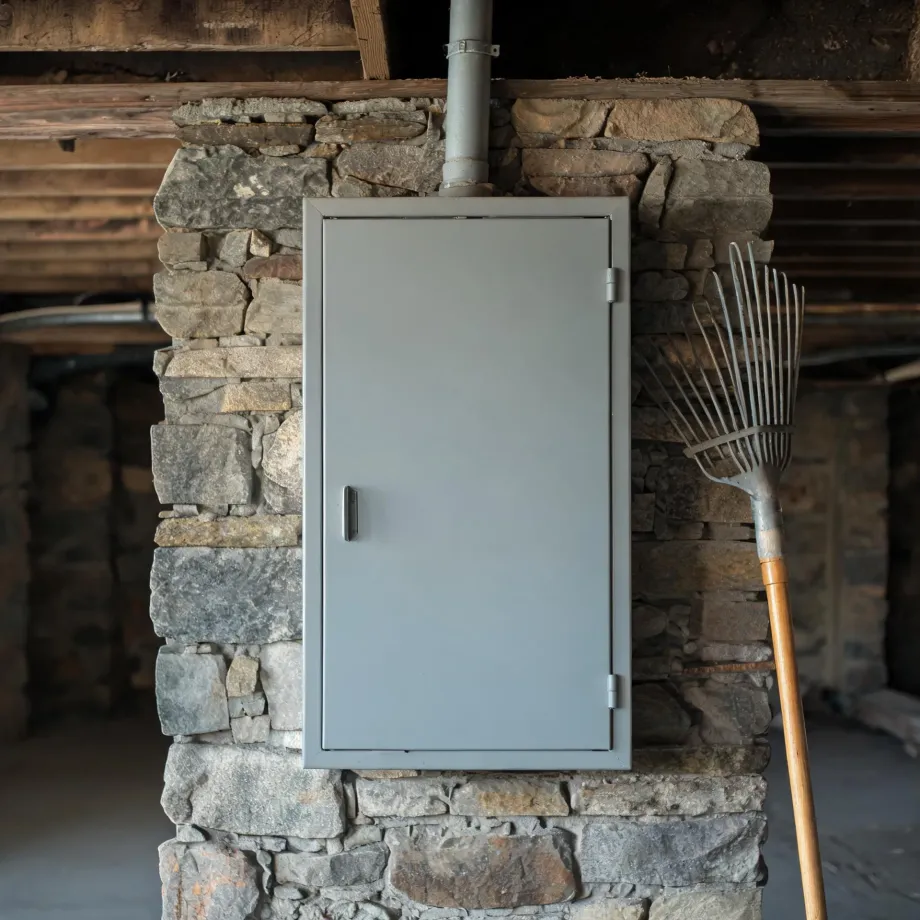
Ductwork is one question; the electrical service is the one that catches homeowners off guard. Half the homes in Oswego County, New York were built in 1971 or earlier (2020-2024 ACS 5-year). A boiler system installed today draws on circuits that many of those homes were never wired to carry, and a contractor quoting the job has to walk the electrical before any equipment decision is final. If the panel needs an upgrade, that work gets priced and scheduled alongside the boiler, not after it.
What a Boiler Installation Covers
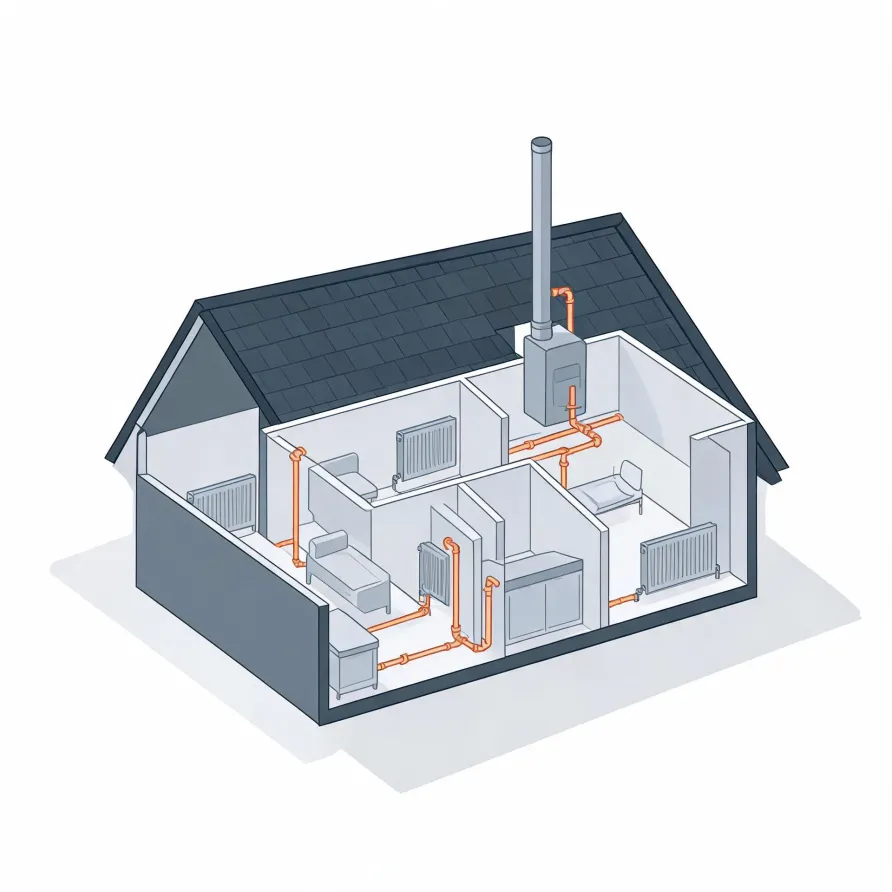
The boiler itself sits in a mechanical room, basement, or utility closet and is the unit a contractor replaces or sets new when doing an installation. It heats water, which then moves out through the system. The expansion tank mounts close to the boiler and absorbs pressure changes as the water heats and cools.
Radiators or baseboard convectors sit in the living spaces and are the pieces that deliver heat to each room. The circulator pump, mounted near the boiler, drives the water through the piping that connects all of it. The aquastat, also at the boiler, controls water temperature and tells the system when to fire.
The drawing shows a typical layout, and a licensed contractor determines what applies to your specific house and setup.
Get matched in Oswego CountyOswego County, by the numbers
240 severe weather events were recorded in Oswego County, New York between 2015 and 2024.
NOAA National Centers for Environmental Information, Storm Events Database, bulk CSV export, events 2015-01-01 through 2024-12-31.Half the homes in Oswego County, New York were built in 1971 or earlier (2020-2024 ACS 5-year).
U.S. Census Bureau, 2020-2024 American Community Survey 5-Year EstimatesOswego County, New York holds 54,844 housing units (2020-2024 ACS 5-year).
U.S. Census Bureau, 2020-2024 American Community Survey 5-Year EstimatesOwners occupy 73.4% of the occupied homes in Oswego County, New York (2020-2024 ACS 5-year).
U.S. Census Bureau, 2020-2024 American Community Survey 5-Year EstimatesSevere Weather Events in Oswego County
Boiler systems work hardest when outdoor conditions are most demanding, and Oswego County's weather record shapes how hard that is. What the county sees year to year determines the load a boiler carries and how a contractor sizes and installs the equipment.
240 severe weather events, 2015–2024. Source: NOAA National Centers for Environmental Information, Storm Events Database.