Tell us about the job
Takes about a minute. No obligation.
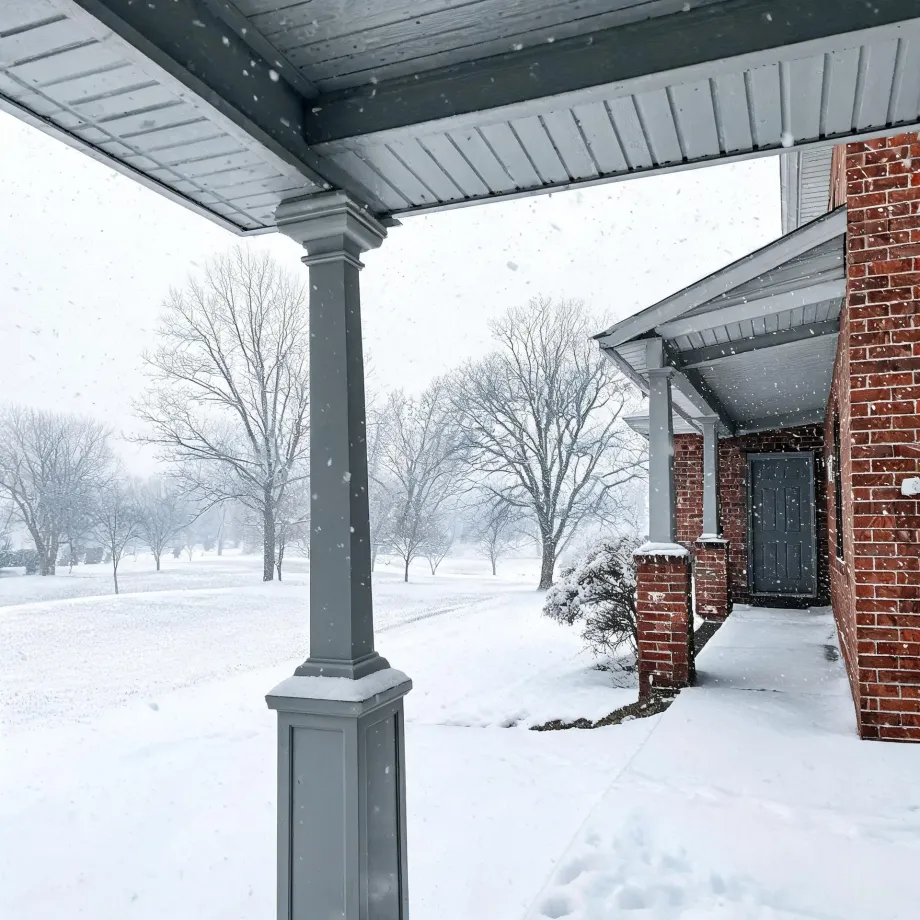
Sizing a boiler for a house in Erie County means sizing it for sustained, cumulative load. Homes in Erie County, NY run heat about eight months a year, from October through May. A burner and heat exchanger that cycle through a season that long accumulate wear in the ignition system, the expansion joints, and the seals well before those same components would fail in a shorter heating climate. A contractor quoting a replacement here has to account for that load profile before settling on output capacity, because an undersized unit will short-cycle under peak demand and drive up wear on the parts that are already doing the most work.
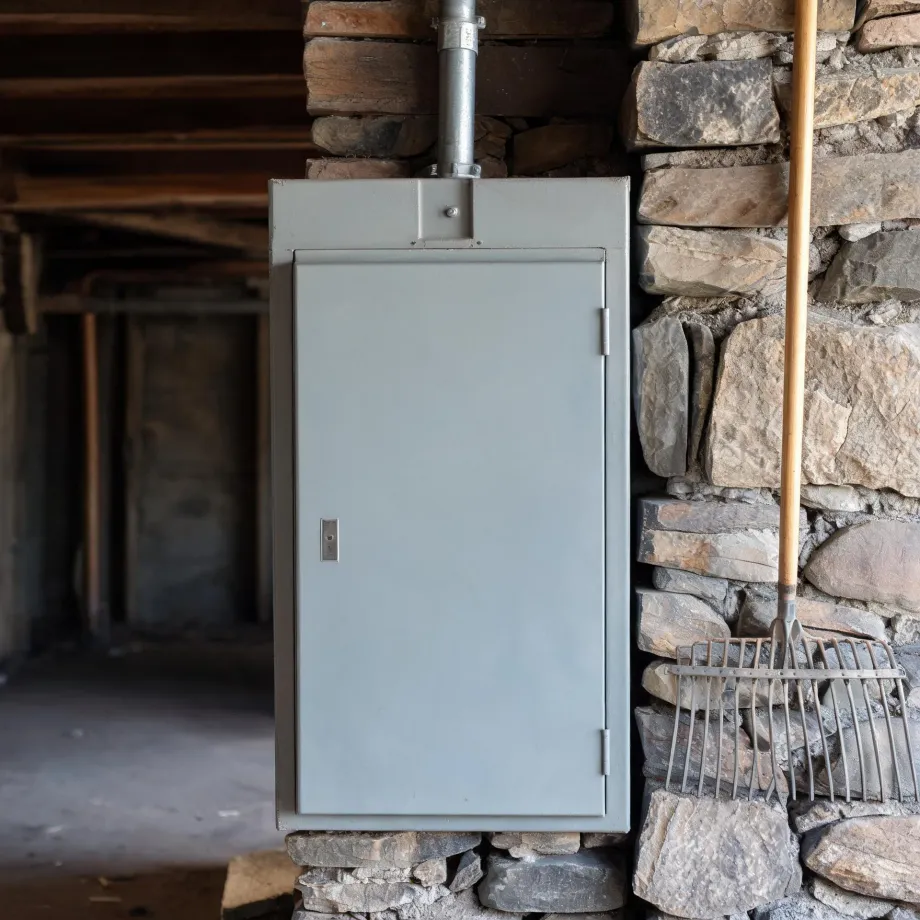
Ductwork laid down for one generation of heating does not automatically carry the next. Half the homes in Erie County, New York were built in 1957 or earlier (2020-2024 ACS 5-year). A contractor sizing a new boiler here has to look at what the existing distribution system was built to do, because piping and radiator configurations from that era were matched to equipment long since retired. The electrical side follows the same logic: service panels in houses this old were not sized for modern controls and auxiliary loads. What a contractor quotes on the box is straightforward; what they find behind the walls decides whether that quote holds.
What a Boiler Installation Covers
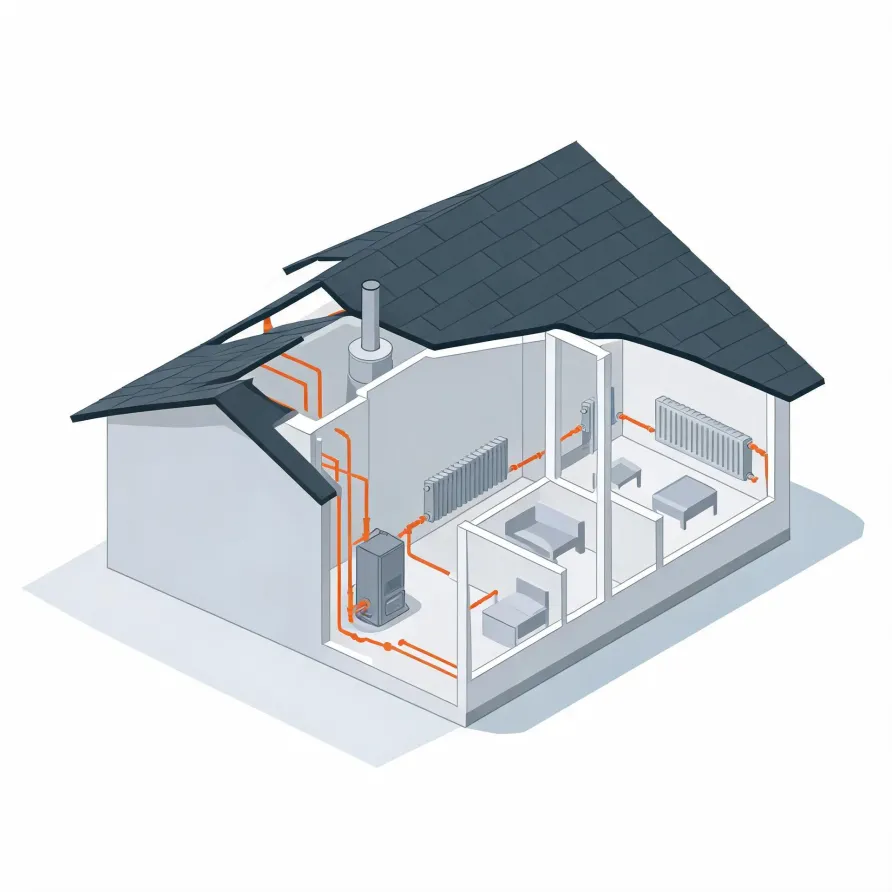
The boiler itself sits in the basement or a mechanical room and is the system's heat source. A contractor also installs the expansion tank, which absorbs pressure changes in the water as it heats, and mounts it near the boiler. Both pieces are new with a full installation.
Radiators or baseboard units go in each room that needs heat, and a new circulator pump moves heated water through the pipes that connect them. A contractor fits new zone valves and thermostats as well, placing each thermostat on an interior wall where it reads room temperature accurately.
The drawing shows a typical layout, and a licensed contractor determines exactly which components apply to your house.
Get matched in Erie CountyErie County, by the numbers
329 severe weather events were recorded in Erie County, New York between 2015 and 2024.
NOAA National Centers for Environmental Information, Storm Events Database, bulk CSV export, events 2015-01-01 through 2024-12-31.Half the homes in Erie County, New York were built in 1957 or earlier (2020-2024 ACS 5-year).
U.S. Census Bureau, 2020-2024 American Community Survey 5-Year EstimatesErie County, New York holds 441,214 housing units (2020-2024 ACS 5-year).
U.S. Census Bureau, 2020-2024 American Community Survey 5-Year EstimatesOwners occupy 65.8% of the occupied homes in Erie County, New York (2020-2024 ACS 5-year).
U.S. Census Bureau, 2020-2024 American Community Survey 5-Year EstimatesSevere Weather Events in Erie County
Erie County weather puts real demands on heating equipment. How hard a boiler works over its life is tied directly to the conditions outside, which makes local weather history relevant to any installation decision.
329 severe weather events, 2015–2024. Source: NOAA National Centers for Environmental Information, Storm Events Database.