Profile view of a bearded man wearing a dark baseball cap and a dark gray T-shirt against a plain off-white background.

Why your boiler won't turn on in a New York winter

Step 1 of 3: Equipment

A boiler that won't fire up in the middle of a cold snap is almost always shut down by a safety switch, not actually broken outright. Low water pressure is the most common cause. Boilers need a minimum pressure to run, and a system that's lost water through a small leak or an air vent will trip offline rather than keep heating with too little in it. A pilot light or igniter that's gone out does the same thing, and so does a thermostat that's lost power or lost its connection to the boiler. Cold weather makes these problems show up fast, because a boiler that was limping along in October has no slack left once it has to run for hours at a stretch. None of this means a new boiler. It usually means something small got tripped or let go, and a contractor can find which one it was and get the heat back on.

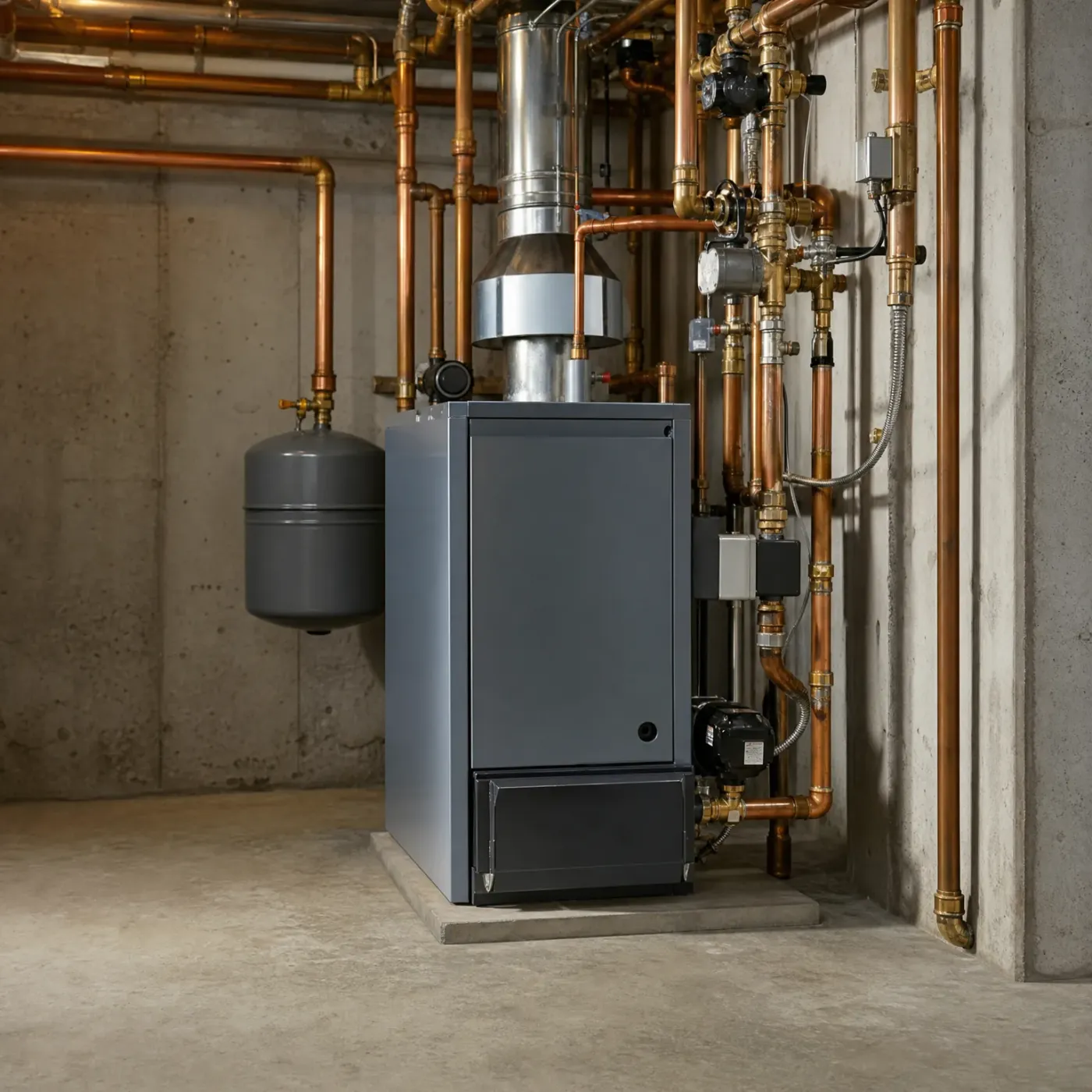
A gray boiler on a concrete pad in a basement, connected to copper piping, valves, pumps and a gray expansion tank, with a concrete wall on the left and a brick wall on the right.
A boiler running right holds steady pressure, with clean pipe connections and no rust weeping from the fittings.
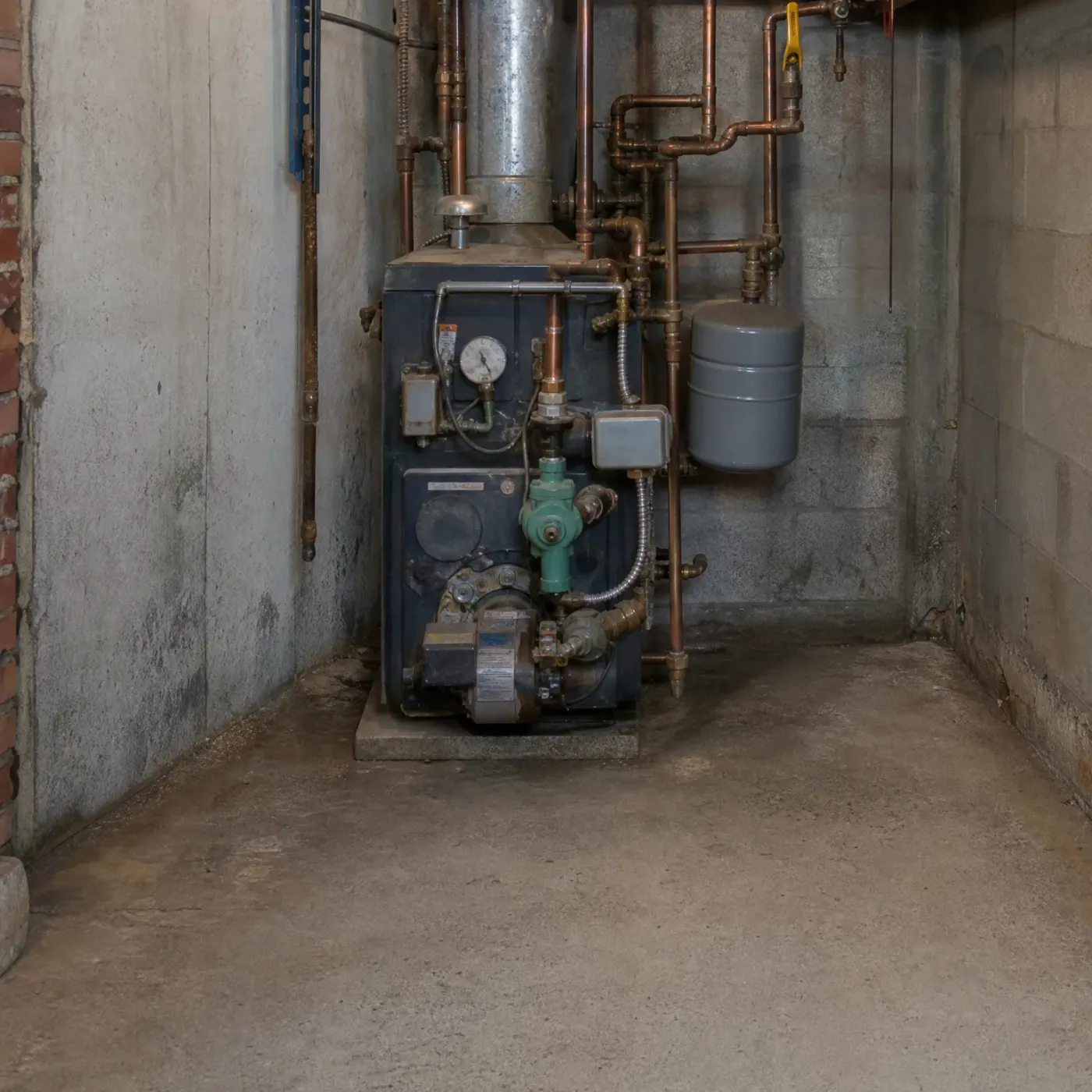
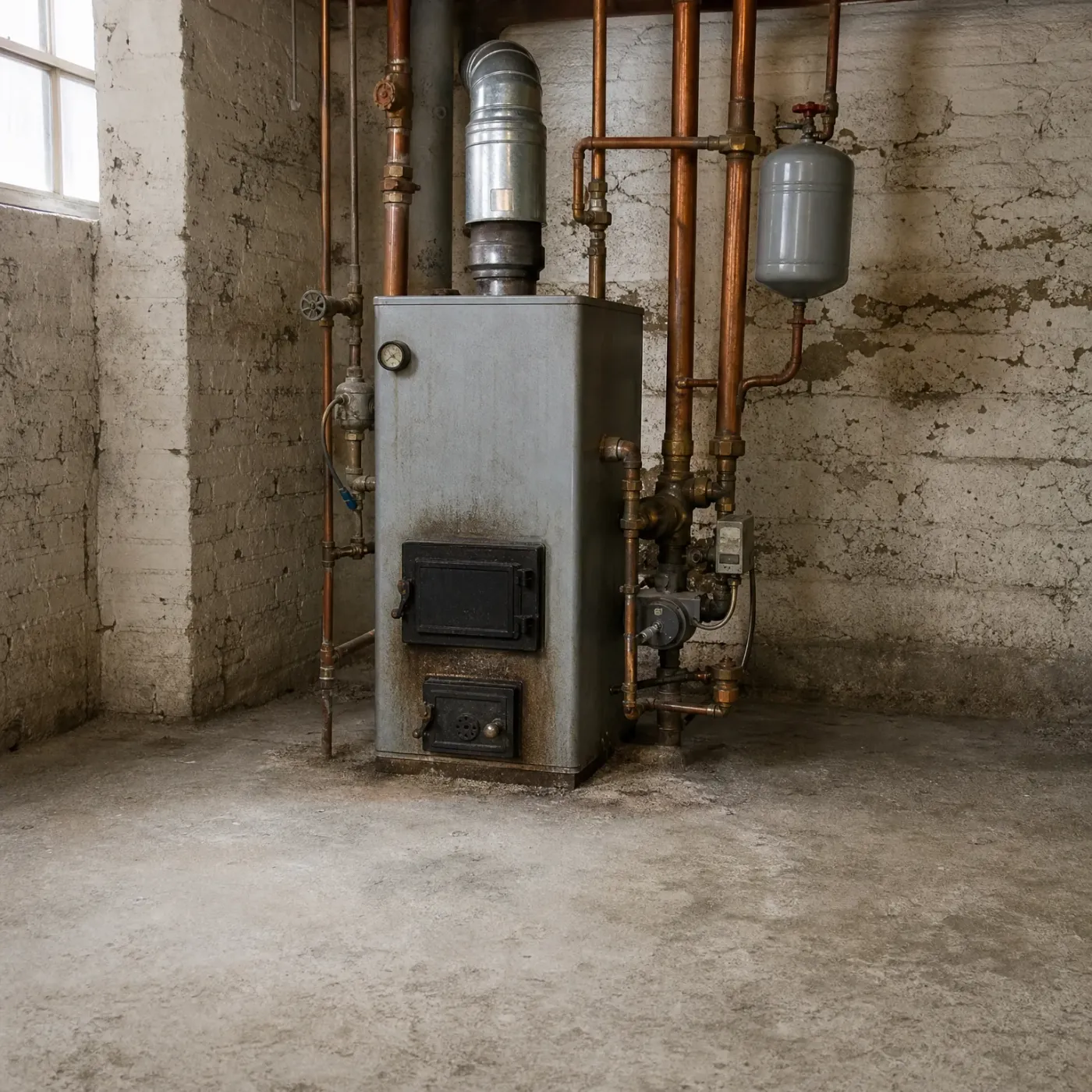
A dark cast-iron boiler with copper piping, pressure gauge, and a gray expansion tank sits on a concrete pad in a basement corner with concrete block and brick walls.
A boiler like this, with an aging flue and worn piping, is more likely to trip its safety switch and stay dark.
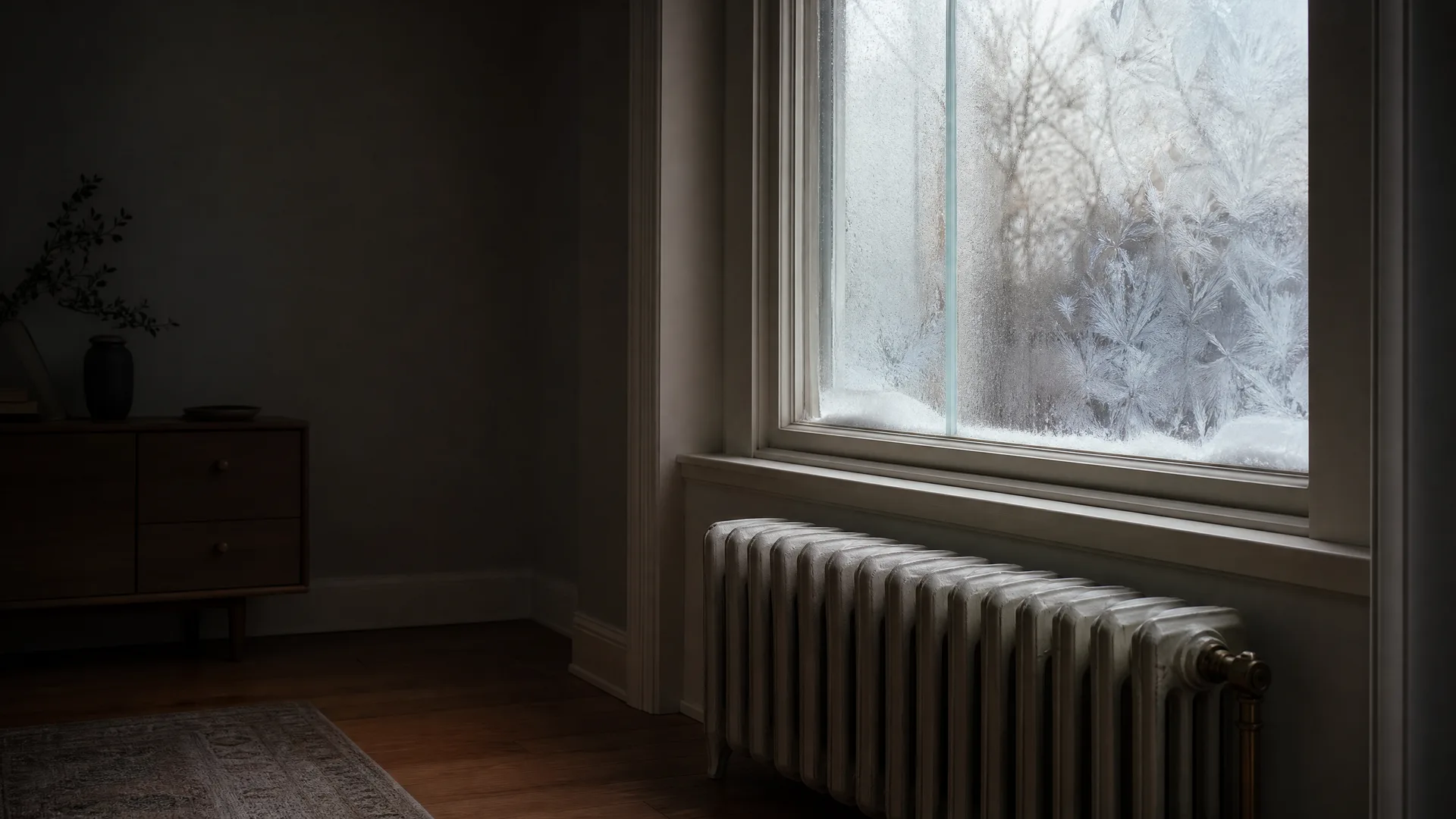
A cast-iron column radiator beneath a frost-covered window in a dim room, with a wooden sideboard, vase of dried branches, wood floor and rug on the left.

You get up before the sun, like always in January, and the living room is cold enough that you can see your breath near the window. The radiator under it is silent. Ice has formed a thin film on the inside of the glass, right where the cold air meets the warmth that should be rising off the cast iron. You put your hand on the radiator anyway, the way you always do, and it tells you nothing you didn't already know. No tick, no hiss, no warmth working its way up from the basement. Outside, the street is the color of the sky. You go check the boiler before you even start the coffee.

Why does the house feel colder than it should by morning

Walk the rooms and check what's actually happening. The radiators stay cool to the touch even with the thermostat turned up, or they're warm at the bottom and cold at the top, a sign air or sludge is sitting where water should be. You might hear the boiler click and try to light, then go quiet. Listen for the low pressure switch cutting it off before the burner even catches. Check the pressure gauge on the front of the unit. Anything under 12 psi usually means a leak somewhere in the system. Left alone through a stretch of single digit nights, a boiler that won't hold pressure or won't ignite leaves pipes with no heat moving through them, and that's when a cold snap turns into a frozen, split pipe.

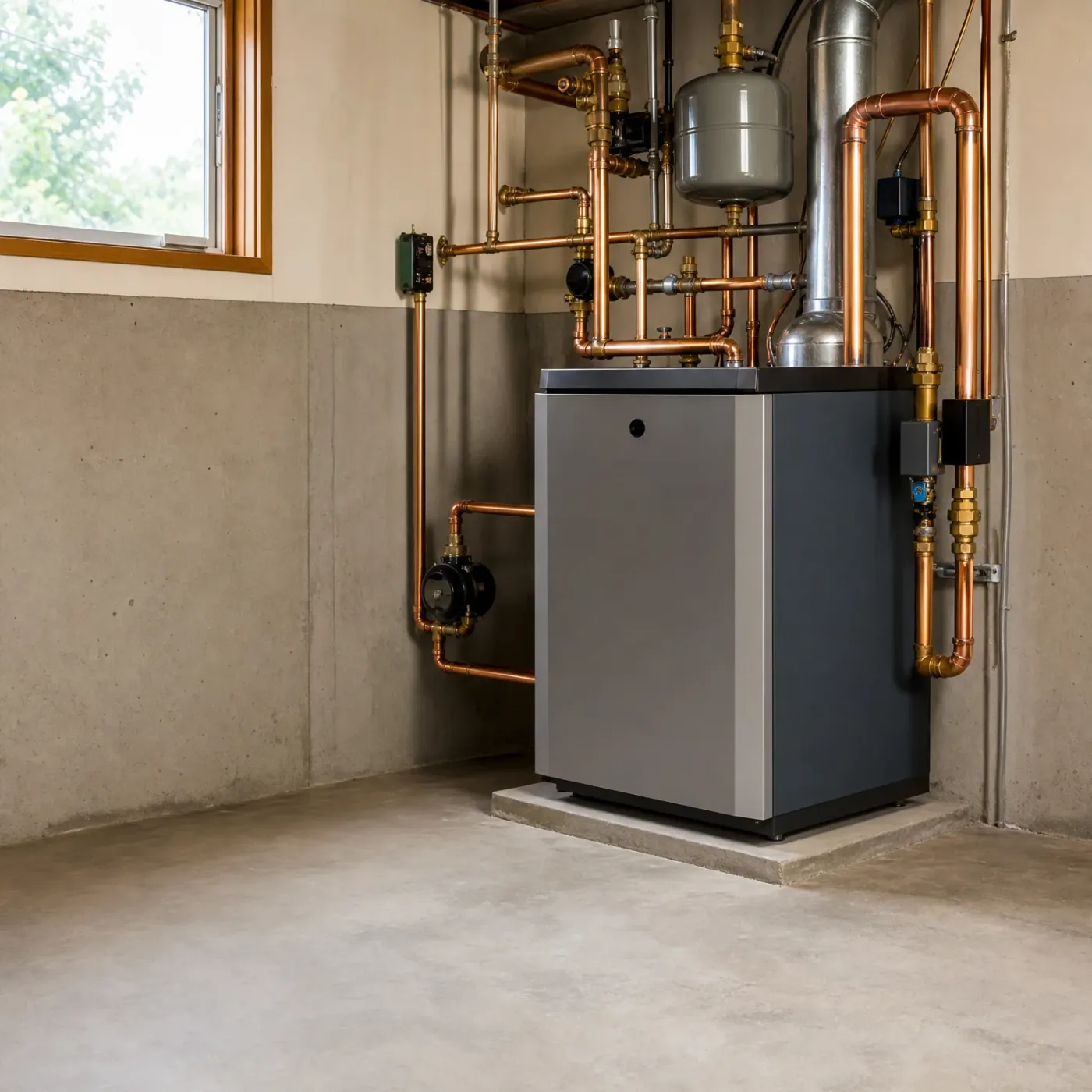
A gray floor-standing boiler on a concrete pad in a basement corner, connected to copper piping, brass valves, a circulator pump, an expansion tank, and a metal flue, with a window at upper left.

What a boiler in good shape looks like

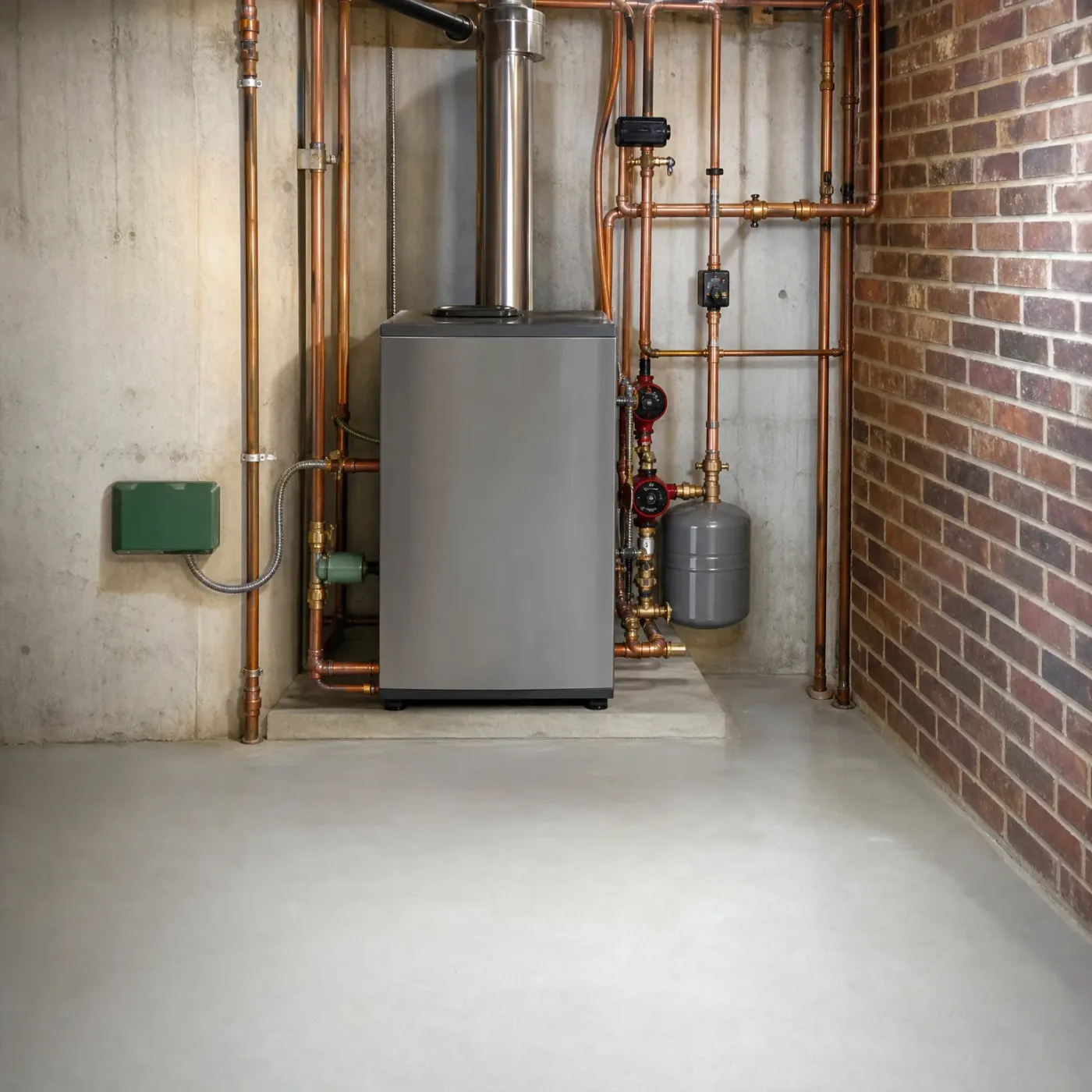
Pressure holds steady on the gauge, the circulator pump runs quiet, and the copper piping and fittings stay dry. The flue vents cleanly. A system kept up like this fires when the thermostat calls for it, even on the coldest night of the year.

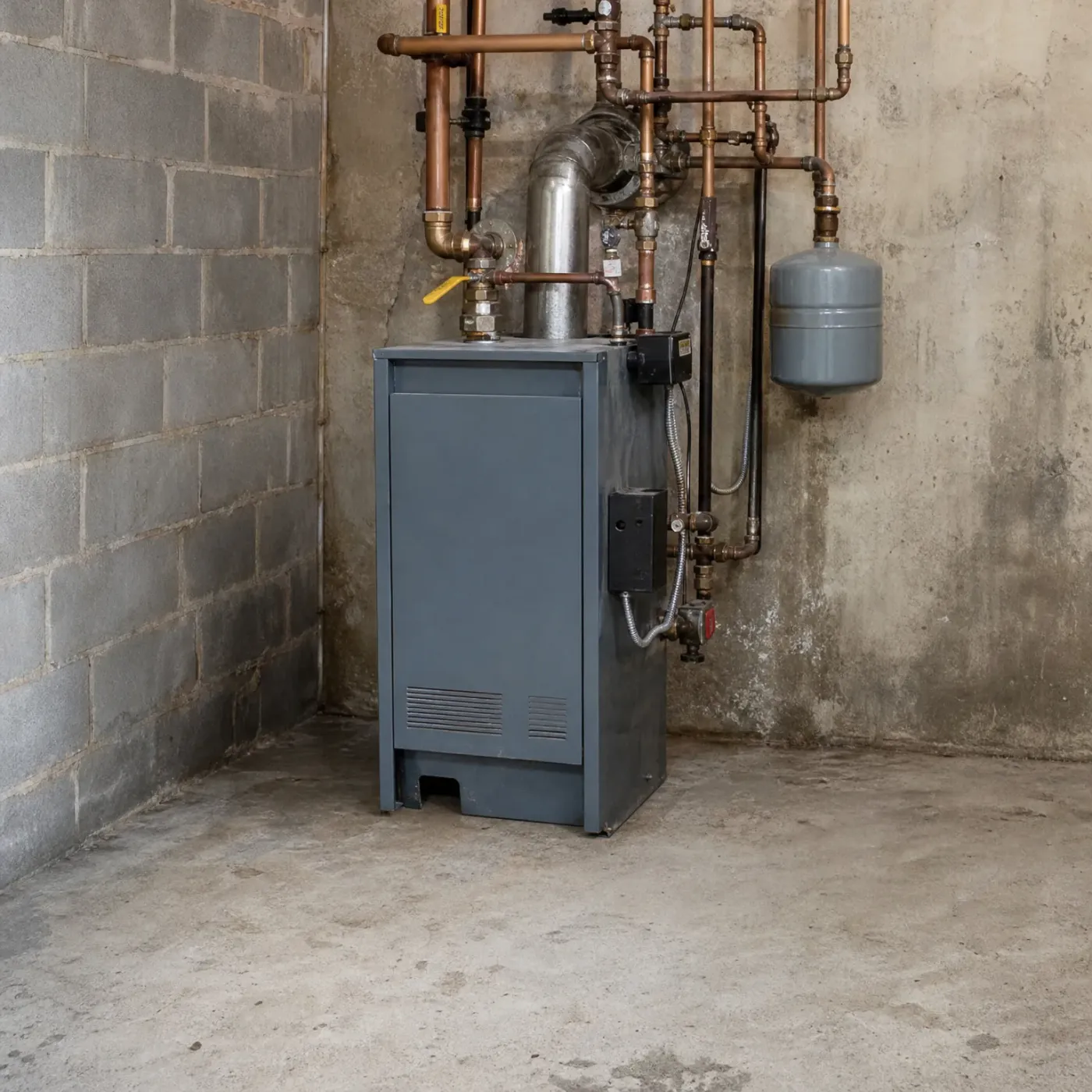
A gray floor-standing boiler in a basement corner with copper and black piping above it, a flue vent, and a gray expansion tank mounted on the concrete wall beside a concrete block wall.

What a boiler heading for trouble looks like

Piping that's worn and an expansion tank doing more work than it should are signs the system is closer to tripping its safety switch. Once that happens, the boiler shuts itself off and stays off until something resets it.

What order do things happen in before a boiler locks out?

You want to know what the boiler was doing right before it quit, because that tells you what actually failed. Most boilers don't just die. They go through a start sequence every time the thermostat calls for heat, and if any step fails to check in, the control board stops the sequence and locks out rather than let gas keep flowing with no proof of a flame.

The thermostat calls, the igniter fires, then the flame has to prove itself fast

The thermostat calls for heat, the circulator pump starts, and the control board opens the gas valve while sparking the igniter. A flame sensor has a few seconds to detect fire. If it doesn't, the board cuts gas and tries again, usually two or three times, before it locks out for good and won't restart until someone resets it. The same lockout can happen if the inducer motor doesn't prove draft first, or if a pressure switch doesn't close. Each of these is the board refusing to send gas into a chamber it can't confirm is burning right. That's why the boiler just sits dark instead of trying forever.

A bearded man in a blue and brown plaid flannel shirt stands indoors looking out a window at snow-covered trees, with a ceramic mug on the windowsill.
A man in a blue T-shirt sits on a light gray sofa, laughing while looking at an open laptop in the foreground, with a framed picture, lamp and potted plant behind him.

The right pro for this job

Get the boiler repair search off your mind today.

Sending the form costs nothing.

Boilers run on a minimum pressure of around 12 to 15 psi. Below that, the low water cutoff opens the circuit and the burner never gets a signal to light.

That cutoff isn't a flaw. It's the one part doing its job right, stopping the boiler from running dry and cracking the heat exchanger.

A woman in a cream cowl-neck sweater stands in a lamp-lit room looking out a window at a snow-covered yard with shrubs and bare trees at dusk.
A woman in a gray turtleneck sweater stands near a large window in a lamp-lit living room, looking out at falling snow and snow-covered conifers.
A woman in a chunky knit sweater stands by a large window looking out at snow-covered ground, with a dimly lit living room containing a gray sofa, framed artwork, shelves and table lamps behind her.
A woman in a gray turtleneck sweater stands in a dimly lit living room with a lamp and bookshelves, looking out a multi-pane window at falling snow.

Fixing it yourself: repressurizing

If the gauge reads below 12 psi, the filling loop can bring it back up. That's a five-minute job if you know where the valve is and the rest of the system is sound.

Connect with a pro

Fixing it yourself: everything else

A tripped flue sensor, a bad ignition board, a stuck valve, these aren't things to open up on your own. A contractor matched to your boiler can find out what actually failed and get it running again.

Connect with a pro
An old gray boiler with copper piping, a flue duct, pressure gauge and an expansion tank stands in the corner of a basement with painted masonry walls and a bare concrete floor.
Before you get your boiler repair
A gray boiler on a concrete pad in a basement, connected to copper piping, valves, circulator pumps, a metal flue, and a wall-mounted expansion tank.
After you get your boiler repair

Winter nights average 24°F statewide

At 24°F overnight, your boiler isn't cycling occasionally, it's running most of the night just to hold the house steady. That's more hours on the circulator pump and more strain on a system already low on water or losing pressure.

NOAA nClimDiv 1991-2020 county normals weighted by homes

Where this leaves you

  • A cold boiler on a January morning is almost always a pressure or ignition fault, not a dead unit.
  • Low water pressure under 12 psi, a tripped flue switch, or a dirty igniter account for most no-heat calls.
  • The gauge and the sound of the circulator pump tell you more about the real problem than how cold the house feels.
  • A boiler that locks out once a season is worth watching, but one that locks out repeatedly needs a technician, not another reset.
  • Once you request a match, finding a licensed contractor is no longer something you have to sort out yourself.
  • None of these faults get better with another cold night. They get fixed, or they happen again.

A boiler that won't fire on a cold January morning is telling you something specific, not failing at random. The pressure gauge, the flue switch, the igniter: one of these stopped the start sequence, and the house got cold as a result, not the other way around. You've seen what the gauge should read, what the pump should sound like, and what separates a system worth resetting from one that needs a real repair. A single lockout in a season is the kind of thing worth keeping an eye on. A boiler that locks out week after week has already told you the reset isn't the fix. Resetting it again just buys you another cold morning, maybe a worse one, since nothing about low pressure or a fouled igniter improves with another night of ice on the windows. The problem sits in the mechanical part of the system, the part a homeowner can check but not always open up. That's the point where it stops being something you have to solve alone. Once you send the request, you're not the one tracking down who's available or whether they handle this brand of boiler. That search is off your plate. What's left is a straightforward call: watch the gauge, listen for the pump, and know that a boiler locking out more than once this winter isn't asking for patience. It's asking for someone to open it up and find what's actually wearing out.

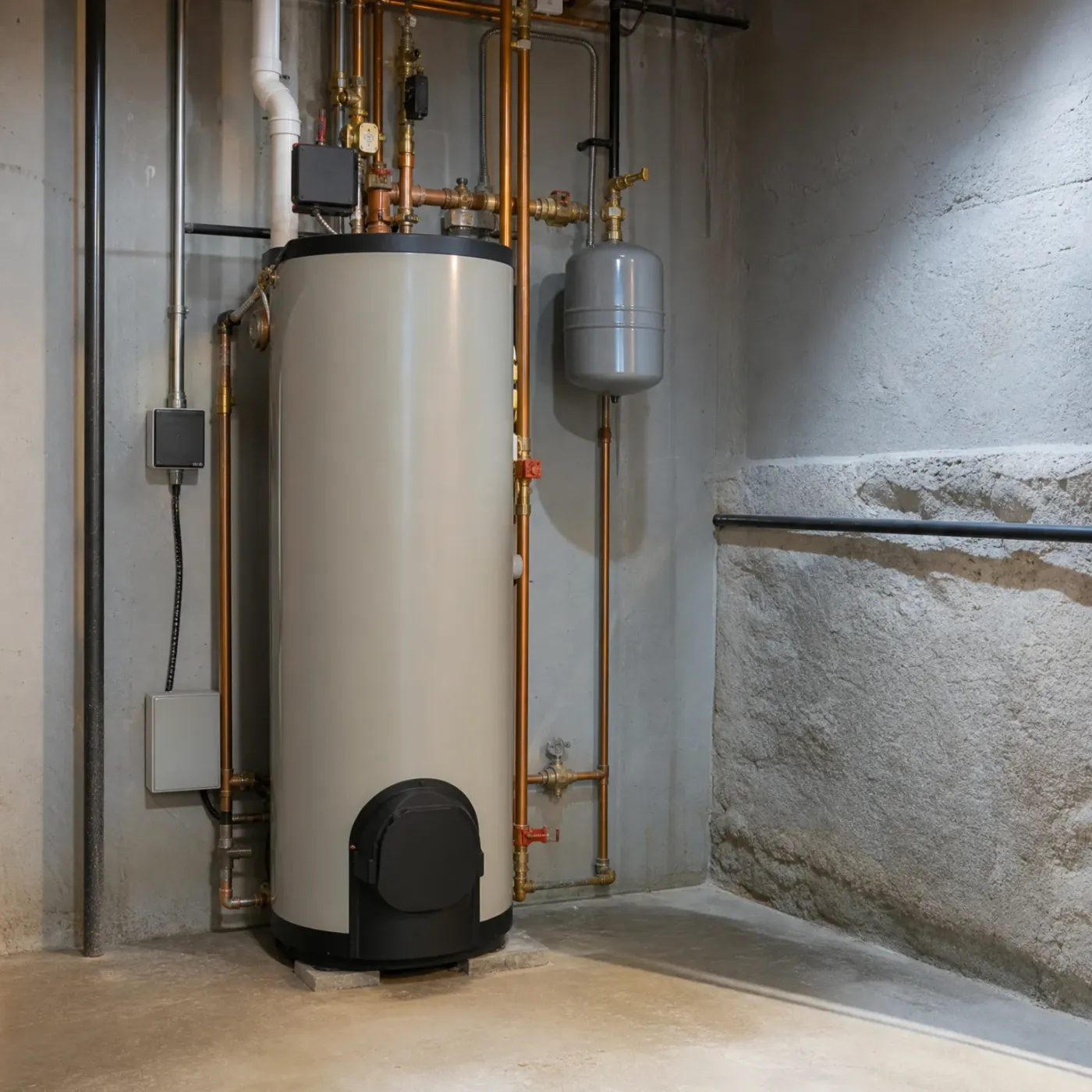
A tall cylindrical boiler or water heater with a black burner cover stands in a concrete-walled basement corner, surrounded by copper pipes, valves, electrical boxes, and a gray wall-mounted expansion tank.

A boiler pro near you

Find a pro near me

Send the request today and let a boiler pro reach out to you.

It costs nothing to send, and you don't have to hire anyone.