Why your boiler makes a banging noise in New York

Describe what your boiler is doing once, in one form.

Answer a few questions

Why does my boiler make a banging noise?

You hear it at night mostly, a banging or knocking from the radiators or the pipes right after the boiler kicks on. It's not subtle, and it's loud enough to wake someone up, which matters when you're trying to keep the house comfortable through a New York winter without a strange noise making everyone nervous about the system failing on the coldest night.

Trapped water hitting steam, or scale built up in the boiler

In a steam system, the bang usually means condensed water is pooling somewhere it shouldn't, in a low spot in a pipe or a radiator that isn't pitched right, and incoming steam slams into it. In a hot water system, the noise is often mineral scale coating the inside of the boiler, which heats unevenly and pops as it expands. Either way, the sound gets worse over time, not better, because the water pooling or the scale building up doesn't fix itself. Left alone, it stresses the joints and fittings, and in a steam system it can waste the fuel used to reheat water that never should have cooled in the pipe to begin with.

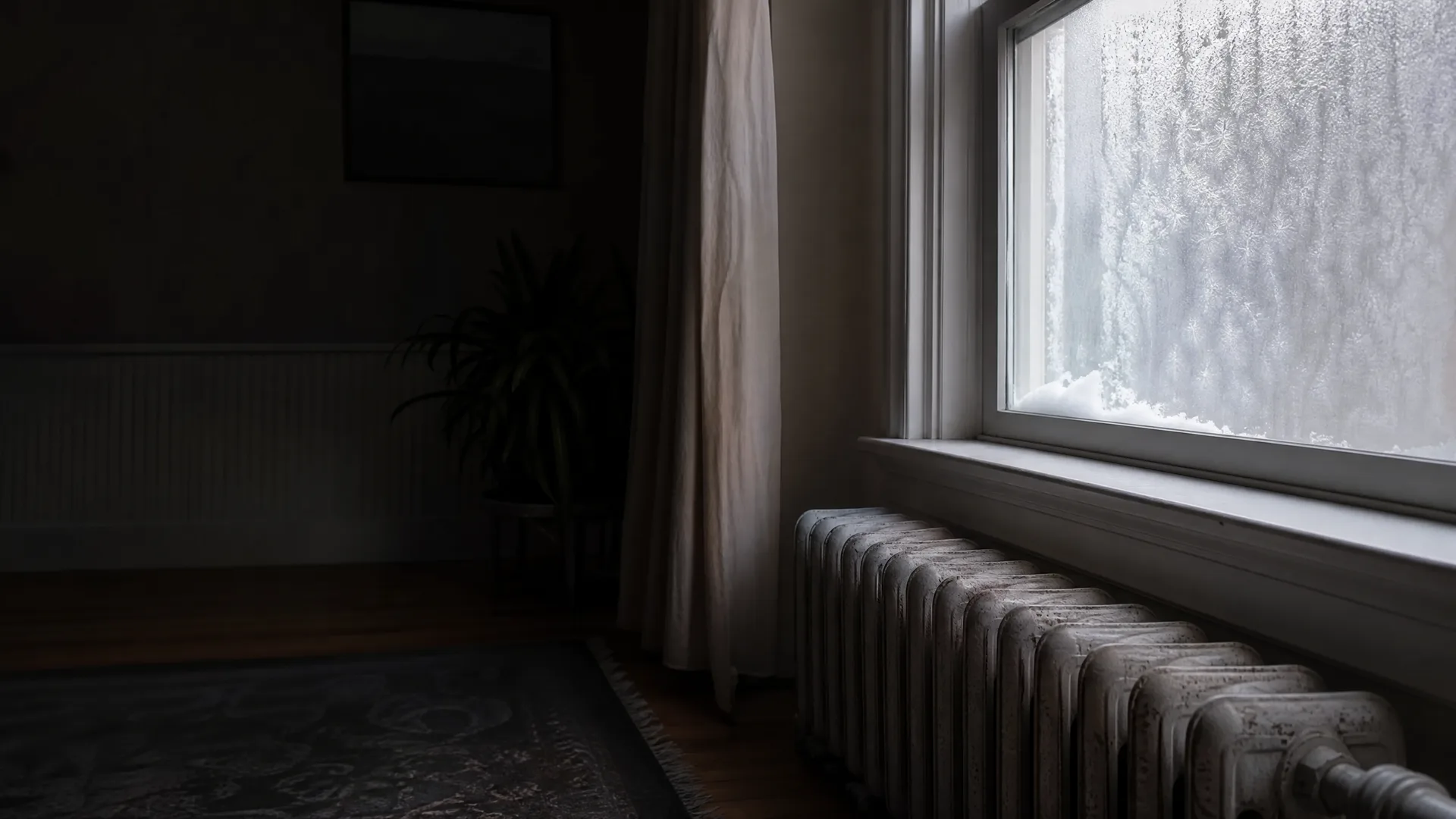
A dimly lit room with a cast-iron column radiator beneath a wide window covered in frost and snow, with a pale curtain, a potted plant, and a patterned rug on a wood floor.

You're up before the sun, checking on the house before anyone else is awake. The radiator under the living room window has frost feathered across the inside of the glass, and the pipe behind it lets out a bang loud enough that you feel it in the floor. The boiler just kicked on. You wait for the next one, and it comes, a knock that travels up through the riser to the radiator and rattles the window frame. The room is cold enough that you can see your breath near the glass. Outside, the sky is still dark, the kind of January morning where the heat has to work from the first minute someone's awake.


Fix the Noise or Let It Run

Call it in now

  • A contractor can bleed the trapped air out of the radiators and refill the loop to the right pressure, which usually stops the banging the same visit.
  • If the noise is from kettling, limescale built up on the heat exchanger has to be flushed or descaled before it gets worse.
  • A local plumber who works on boilers all winter in New York has heard this exact noise hundreds of times and knows which cause fits which sound.
  • Catching it now means one visit instead of the boiler cycling on that bang every night until spring.
  • A sagging pipe banging against a joist or a strap needs to be found and resupported, and that only gets harder to reach once it's buried behind finished walls.

Wait it out

  • The banging doesn't go away on its own. Trapped air and kettling both get worse the longer the boiler keeps running.
  • A boiler with limescale caking the heat exchanger is working harder to heat the same water, and that shows up on your gas bill.
  • Pipes that knock against framing every time the system cycles can wear a groove into the pipe or the strap over a season of heat.
  • If the room with the loud radiator stays cold because air is trapped at that end, that's the room everyone notices first.
  • Left alone, a kettling boiler can eventually crack the heat exchanger, which turns a repair into a full replacement.
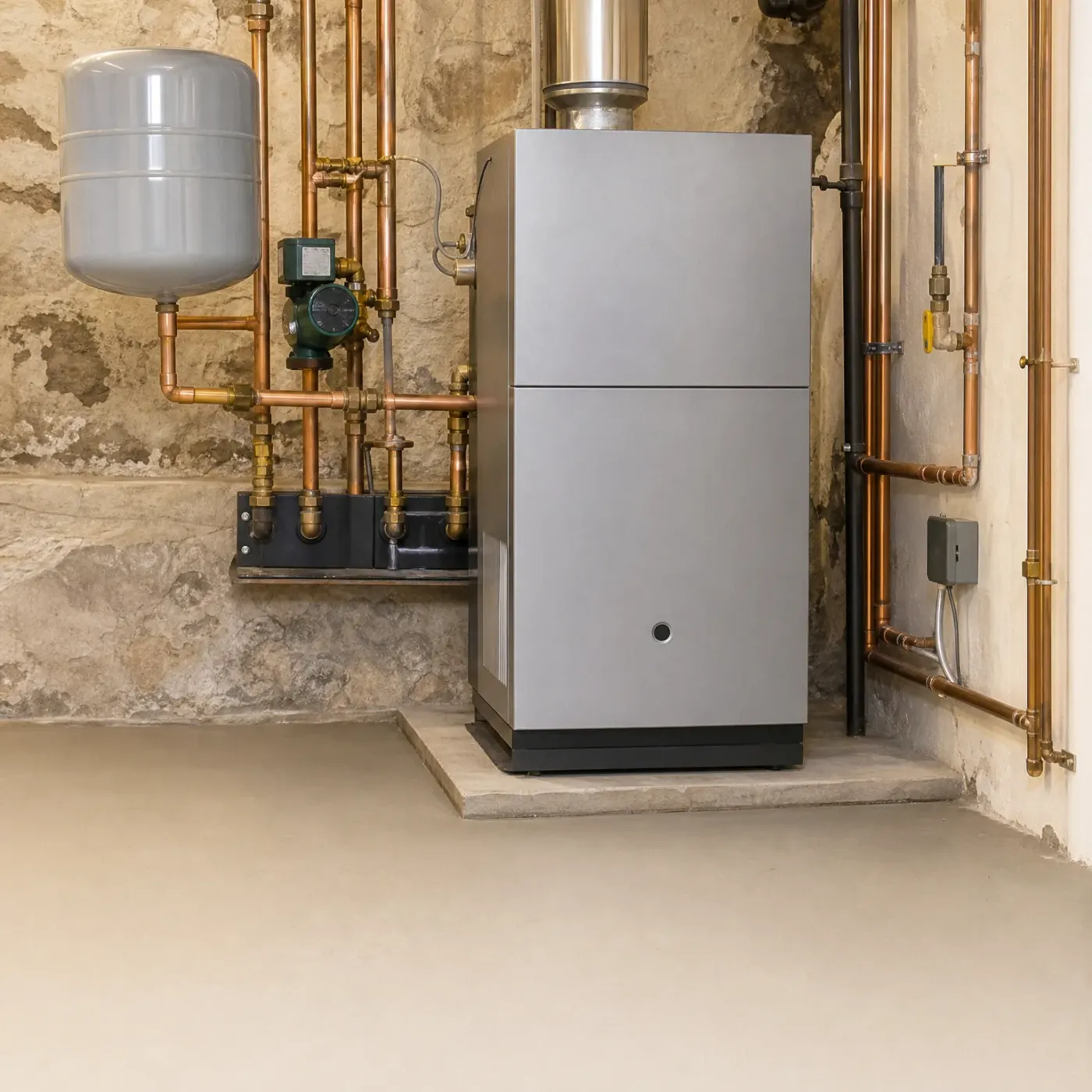
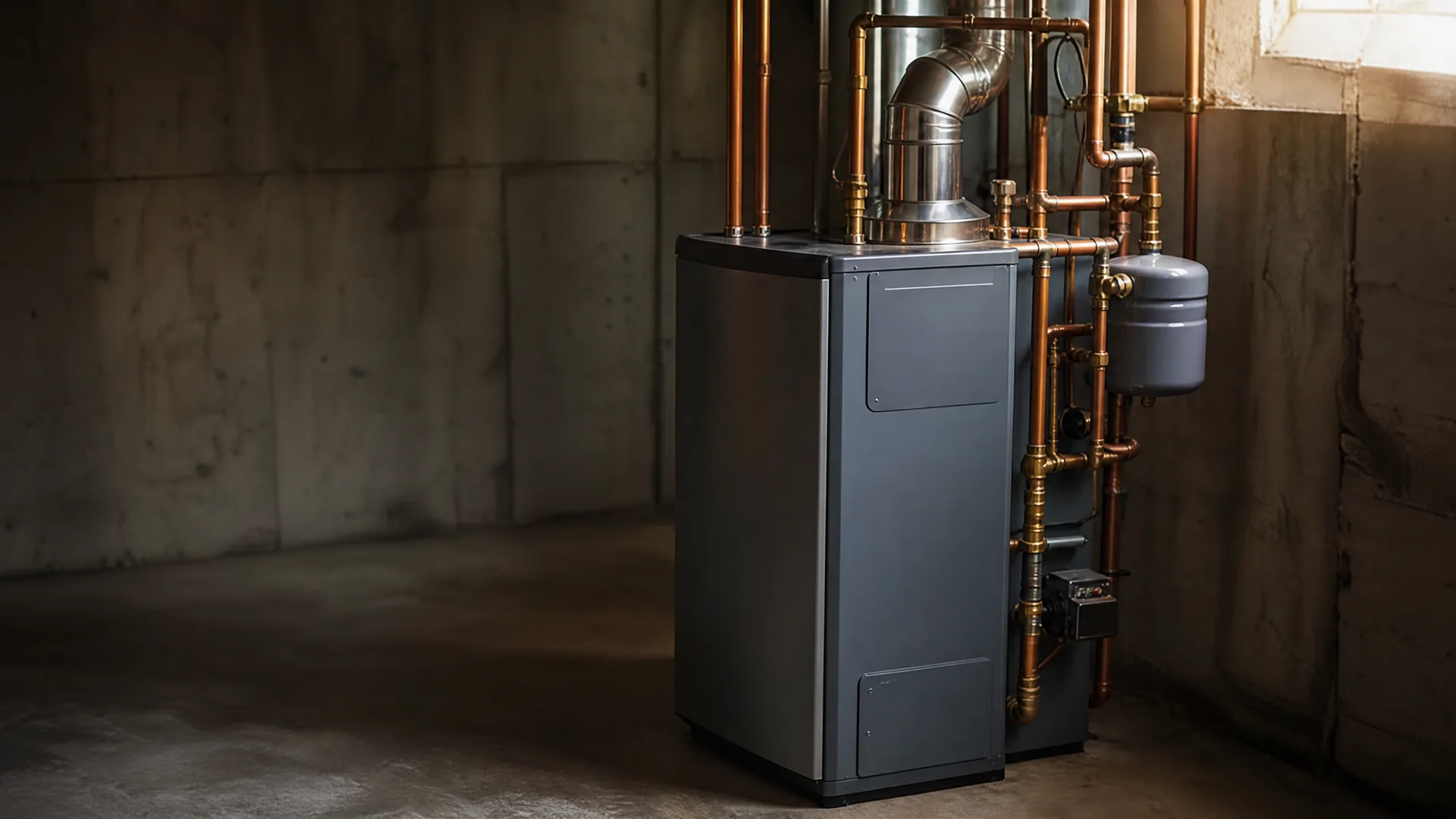
A gray boiler unit with a flue pipe stands on a concrete pad in a basement, surrounded by copper piping, a circulator pump, an expansion tank mounted on a stone wall, and an electrical outlet.

Pipes full, pressure right

Water moves through the loop without trapped air, so the radiators fill quietly and the pump keeps steady pressure. The expansion tank does its job absorbing pressure changes, and the flue draws clean. No knocking, no banging, just heat.

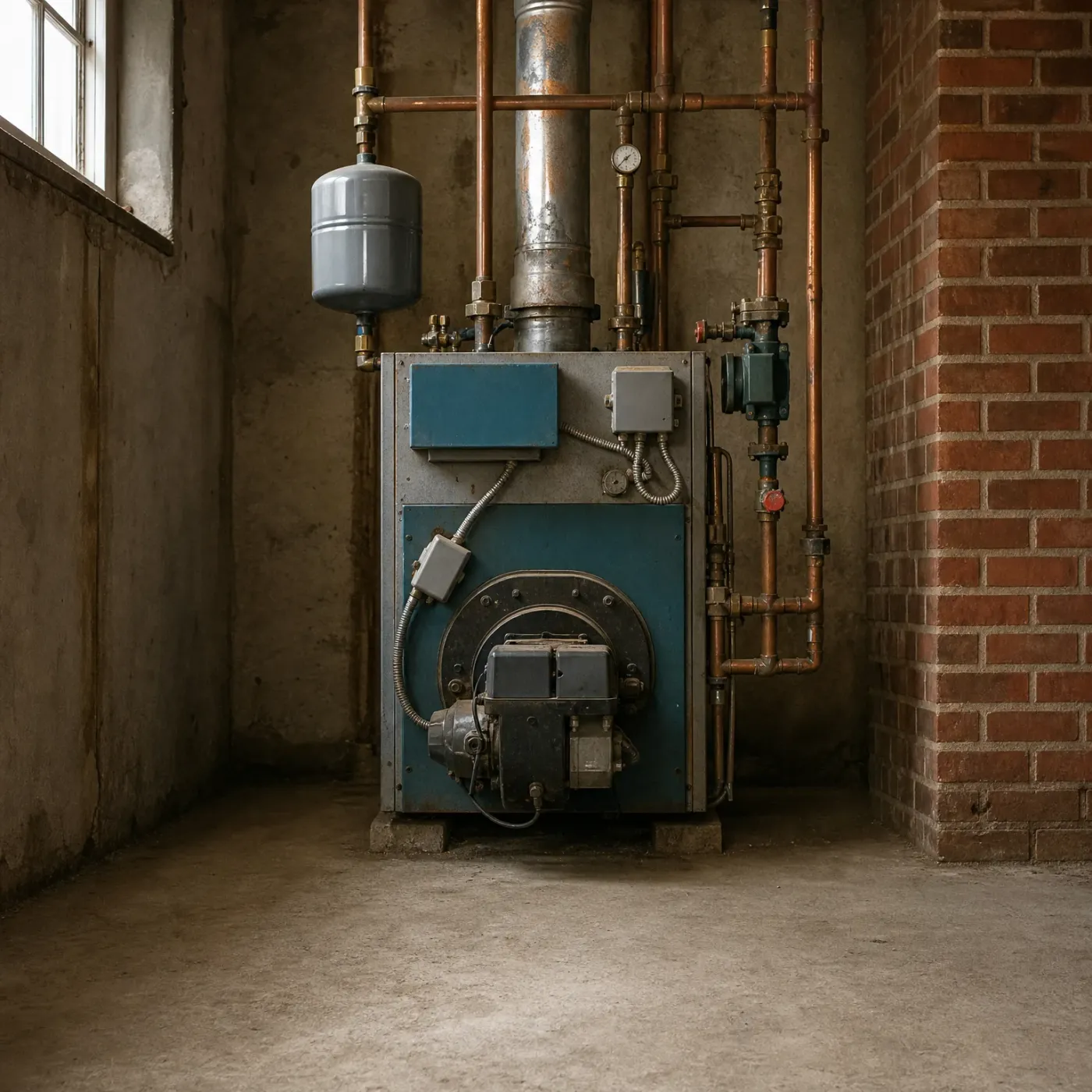
A blue cast-iron boiler with a burner unit, gauges and copper piping stands in a concrete-floored basement room beside a red brick pillar and a window.

Scale building, air trapped

Limescale coats the heat exchanger and trapped air sits in the lines, so the boiler bangs and knocks as it heats up. Left alone, the heat exchanger works harder and wears faster, and the noise comes back louder each time the burner fires.

A woman in a knitted shawl sits in a living room with a fireplace, shelves, a sofa with cushions, and a lamp by a bright window, looking off to the side.
A woman with long brown wavy hair in a green shirt over a white top stands in a living room with built-in white shelves, a ceiling fan, a potted plant and a sliding glass door.
A woman with shoulder-length gray-streaked hair in a light gray knit sweater stands smiling and looking off to the side in a living room with a sofa, houseplant, framed picture, and sunlit sliding glass door.
A woman with shoulder-length curly gray hair wearing a gray knit sweater stands near a window with a sheer curtain, looking to the side, with a blurred interior room behind her.

No phone calls to make

The pro who reaches out is licensed in New York.

No fee to send it, and nothing to sign.

Air in the loop is normal

Every boiler loop needs bleeding now and then. Water picks up dissolved air, and that air works loose and collects at the high points, usually the radiators upstairs. A few inches of trapped air in a pipe is enough to make the water hammer against it when the pump pushes through. This isn't a sign anything is failing. It's a maintenance item, the same way a car needs its tires checked. A contractor bleeds each radiator in turn and the banging from air is gone that visit.

Kettling means scale buildup

Kettling sounds different, more like a kettle starting to boil, and it comes from inside the heat exchanger itself. Limescale builds up on the metal over time, and water trapped under that scale boils and pops before the rest of the water gets hot. The harder the water feeding the boiler, the faster that layer builds. Left alone, kettling runs the heat exchanger hotter than it should and wears on it faster. Clearing it means flushing the exchanger, not just bleeding a radiator.

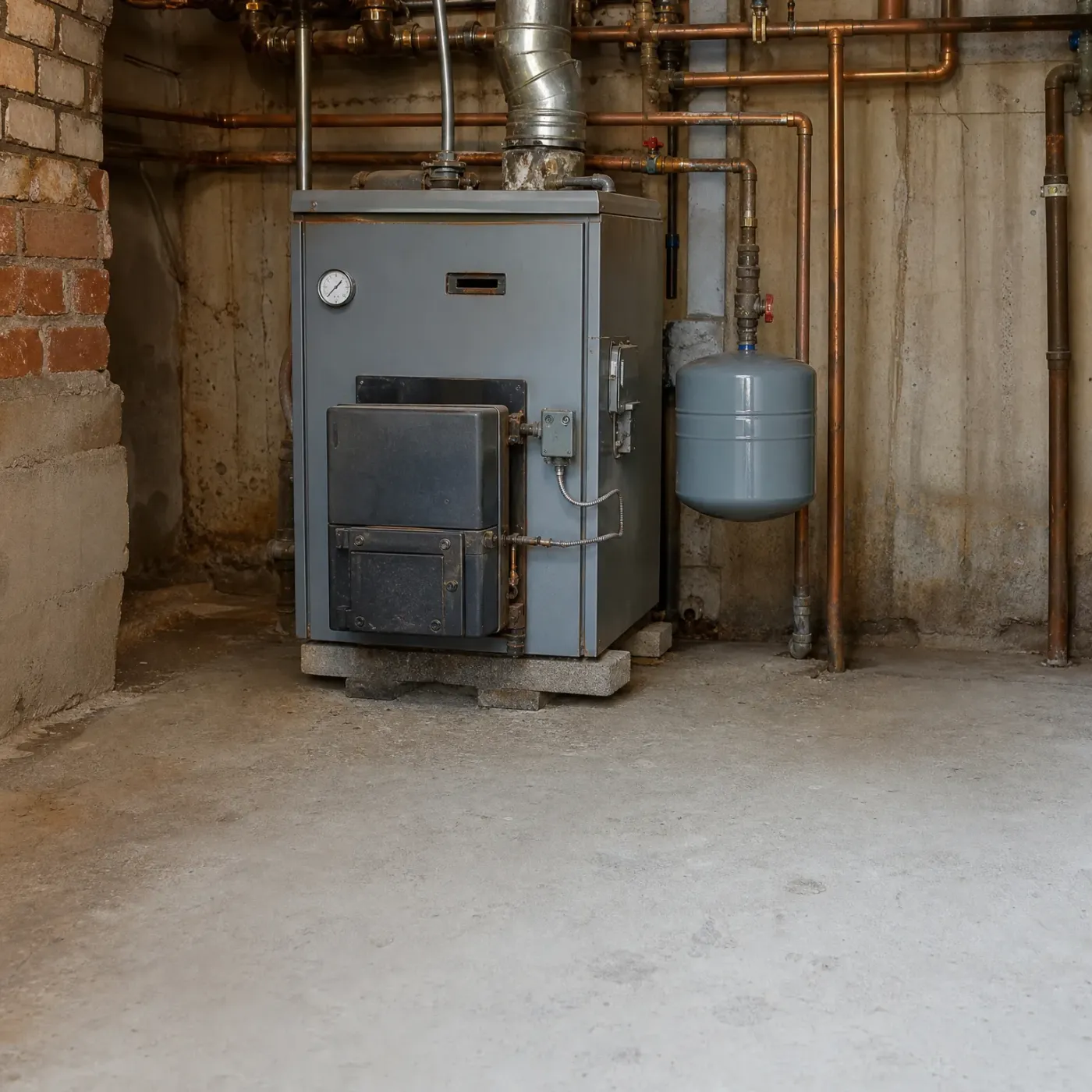
A gray boiler on a concrete block base in a basement, with copper piping, a metal flue, and a gray expansion tank mounted beside it against a concrete wall.
Before you get your boiler repair
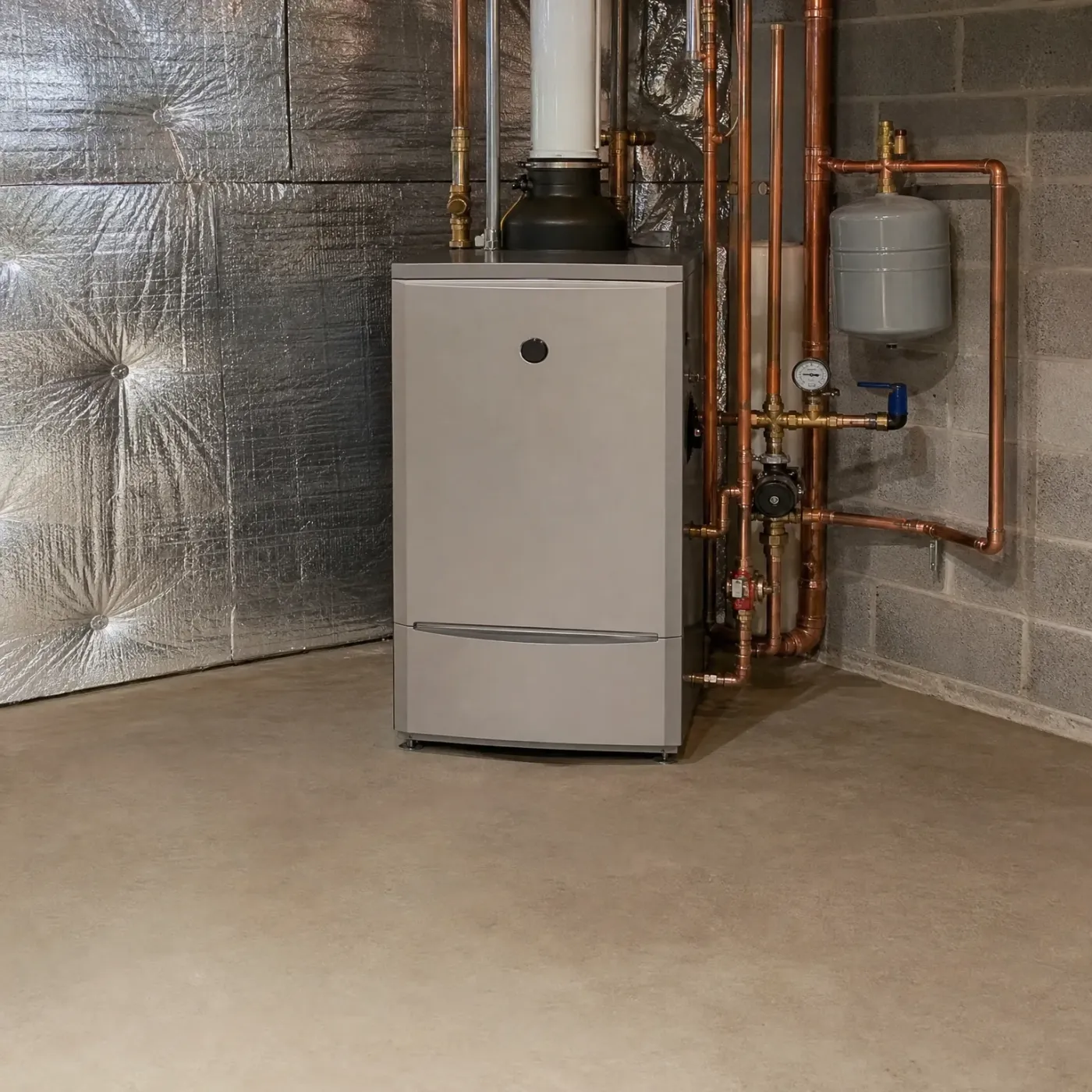
A gray residential boiler in a basement corner with copper piping, a circulator pump, pressure gauge, blue-handled valve and gray expansion tank against a concrete block wall, next to a foil-insulated wall.
After you get your boiler repair
  1. Water picks up dissolved air as it heats inside the boiler.

  2. Air works loose and rises to the highest point in the loop.

  3. Trapped air collects inside a radiator or a pipe run.

  4. The pump pushes water past that pocket of air.

A closed dark laptop and a ceramic mug of coffee on a wooden dining table, with wooden chairs, a dark kitchen cabinet with cutting boards and a potted plant, and a leafy plant by a window in the background.

What the banging means for your house tonight

The noise itself won't crack a pipe, but what's behind it does cost you. A boiler running with trapped air or a limescale-coated heat exchanger works harder to push heat through the loop, and gas here isn't cheap to waste. Kettling especially puts stress on the heat exchanger every time it fires, and that's the one part of the boiler you don't want to replace. If a bedroom radiator is the one banging, that's probably the room running cooler than the rest while someone's asleep in it.

Finding someone to look at it is its own chore. You don't want to spend an evening on the phone describing the same banging noise to three different companies, waiting on callbacks, then sorting through quotes that don't match. A local boiler contractor who's in New York homes every winter has heard this exact noise before and usually knows from the radiator it's coming from whether it's air, pressure, or scale before they even open the panel. One contractor, one visit, one person who already knows what to check.

A living room corner with a beige sofa and cushion, a round wooden coffee table holding a pale ceramic vase of eucalyptus stems and a wooden bowl, and a curtained window with a potted plant above a latticed radiator cover in the background.
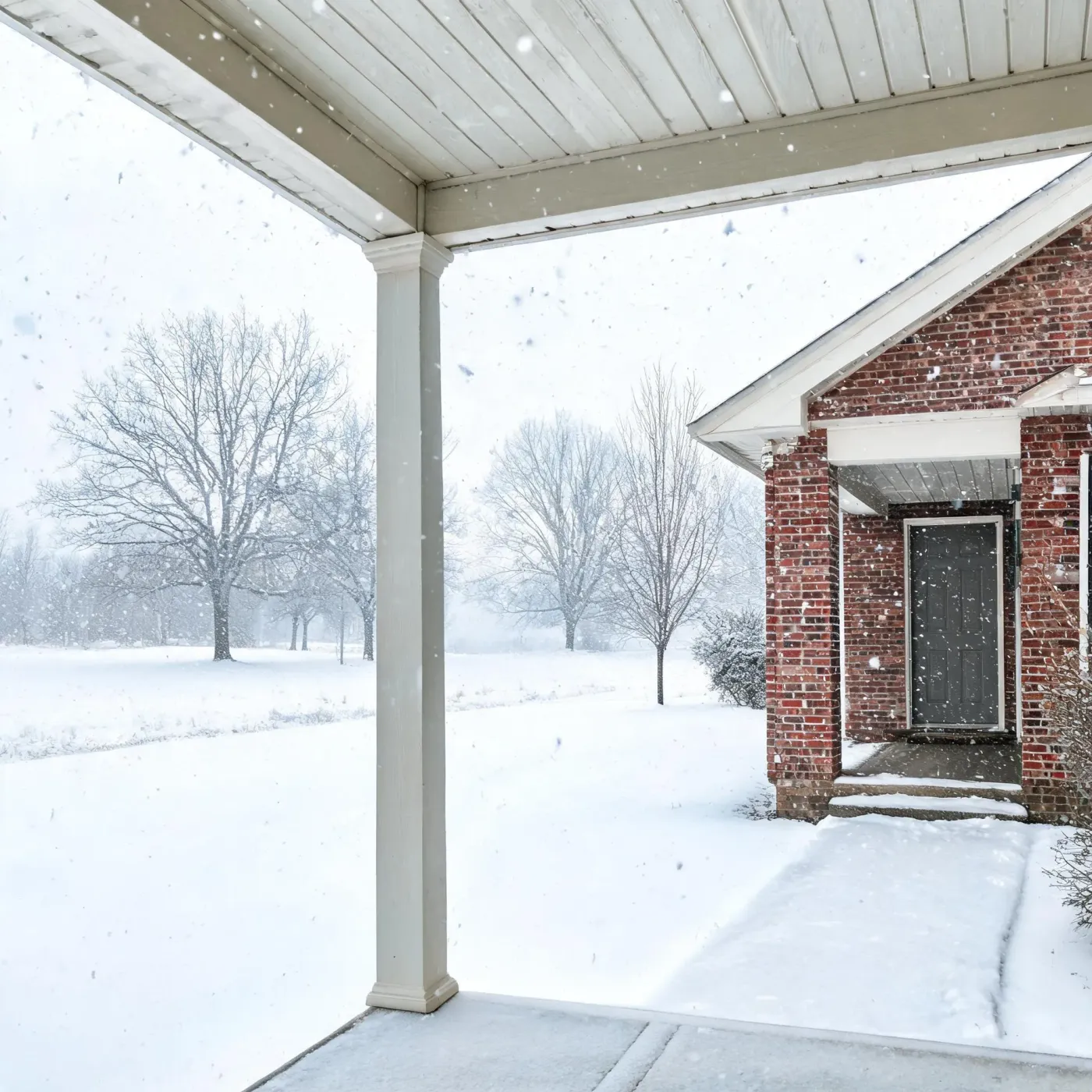
View from under a covered porch with a white column toward a red brick house with a dark door, with falling snow, snow-covered ground and bare trees in the background.

Winter nights average 24°F across New York, according to NOAA. That's cold enough that your boiler is running long stretches overnight, cycling on and off for hours while everyone sleeps. Every time it fires, water heats up and picks up dissolved air, and every time it cools between cycles, that air has a chance to work loose and gather in the radiators. More run time means more chances for air to collect and more chances for you to hear it hit a pocket of air in the pipe. On a mild night the boiler barely runs and the noise might not show up at all. On a night this cold, it will.

NOAA nClimDiv 1991-2020 county normals weighted by homes

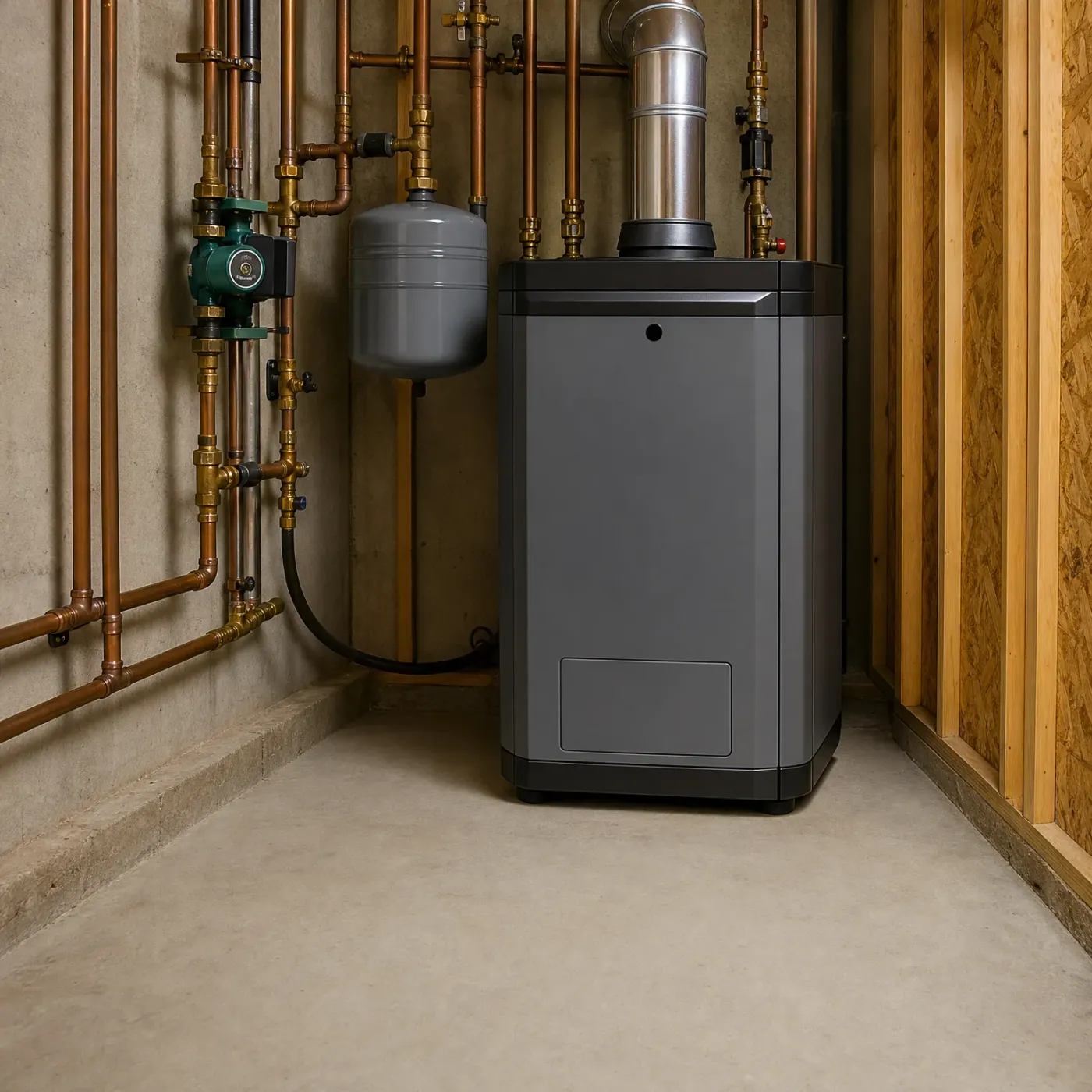
A gray floor-standing boiler with a metal flue pipe stands in a basement corner beside copper piping, brass valves, a green circulator pump, and a gray expansion tank on a concrete wall, with exposed wood framing and sheathing at right.
Water moves through the loop quietly, filling each radiator without a pocket of trapped air to bang against.
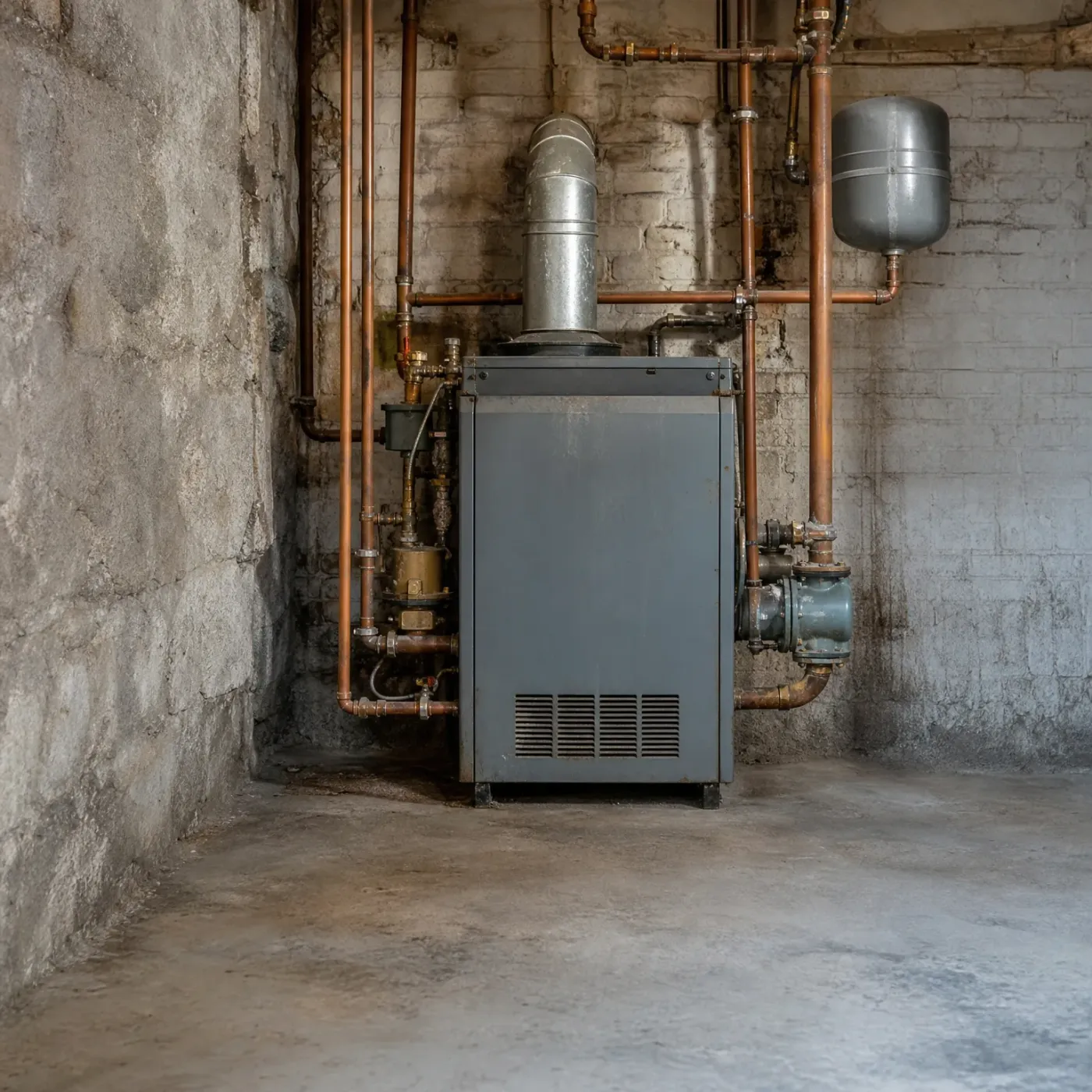
A gray boiler with a metal flue pipe and copper piping stands against a weathered painted brick basement wall, with an expansion tank mounted overhead and a bare concrete floor in front.
Years of limescale and sediment have built up around that cast iron, and the knocking gets worse each time it fires.
A woman and a child wrapped together in a thick knitted blanket on a sofa, both with eyes closed, with a lit table lamp and houseplant in the dim background.
An older woman with gray hair in a bun and glasses, wearing a beige knit sweater, smiles while looking to the side in a warmly lit kitchen, with a loaf of bread on the counter in the foreground and a snowy scene outside the window.

Keep running it with the noise

The banging doesn't stop on its own, and most nights it gets a little louder as more limescale builds or more air collects. Letting it go just means more nights of waking up to it.

Winter nights average 24°F statewide

24°F overnight means your boiler isn't firing once and resting. It's cycling on and off for hours straight through the night, and every cycle is another chance for dissolved air to work loose and collect at a high point. That's more nights with banging, not fewer.

NOAA nClimDiv 1991-2020 county normals weighted by homes

The banging comes down to one of two things: air trapped in the loop, or limescale built up on the heat exchanger. Bleeding the radiators and refilling the loop fixes the first. Flushing the exchanger fixes the second. A boiler contractor who works on these systems all over New York every winter has heard both and knows which one he's listening to before he opens his truck. Once you put in a request, you're connected with one licensed local contractor, not a handful of companies calling you back at once, so there's no sorting through quotes or explaining the noise over and over to different people. He'll come out, listen to it fire, and tell you straight which it is and what it takes to quiet it down. The noise doesn't go away on its own, and every cold night it keeps banging is another night of a boiler working harder than it should to keep the house warm.

A gray boiler unit in a concrete-walled basement, connected to copper piping, a metal flue duct, and a wall-mounted expansion tank.

One form, no calling around

Step 1 of 3: Equipment