






Why your boiler keeps turning off in New York

Step 1 of 3: Equipment

A boiler that keeps shutting off is usually telling you something specific through the part that's failing. A dirty or failing flame sensor is the most common reason, it can't confirm the flame is lit, so the boiler shuts down as a safety measure. Low water pressure does the same thing, and so does a bad pressure switch or a clogged condensate line on newer high-efficiency units. Thermostat wiring problems and a failing igniter show up a lot too. None of these fix themselves, and running a boiler that's cycling off repeatedly during a New York winter puts more wear on the parts that are already struggling. Most homes here heat with gas, and a boiler that won't stay lit on a cold night isn't something to wait out. A licensed technician can test each of these in order and find which one is actually causing the shutdowns.

A woman with dark hair in a bun wearing a cream knit sweater sits on a gray sofa in a bright living room, looking off to the side.
A woman wrapped in a knit blanket sits on a gray sofa in a living room, looking toward a bright window with houseplants and an armchair in the background.
A woman in a gray cowl-neck sweater sits on a light sofa with cushions, smiling and looking to the side, with a kitchen and window visible behind her.
A woman with dark hair in a bun, wearing a light linen shirt, sits on a sofa and looks to the side, with a window, houseplants and a kitchen with pendant lights blurred behind her.

Call Now or Watch It First

Call for repair now

  • A boiler that shuts off repeatedly is already telling you something, and running it over and over can damage the heat exchanger or ignition parts further.
  • If the shutoffs are happening more often, the part that's failing is getting worse, not better.
  • A pro can test the flame sensor, pressure, and igniter in one visit and tell you exactly what's tripping the safety switch.
  • Waiting through a cold snap with an unreliable boiler means you're gambling with heat on the coldest nights of the year.
  • A repair now is usually smaller than the repair after the part it's stressing gives out too.

Wait and watch

  • If the shutoffs are rare and the boiler restarts fine on its own, you may be dealing with a minor, isolated issue.
  • Low water pressure sometimes causes a single shutoff that a simple refill corrects without any parts failing.
  • Watching how often it happens and under what conditions gives a contractor useful information when you do call.
  • Delaying means living with a boiler that might quit on a night you need it most, with gas heat that New York winters make hard to go without.
  • If it only happened once after a power blip, it may not be the boiler at all.
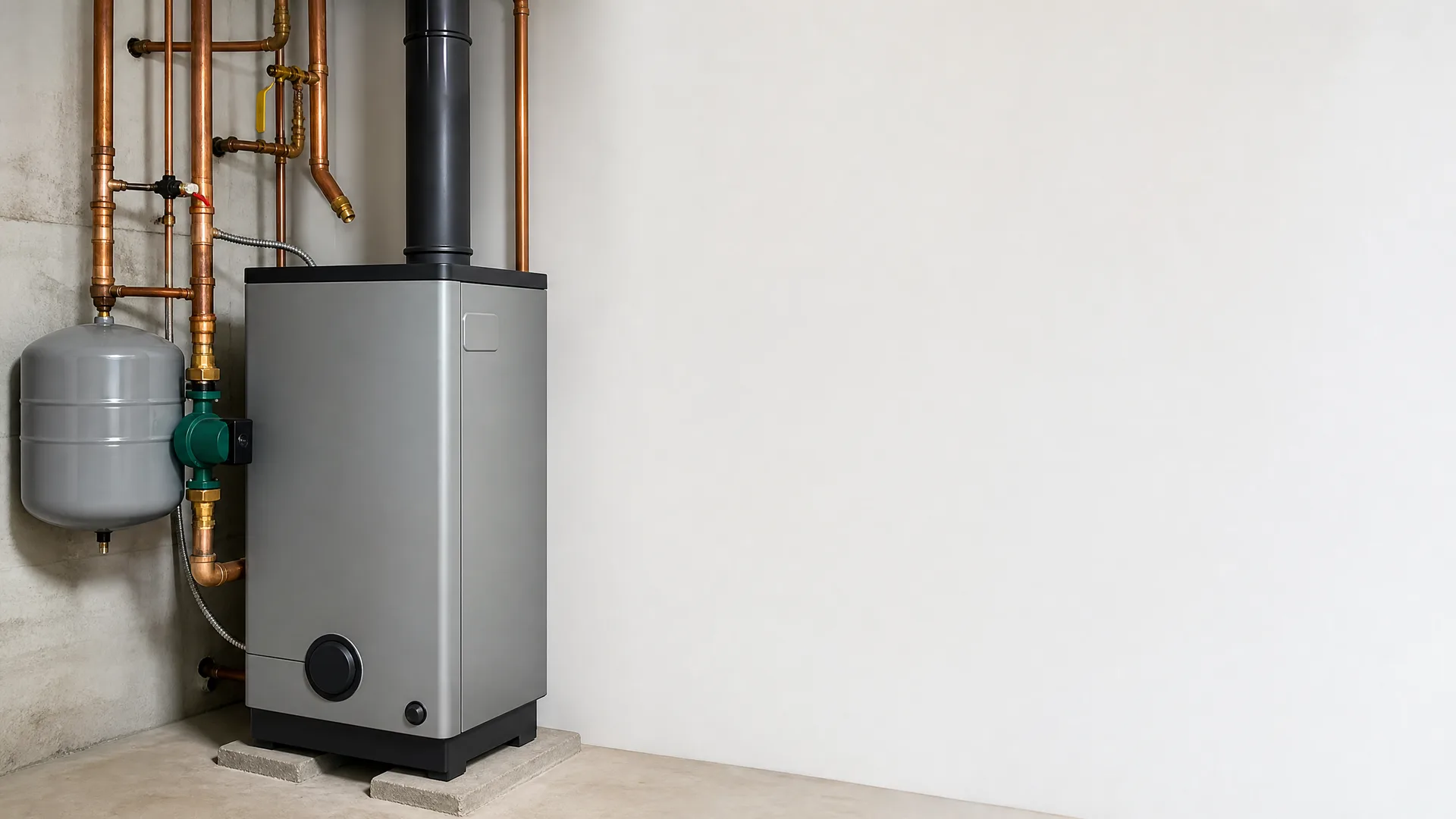
A gray floor-standing boiler with a black flue pipe stands on concrete blocks in a corner, connected to copper pipes, a green circulation pump, and a gray expansion tank on the wall.

What the pressure gauge tells you

Most boilers want to see 12 to 15 psi when the system is cold. If the needle sits below that, the low water cutoff will trip and shut the burner down before it fires. You can check this yourself on the gauge near the front of the unit. If it reads low every few days, something is letting water out, a bleed valve left open, a slow leak at a fitting, or a failing pressure relief valve.

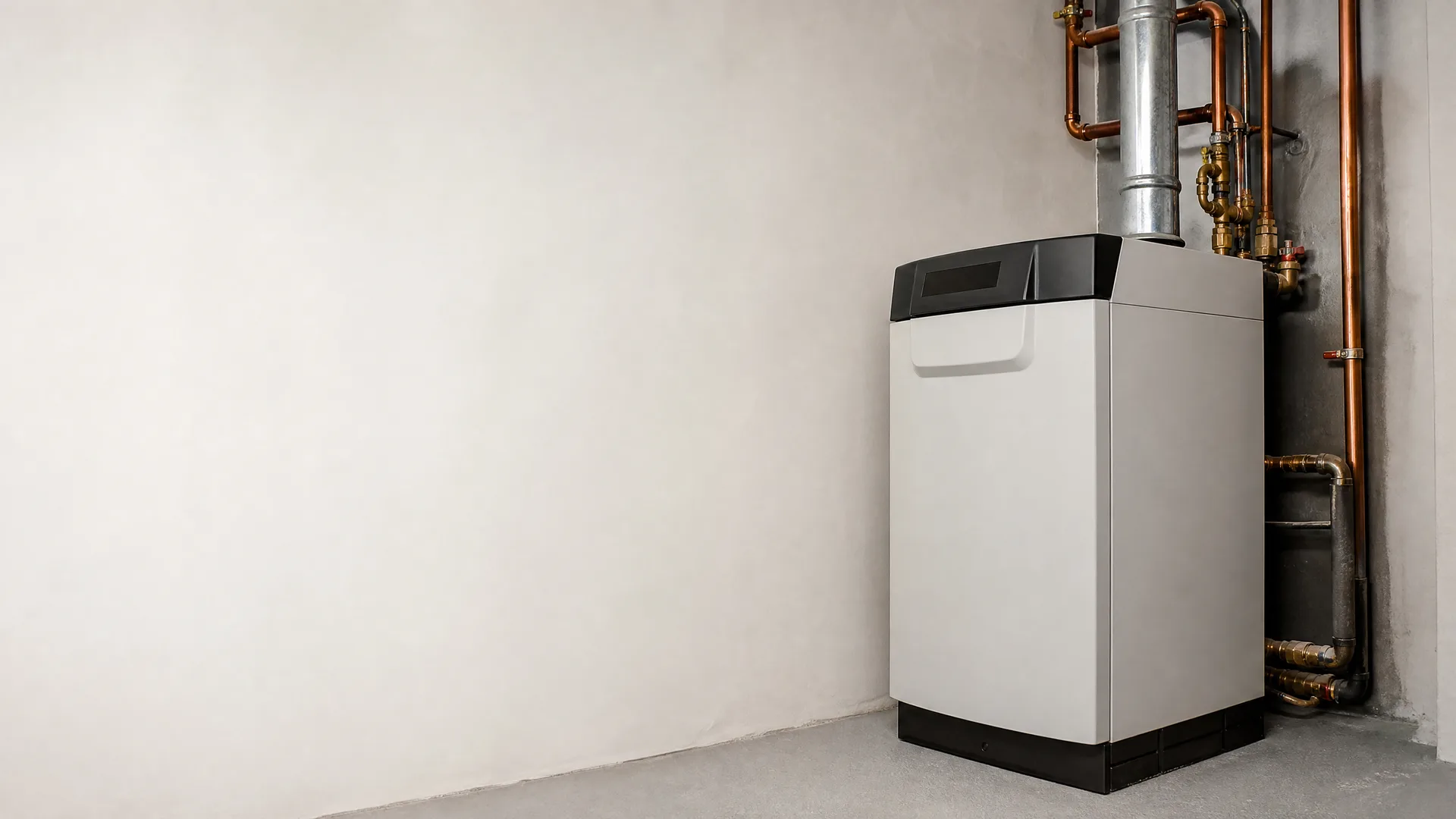
A white and black floor-standing boiler in the corner of a bare plastered room, with copper and metal pipes running up the wall behind it.

Why the flame sensor fails first

The flame sensor is a thin metal rod sitting right in the burner flame. Every time the boiler fires, it coats a little more with carbon. Once that coating gets thick enough, the rod can't read the flame anymore and the control board cuts the gas to be safe. This part usually fails well before the igniter or the gas valve, which is why it's the first thing a tech checks.

Is this happening more than once a day now?

You turn the thermostat up, the boiler fires, and a few minutes later it quits again. Maybe you hear the burner click on and off more than it used to, or the house takes longer to warm up because the system keeps resetting instead of running a full cycle. Some homes notice a faint burning smell near the unit, or a reset button that needs pressing more often. With New York gas prices what they are, a boiler that short-cycles all winter is burning fuel on every failed attempt without heating the house for it. Left alone, the part causing the shutoffs usually doesn't fix itself, and running the burner through repeated failed starts puts more strain on the heat exchanger and ignition components each time.

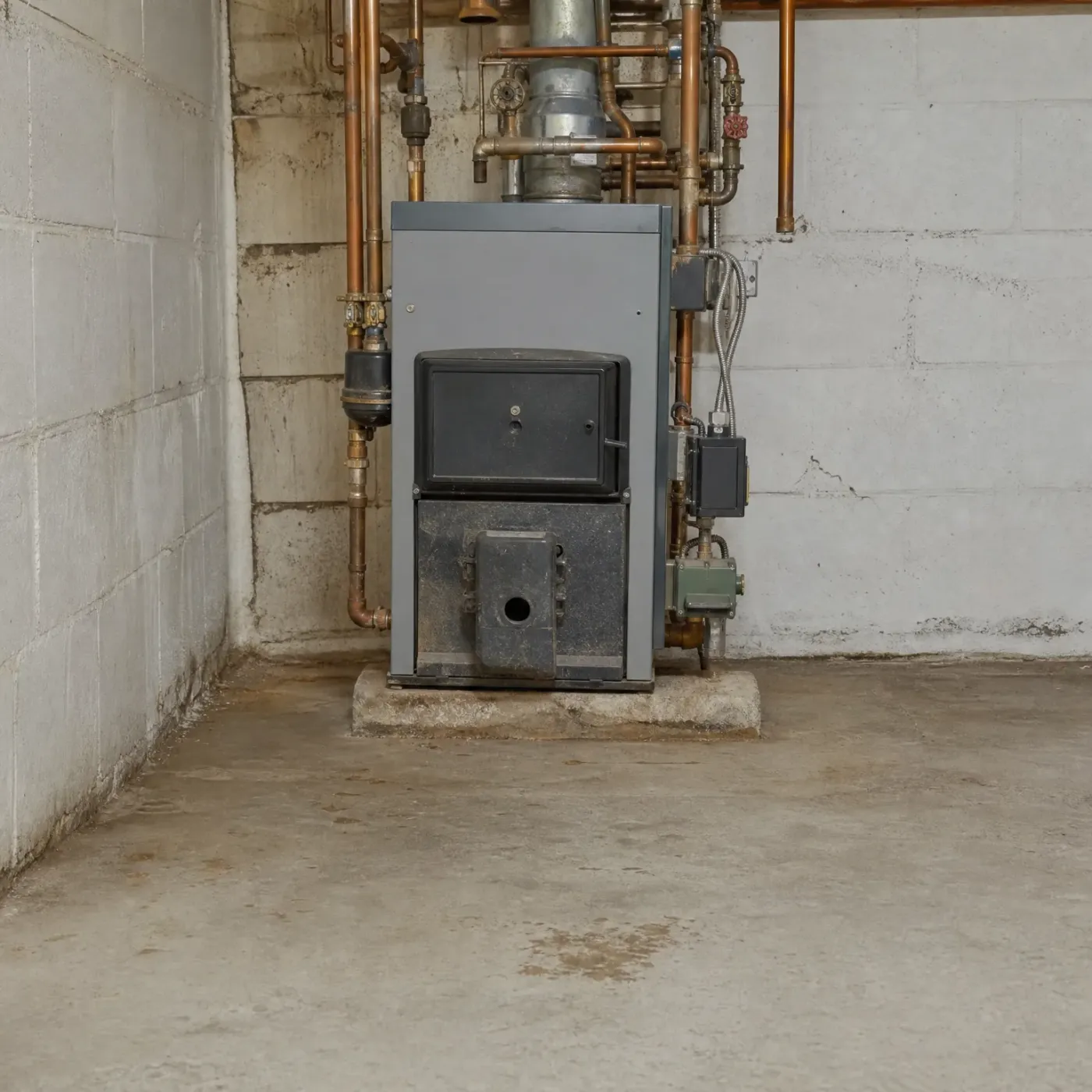
A gray boiler on a concrete pad in a basement with painted concrete block walls, copper piping, a metal flue, and electrical control boxes.
Before you get your boiler repair
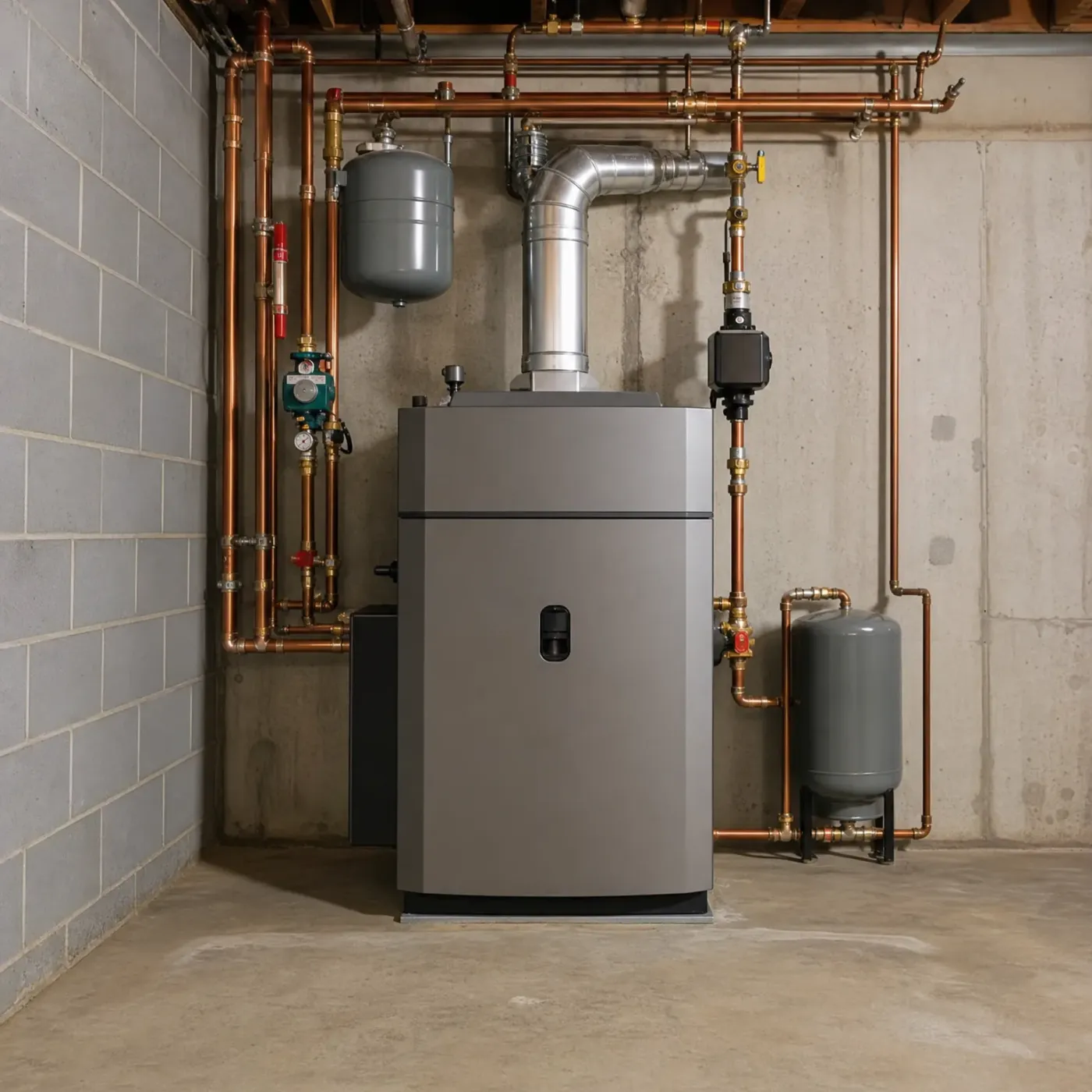
A gray boiler with a metal flue pipe stands in a basement against concrete and concrete-block walls, connected to copper piping, a circulator pump, and two gray expansion tanks.
After you get your boiler repair
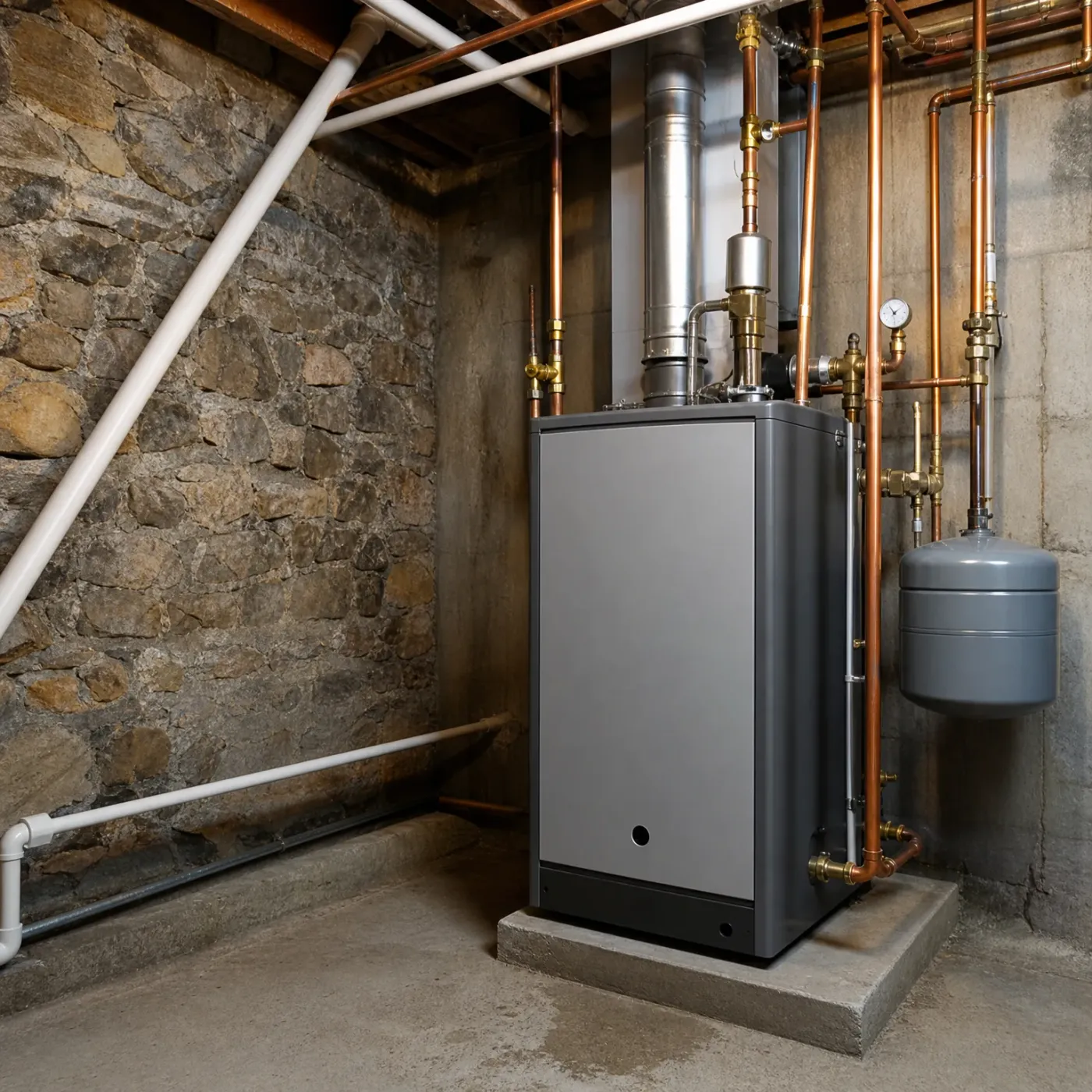
A gray floor-standing boiler on a concrete pad in a basement, connected to copper piping, a metal flue, a gauge, and a gray expansion tank, beside a stone wall and white insulated pipes.

A local pro for your boiler repair

Explain the job once and skip repeating it on every call.

A local pro who knows boilers gets your details and gets in touch.

Request a pro

You only hire the pro if you want to.

A woman stands in the open doorway of a white stucco house holding the dark door, facing a man in a black cap and shirt seen from behind in the blurred foreground, with a potted flowering plant beside the entry.

What the pressure switch is actually checking

Gas boilers have an induced draft motor that pulls exhaust out through the vent before the burner is allowed to fire. A pressure switch sits on that motor, watching for a drop in pressure that proves the motor is actually spinning and the vent is clear. If the switch doesn't see that drop, it won't let the gas valve open at all, or it cuts the burner mid-cycle if the draft falls off. A cracked hose, a stuck motor, or a vent pipe blocked by a bird's nest or ice can all trigger the same shutoff, and the switch is doing exactly what it's built to do.

That's one more thing that can be wrong, on top of the flame sensor and water pressure the parts above already covered, and it's not something you can see by looking at the boiler from across the room. Someone who works on these every day can open the jacket, test the switch with a meter, and look at the vent run itself. A page like this one can get you to that person without you having to find them on your own, describe the clicking and the short cycles over the phone a few times, and wait on quotes to figure out who even answers.

A dark ceramic mug on a round wooden table beside a light grey sofa with a woven cushion and knit throw, with a window, potted plant, floor lamp and wooden cabinet blurred in the background.
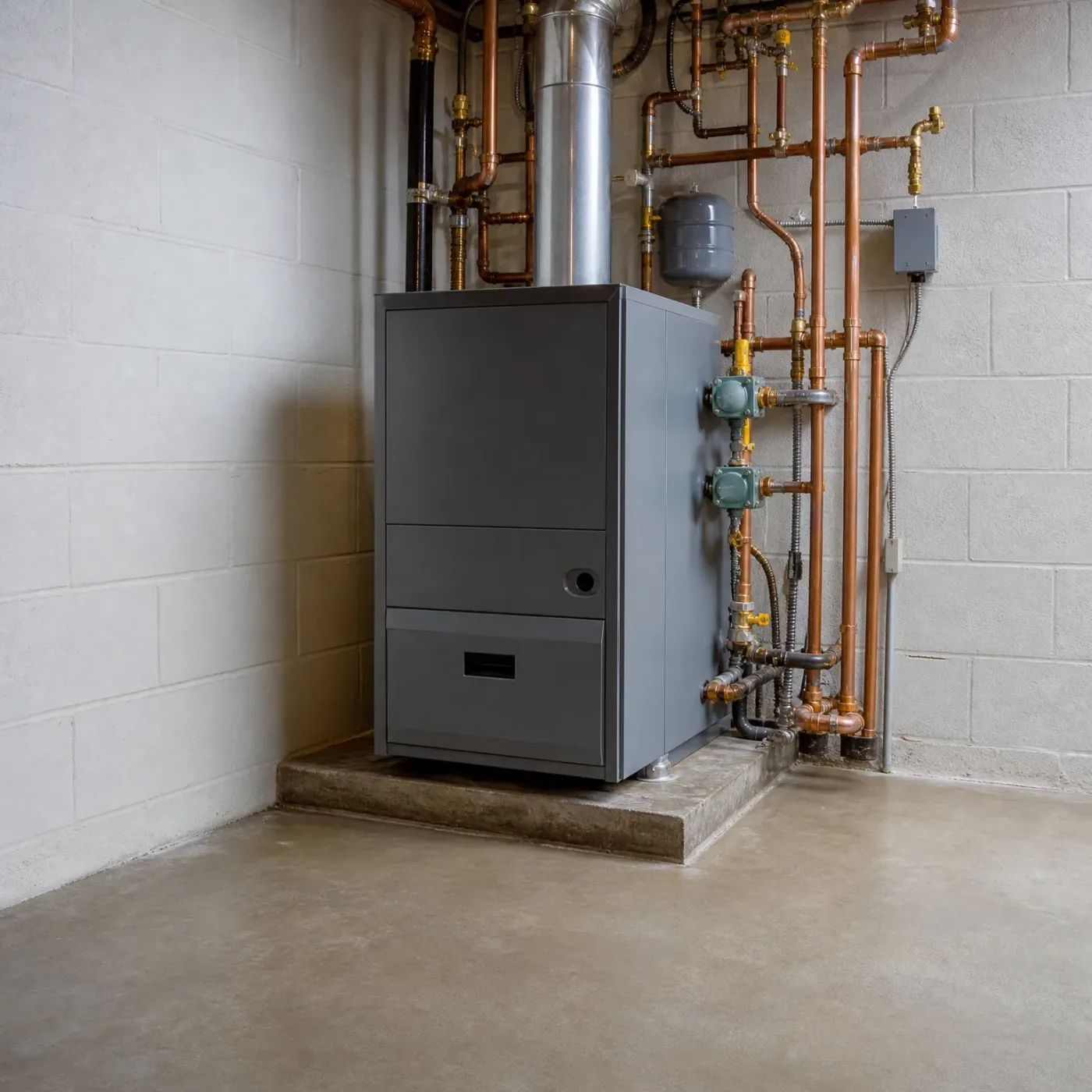
A gray boiler unit on a concrete pad in a basement corner, connected to copper piping, valves and a metal flue against painted concrete block walls.

Running the way it should

The flame sensor reads a steady flame, the pressure switch confirms draft, and the burner stays lit. Pipes and fittings hold pressure without weeping, and the expansion tank does its job quietly in the corner. No clicking on and off, no cold radiators upstairs.
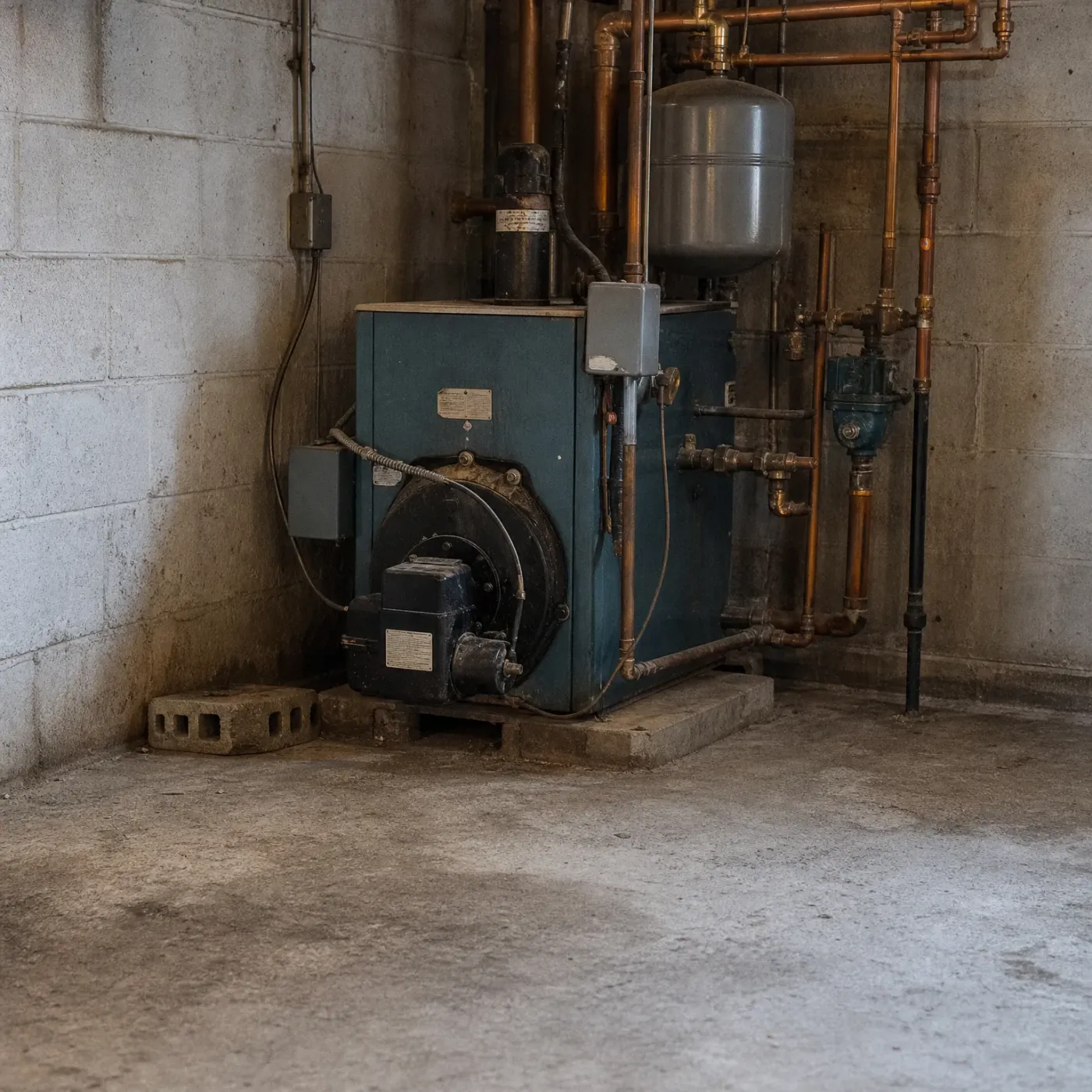

A blue oil-fired boiler with a burner unit sits on a concrete pad in a basement corner, with copper piping, valves and a gray expansion tank overhead against concrete block walls.

Running the way it shouldn't

Old iron and copper pipe joints like these are where pressure gets lost over the years, and a boiler that can't hold pressure won't hold a flame either. If yours is cutting off more than once a day, a part on it is already failing.

Winter nights average 24°F statewide

On a 24°F night your boiler is running long stretches to hold the house, and it's cycling through its safety checks that many more times. A flame sensor or pressure switch that's already marginal tends to show itself first on nights like these.

NOAA nClimDiv 1991-2020 county normals weighted by homes

Keep running it and hope it holds

Most likely it shuts off again, maybe tonight, maybe during the coldest stretch when you need it most and parts are harder to get to fast.

A smiling older woman with gray hair in a cream knit sweater stands in a dimly lit kitchen beside a window showing snow outside, with a round loaf of bread on the counter in the foreground.
A woman with her hair in a bun sits wrapped in a beige knitted blanket on a couch, holding a sleeping child against her chest in a warmly lit room with a lamp and houseplant in the background.

Where this leaves you

  • A boiler that keeps shutting off is almost always pointing at one part, usually the flame sensor, the pressure switch, or low water pressure.
  • The pressure gauge near the front of the boiler tells you fast whether low water pressure is behind the shutoffs, since it should read 12 to 15 psi cold.
  • Shutoffs that happen more than once a day, or that show up on the coldest nights, mean the failing part is getting worse, not staying the same.
  • Running a boiler that keeps tripping its safety switches can damage the heat exchanger or the ignition parts it's trying to protect.
  • Instead of calling around to different repair companies and repeating the same explanation each time, you can get matched with a contractor who takes it from here.
  • That match means no more comparing quotes on your own or hunting for someone who can get to a New York boiler before the next cold snap.

A boiler that keeps shutting off is not failing at random. It is almost always the flame sensor, the pressure switch, or water pressure that has dropped below 12 psi, and the gauge on the front of the unit will usually tell you which. How often it happens matters too. Once a day is worth watching. More than that, especially on a cold night, means whatever part is failing is getting worse, not staying the same, and the heat exchanger or ignition parts pay for it if the boiler keeps restarting against a switch that will not clear.

None of that changes what happens next for you. Somewhere in New York tonight, a boiler is doing this same thing in another kitchen, and that homeowner is doing what you would otherwise have to do: pulling up a list of repair companies, calling the first one, explaining what the boiler is doing, getting a quote, calling the next one, explaining it again. Instead, you get matched with a contractor who already knows what you've described here, and that contractor reaches out to you. No comparing estimates on your own. No hoping someone has an opening before the next cold snap hits. The part that was going to fail eventually did, and now the only thing left is getting someone out to look at it, which is the one piece of this you don't have to handle alone.

Sunlight falls across a beige upholstered sofa with a textured woven cushion and a chunky knit throw, beside a dark wood cabinet holding a ceramic vase with green leafy branches, near a white-framed window.
A sunlit corner of a room with a wooden side table holding a ceramic vase of green foliage and a wooden bowl, beside a light upholstered sofa with a knit throw and rust-colored pillow, with window shadows cast on a beige wall.
A sunlit room corner with beige walls, a white-framed window with sheer cream curtain, wood floor with a light rug, and a woven basket holding a knit blanket.
A beige ceramic vase holding a leafy green branch sits on a wooden cabinet in a corner, with sunlight through a sheer curtain casting leaf shadows on the wall.
A grey upholstered sofa with a rust-orange velvet cushion and a textured throw sits beside a window with linen curtains, next to a wooden side table holding a pale ceramic vase of olive branches.

Get the right pro for your boiler

Skip searching for a boiler pro and answer a few questions instead.

Start one form

Asking costs nothing, and the choice to hire stays yours.