

No water at the connections
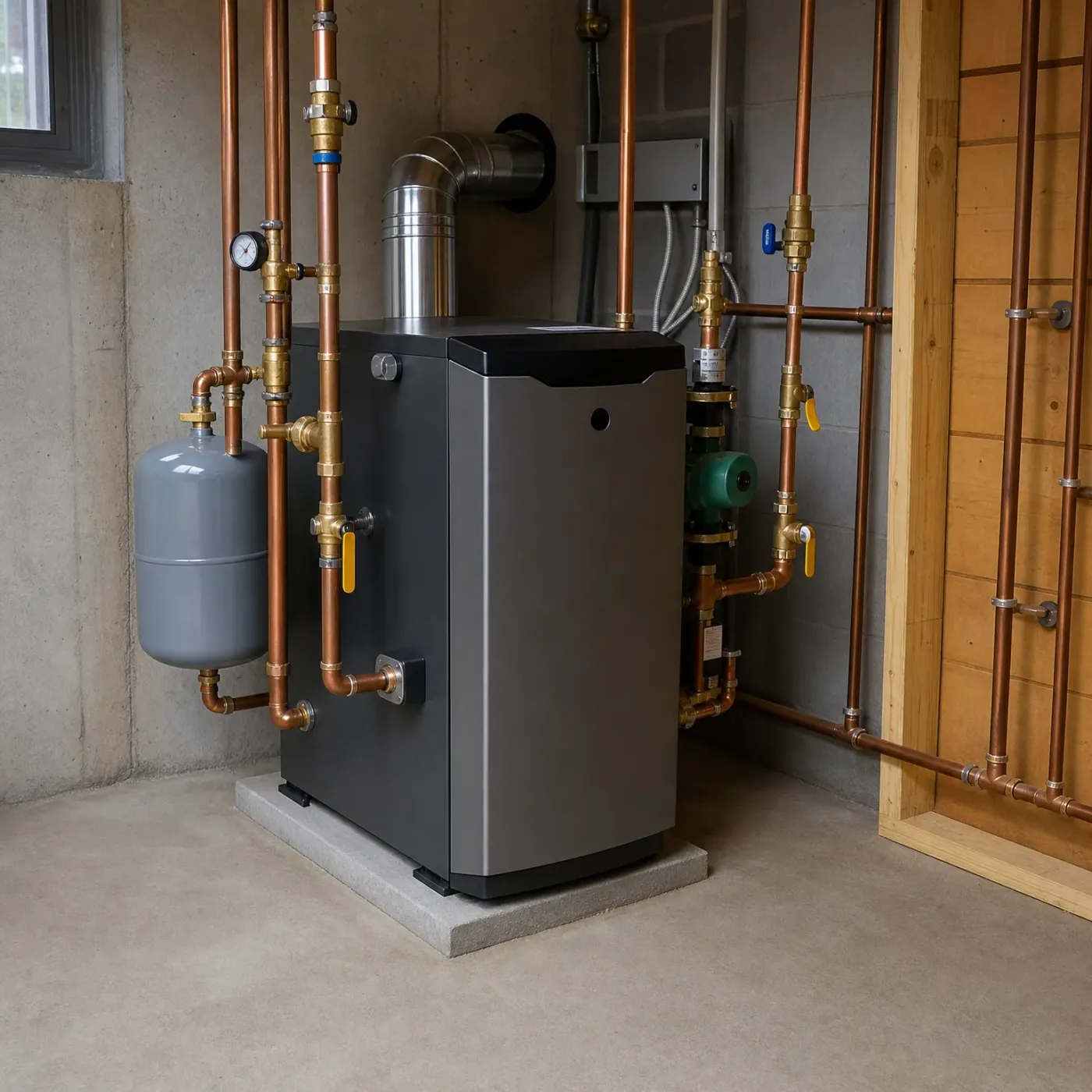
Pipes, valves and fittings stay dry. The pressure gauge sits in the normal range and the relief valve isn't discharging. This is what a boiler looks like when nothing is pushing water out of it.
Say what's going on with your boiler, and a pro who works on them reaches out.
Match me with a proA leaking boiler usually comes down to one of a few things. Pressure built up too high and the relief valve let water out to protect the system. A seal or gasket wore out somewhere in the piping. Or the tank itself, or a fitting, has corroded through, which happens more as a boiler ages. Where the water is coming from tells you a lot. Water near the pressure relief valve points to pressure. Water lower down, near the tank, points to corrosion. A puddle at a pipe joint points to a worn seal. None of these fix themselves, and a boiler that keeps leaking can lose pressure faster than it should, which affects how well it heats your home through a New York winter. It's not something to watch and wait on. A licensed plumber or heating technician can trace the leak to its source and tell you whether it's a simple part or something more.
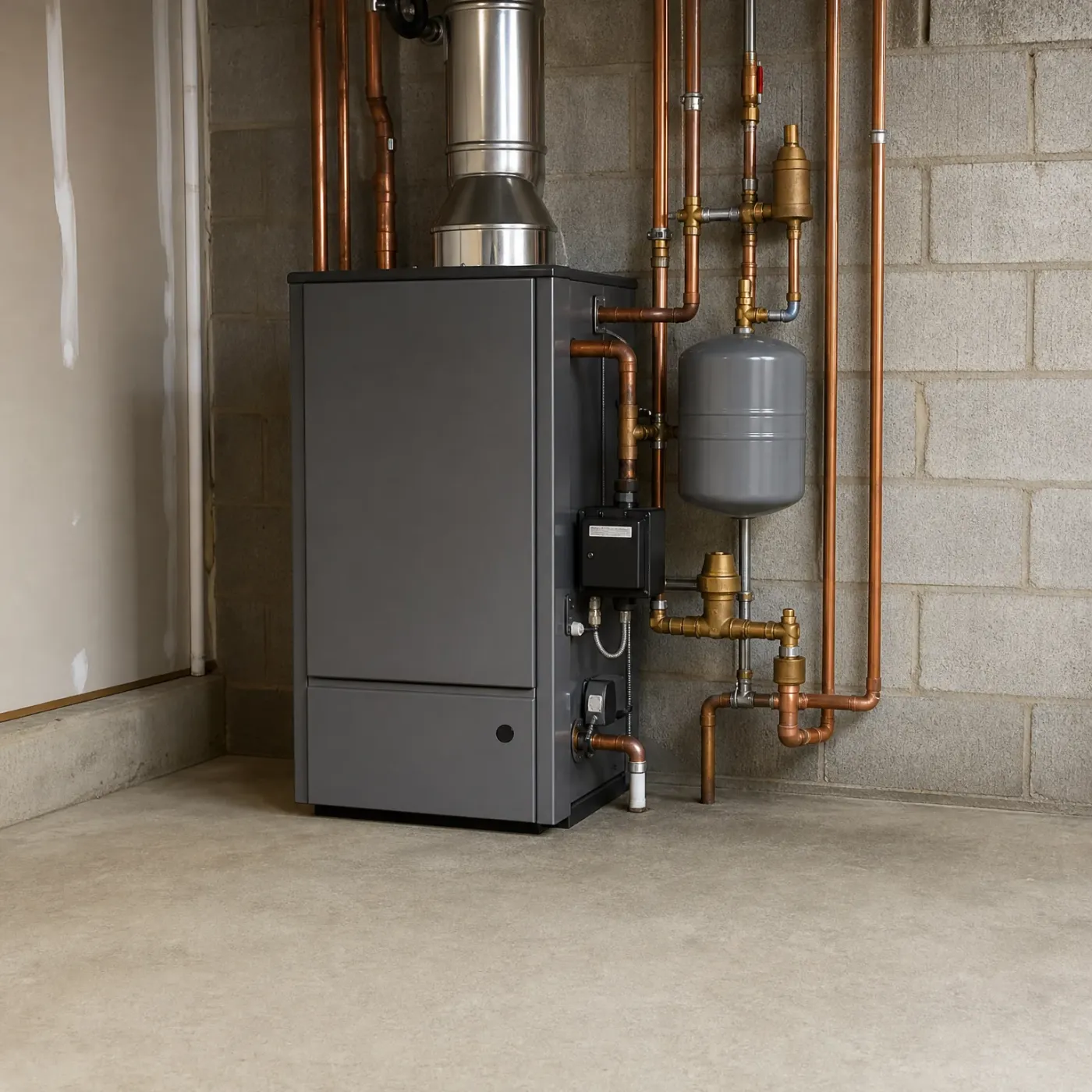
Pipes, valves and fittings stay dry. The pressure gauge sits in the normal range and the relief valve isn't discharging. This is what a boiler looks like when nothing is pushing water out of it.
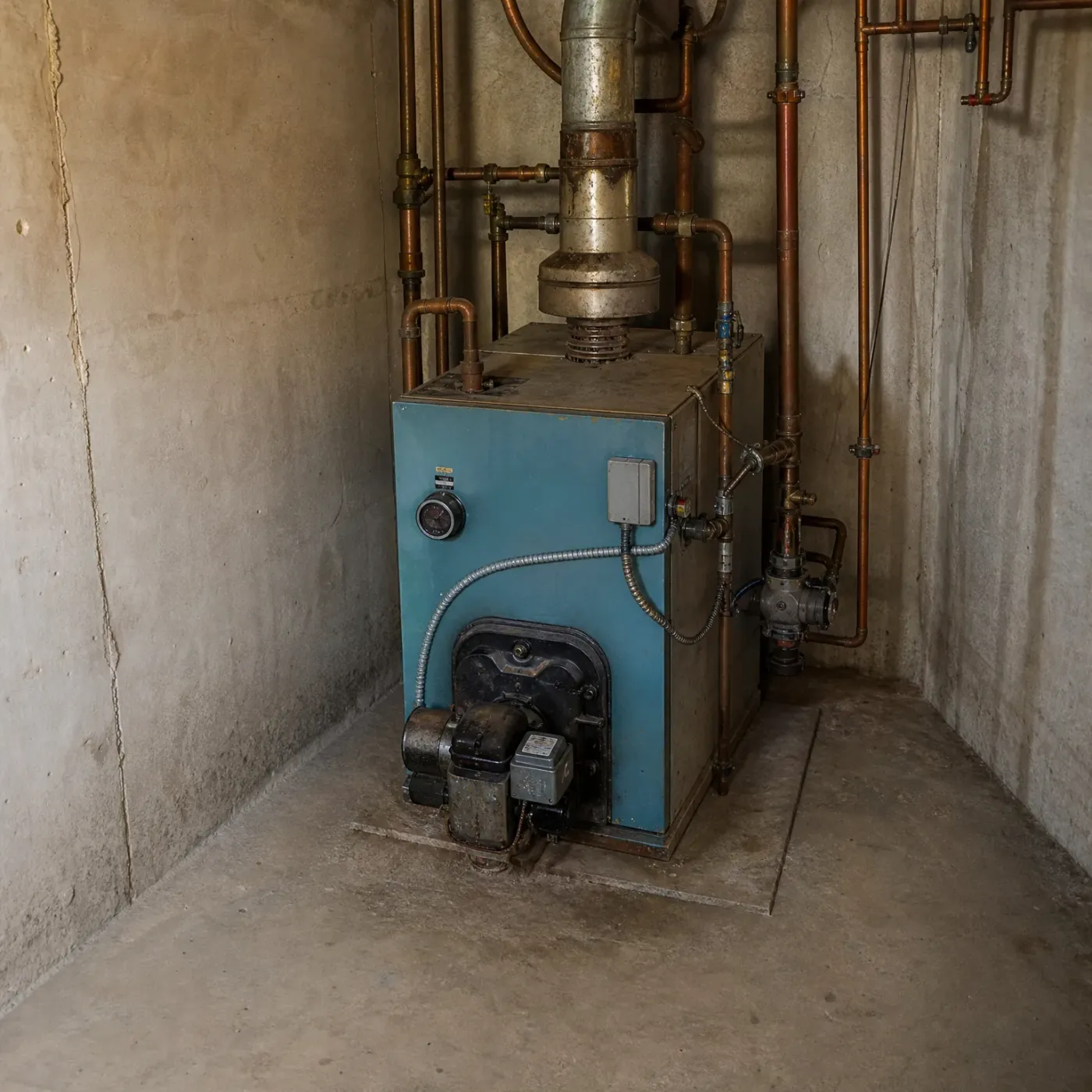
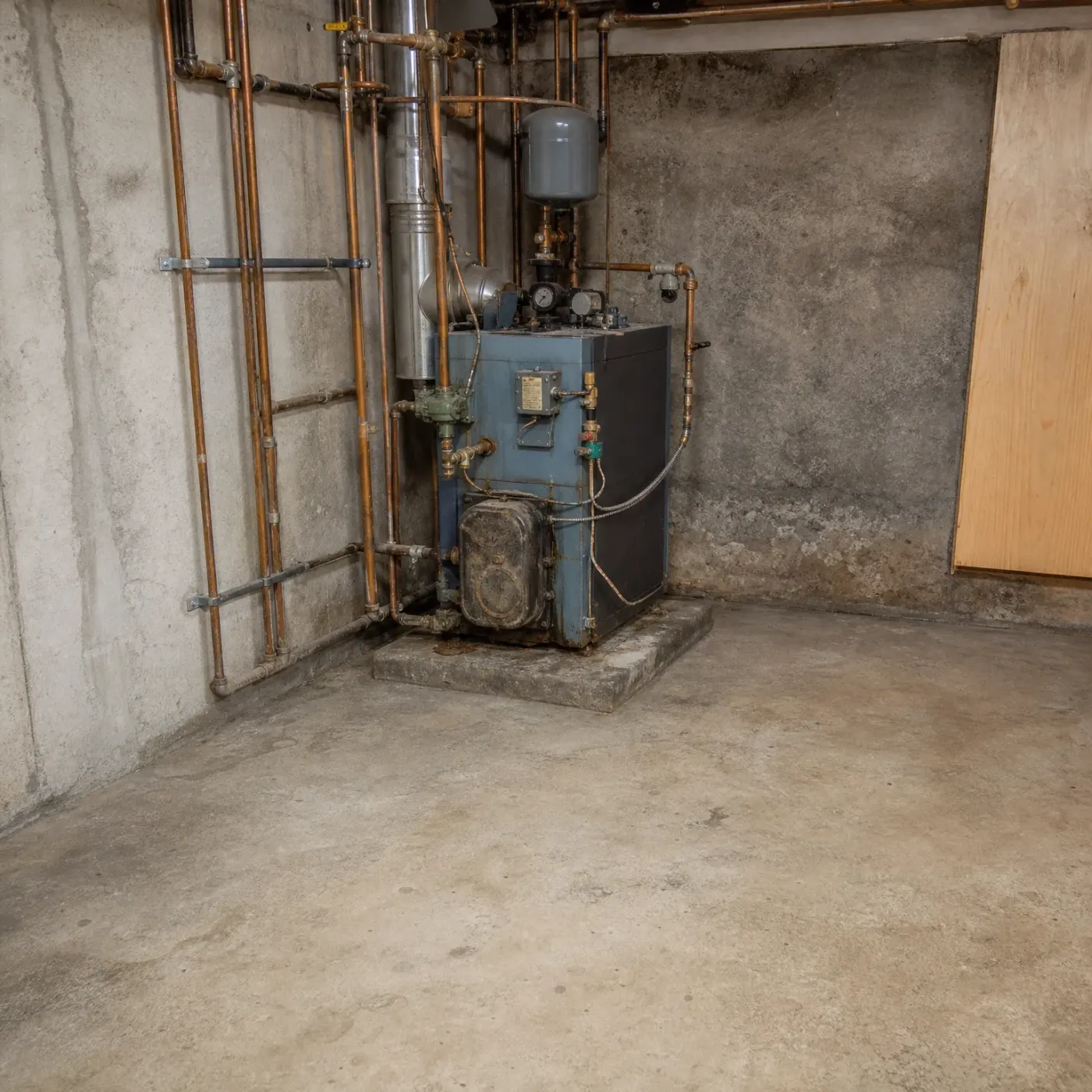
A puddle under the unit or rust forming where a pipe meets the tank means something has already given way. On an older boiler like this one, that's often a fitting that's corroded through or a seal that's failed with age.
Go look at the floor around the unit. A damp patch, a small puddle, or rust colored streaks running down the tank all mean water is getting out somewhere it shouldn't. You might hear a hiss or drip near the relief valve, or notice the area smells musty even after you've wiped it dry. Check the basement or utility closet floor too, since water tracks away from the base before you spot it at the source. Left alone, that water sits against the floor and the boiler's own metal, and over time it can rot out the subfloor underneath or rust through parts of the unit that were fine before. A boiler that's leaking isn't fixing itself while you wait.
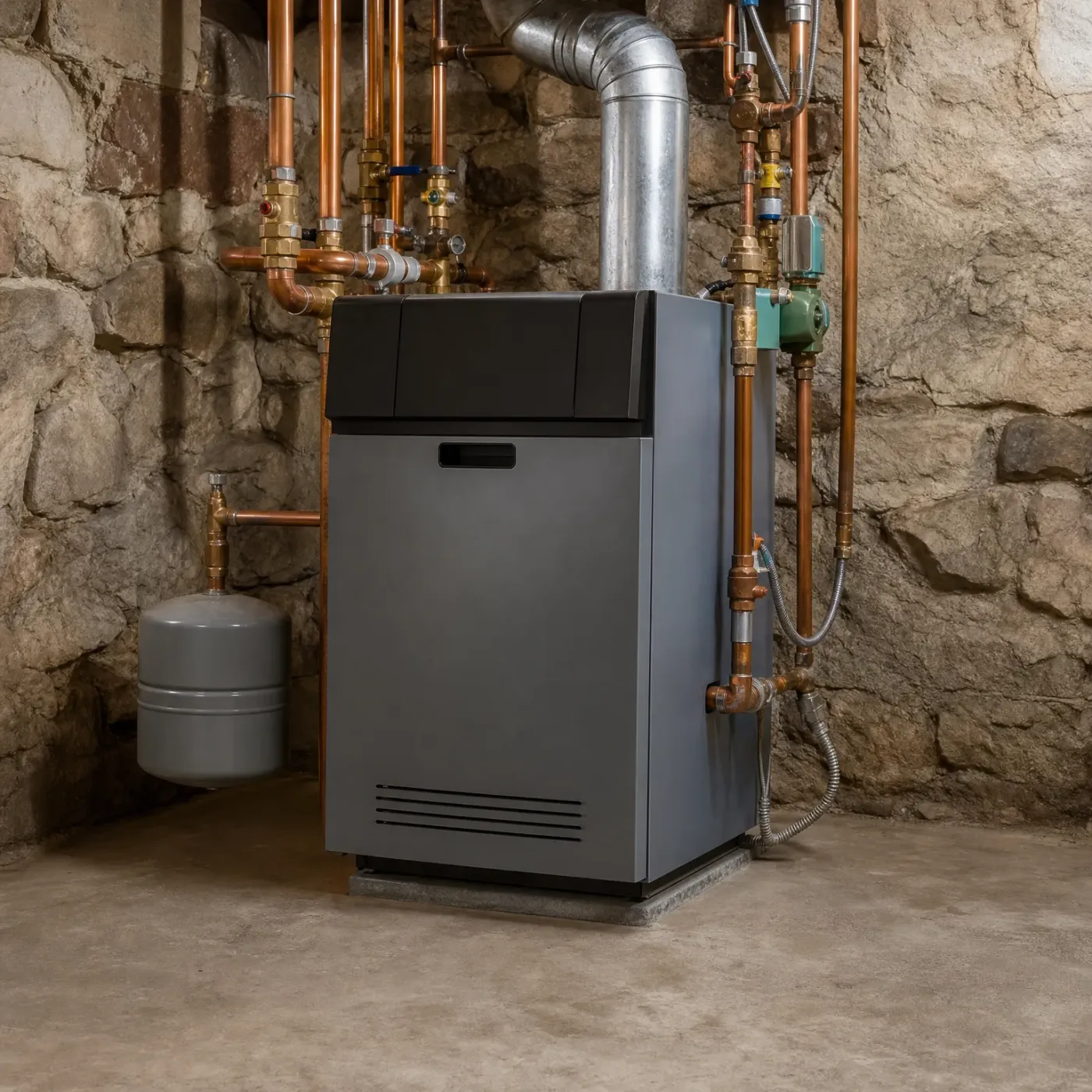
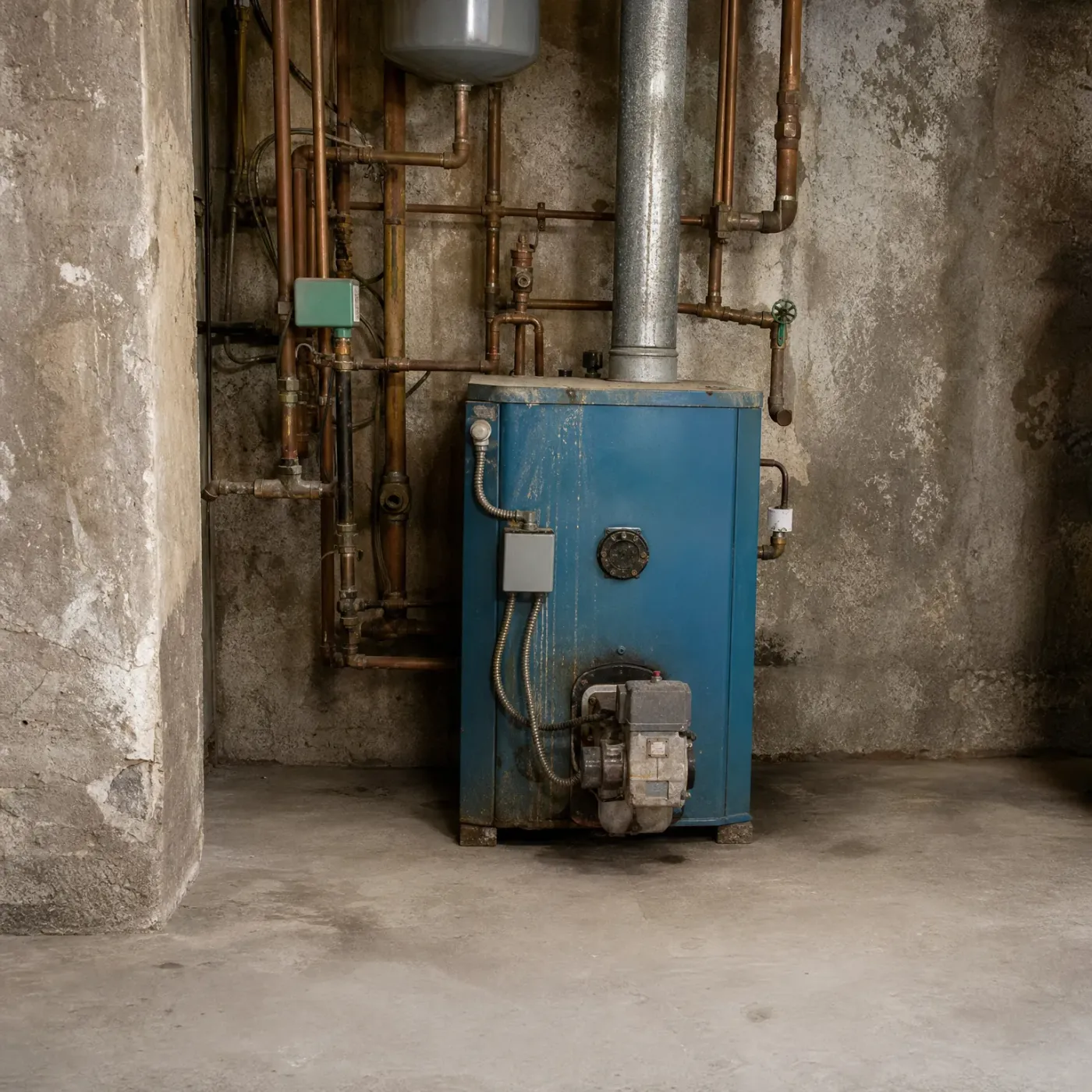
Most leaks trace back to a handful of spots once you know where to look. The relief valve is built to open around 30 psi so the system doesn't over pressurize, but once it's released water, the mineral residue it leaves behind can keep it from seating fully again, and it starts weeping on its own. The circulator pump has a shaft seal that wears over years of running, and when it goes, water shows up at the pump housing, not the tank. Cast iron and steel both corrode from the inside, so you'll often see rust colored water at a fitting well before the tank itself gives out. An expansion tank that's lost its air charge goes waterlogged, and that lets pressure climb high enough to trip the relief valve with no other cause. Threaded joints loosen slightly from hundreds of heating cycles a season, which is why the old unions are usually the first place to check. And a cracked heat exchanger tends to only leak while the burner's firing, since that's when the metal expands enough to open it up.




A leaking boiler doesn't fix itself quietly. Left alone, that drip can mean the relief valve keeps dumping water to protect the system, or a corroded fitting gets worse until it's a bigger job than it started as. With gas and electric rates what they are in New York, a boiler working harder than it should to compensate for lost water or pressure costs you more every month it runs, and winter here doesn't give you much room to let a heating problem sit. What you need is someone who already knows these systems, the age of the fittings, the way these relief valves behave once mineral deposits build up, and can look at yours and tell you what's actually happening. Submit your information and you'll be connected with a licensed local contractor who works on boilers like this through every New York winter. Just one contractor, matched to your situation, reaching out to you directly, so you're not stuck fielding calls while water keeps finding its way out from under your boiler.
A tank that's rusted through on the inside doesn't announce itself until water shows up on the floor. By the time you see a leak from corrosion, the metal has been thinning for a while.
That's why a corroded tank gets replaced, not patched. A relief valve or a pump seal can be swapped out. A hole in the tank wall can't be sealed back up the same way.
A small drip or a damp fitting gets fixed before it spreads. The boiler stays in service through the New York winter without a bigger repair bill waiting underneath it.
Water keeps finding its way out while the tank or fittings behind it corrode further. What started as a drip can end with the boiler needing to be replaced instead of repaired.


Winter nights across New York average 24°F, according to the National Weather Service. That kind of cold keeps a boiler running long stretches at a time to hold a house at temperature, and the metal inside the tank and at every pipe joint keeps expanding and contracting as it cycles. A seal or gasket that's already worn gives out sooner under that kind of repeated stress, and a fitting with early corrosion is more likely to let go on one of those cold nights than in milder weather. If you're going to spot a puddle or damp spot near the unit, a hard cold snap is often when it shows up.
NOAA nClimDiv 1991-2020 county normals weighted by homes
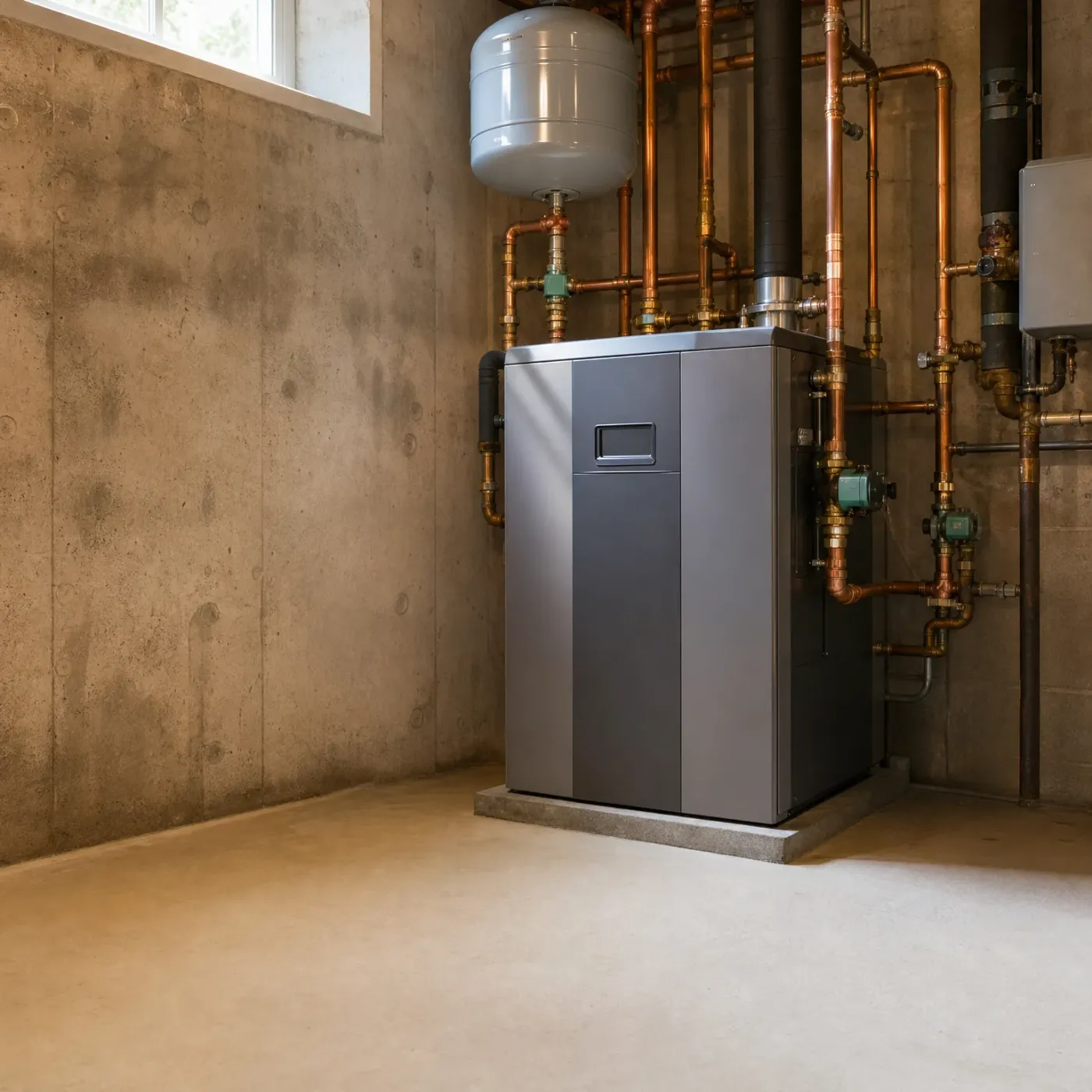
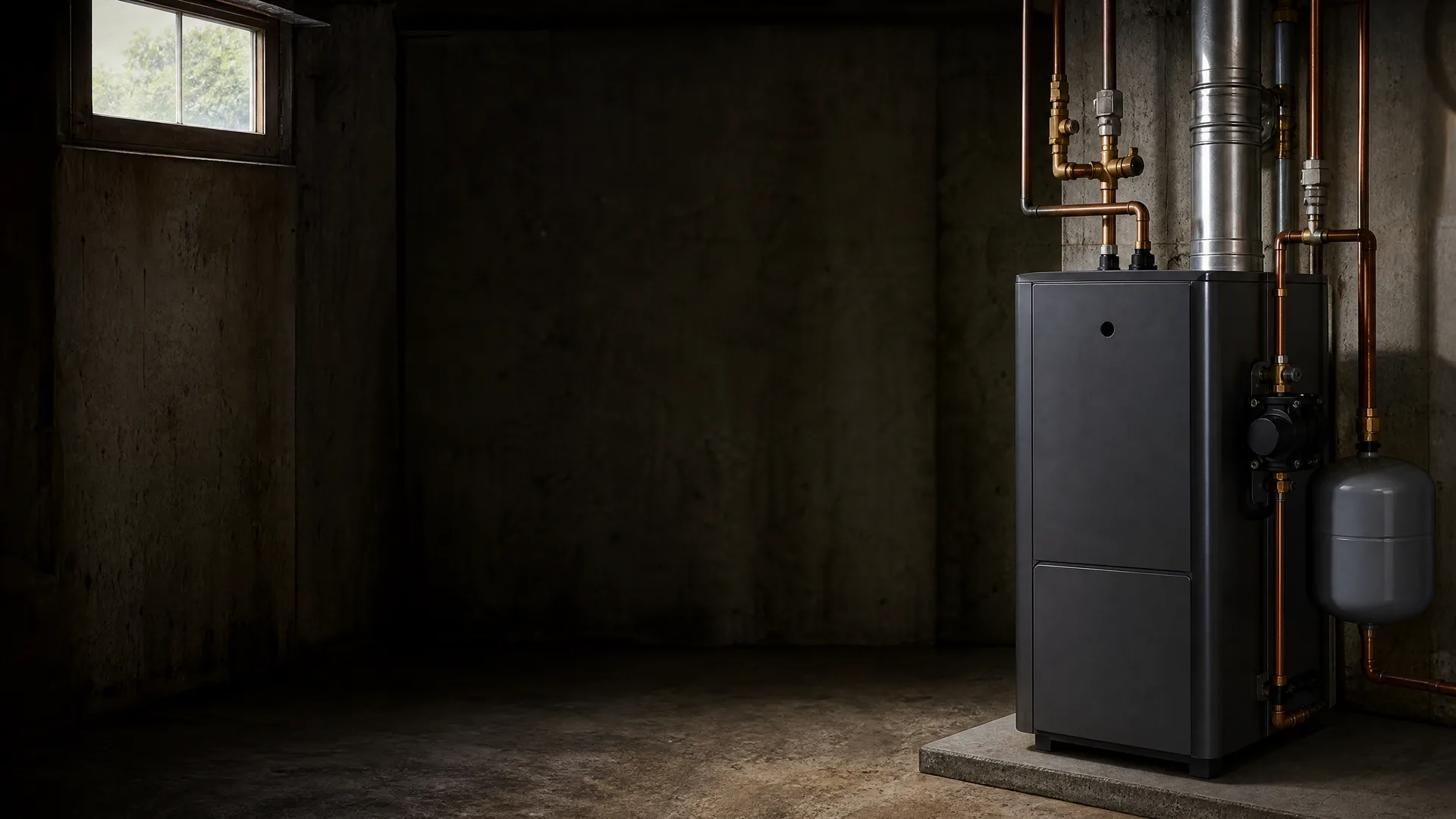
Every pump, valve and fitting behind this boiler is dry to the touch. The expansion tank holds its charge, the gauge sits in the normal range, and nothing is seeping down the wall or pooling on the pad underneath.
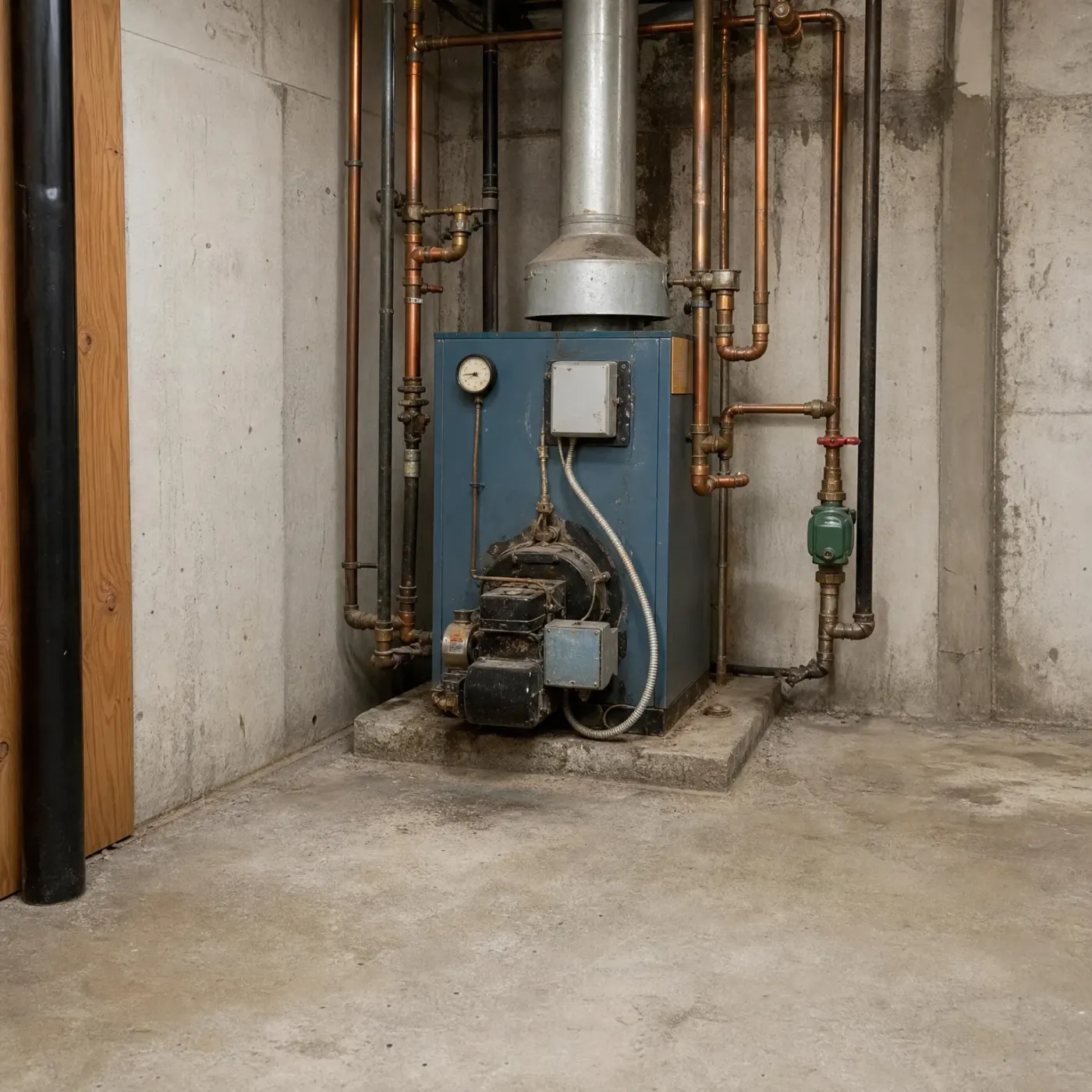
This boiler's pressure gauge, burner and the fittings around the flue are where an old unit like this starts to go. Watch the base and the pipe joints near the circulator pump. That's usually where the first drip shows up.
At 24°F overnight, your boiler is firing in long stretches to keep up, not short bursts. That steady cycling keeps the metal at every joint and fitting expanding and contracting, and a seal or connection that's already worn is more likely to let go during a stretch like that.
NOAA nClimDiv 1991-2020 county normals weighted by homes

Whatever is behind the water under your boiler, it has a cause that a licensed plumber can find and fix. A worn seal gets replaced. A corroded fitting gets replaced. A relief valve that won't stop discharging gets looked at for the pressure problem causing it. None of that requires guessing, and none of it requires replacing a boiler that's otherwise sound.
What helps is having someone look at your specific setup who knows what tends to go first on these systems after a New York winter. Once you put in a request, you're matched with one licensed local plumber suited to the job, not a list of companies competing for your callback. They'll reach out directly, look at what your boiler is actually doing, and go from there.

Only one pro gets your request, so you hear from one company.