 Hand it over
What your boiler pressure should be in New York
Send the form and the boiler tune-up stops being something to remember.
A cold boiler should read somewhere between 12 and 15 psi on the gauge. Once the heat is running, that number will climb, and that's normal. If the needle sits below 12 when the system is cold, or if it keeps dropping no matter how many times you bring it back up, something in the system needs a look.
In New York, that gauge matters more once the weather turns. Gas heat has to work and keep working through a long winter, and a boiler running low on pressure can't push water through the radiators the way it should. Rooms stay cold even though the burner is firing. Left alone, it can mean a cracked heat exchanger or a leak somewhere in the lines, and either one gets worse with time, not better.
Checking the pressure yourself only tells you so much. A contractor who services boilers all winter in this area knows which brands tend to lose pressure slowly through a bad valve, and which ones point to something failing inside. That's not something you guess at from a number on a gauge.
Send the form on this page and the search is handled. One licensed boiler contractor local to your area gets matched to the job, not a handful of companies competing for your attention. You won't be fielding calls all afternoon trying to figure out who's legitimate. That part is done once you hit submit. What's left is someone who knows this equipment coming to look at what your gauge is actually telling you, and setting it right before the cold weather makes the problem bigger.
A cold boiler should read somewhere between 12 and 15 psi. That's the resting pressure, the number you check before the burner has fired. Once the heat kicks on and the water warms up, the pressure rises a few pounds, and that's expected since hot water takes up more room than cold water. The problem is when the gauge sits outside that 12 to 15 range to begin with. Below 12 and there isn't enough water in the system to push heat through every radiator or baseboard in the house, so you get cold spots upstairs or rooms that never quite warm up. Above 15, you're closer to the point where the relief valve opens and dumps water, which is the system protecting itself from a pressure it shouldn't be holding. Either way, the gauge is telling you something before the house does.
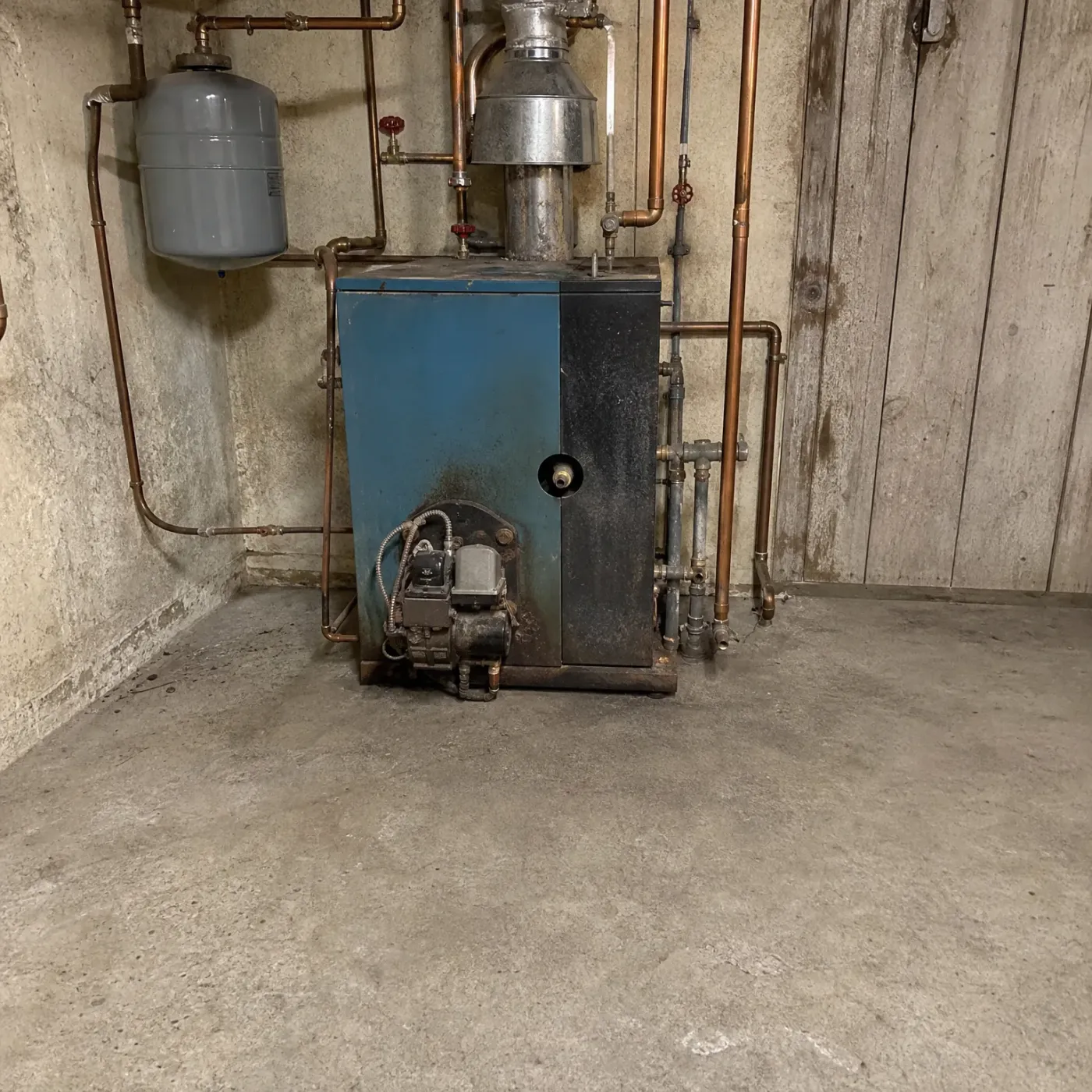
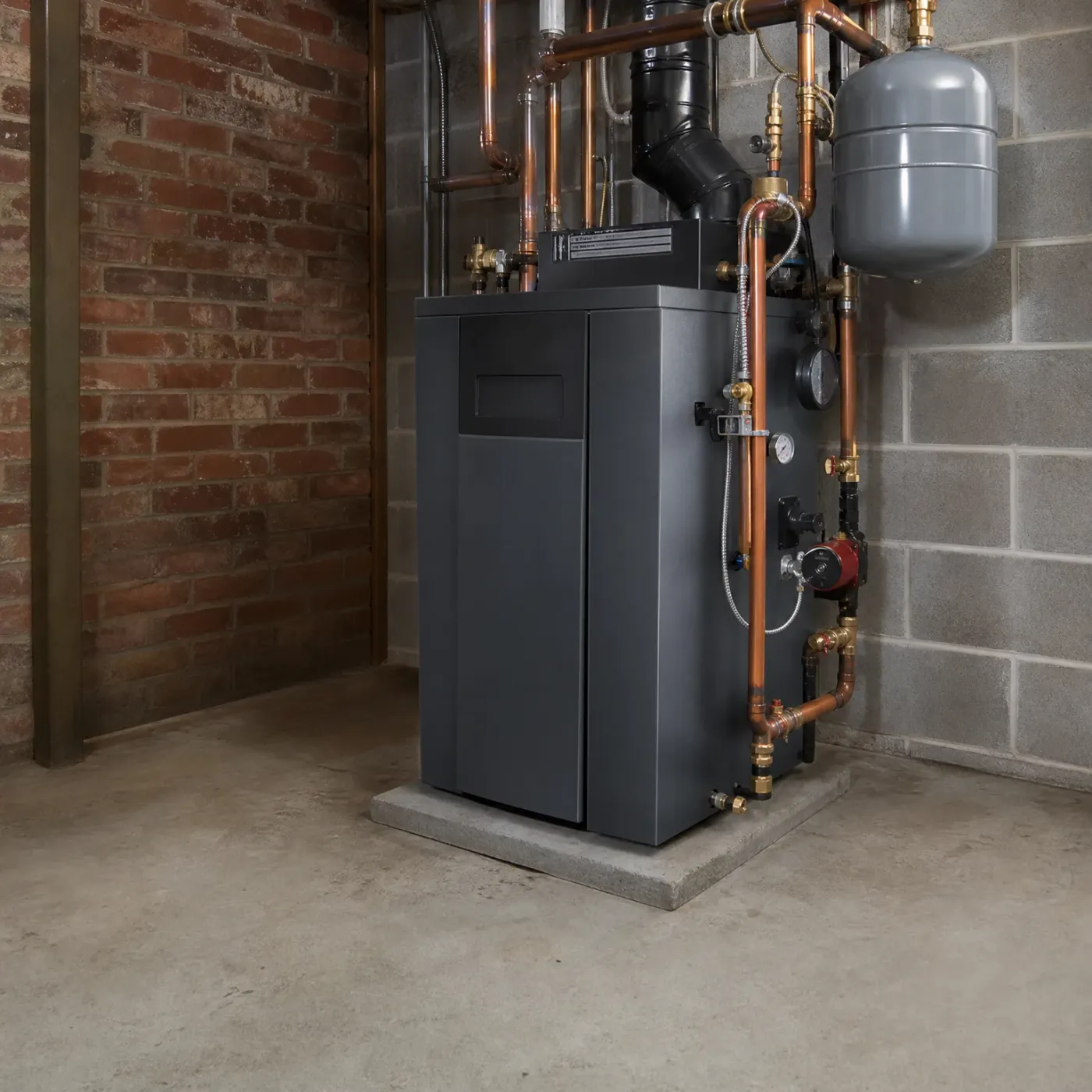
The gauge on your boiler isn't just sitting there. It's reacting to a small system working underneath it. Heat the water and it expands, so pressure climbs once the burner runs. The expansion tank is built to take up that extra volume, and when it can't, because it's waterlogged or has lost its air charge, the gauge swings higher than it should once the heat kicks on. On the other end, a pressure reducing valve on the feed line is what brings the gauge back up after a drop, feeding the loop automatically so you don't have to. And if pressure ever climbs past 30 psi, the pressure relief valve opens on its own and vents water, which is the boiler protecting itself from a bad situation. None of this means your gauge is broken when it moves. It means the system is doing what it's supposed to. What matters is the pattern. A fast drop points one direction, a slow one points another, and a tech who knows the equipment can usually tell which by looking at where the needle sits over time.
What Moves Your Pressure Gauge
- The pressure relief valve opens automatically if pressure climbs past 30 psi, venting water to protect the boiler from damage.
- A pressure reducing valve on the feed line refills the loop automatically on most systems, so the gauge creeps back up on its own after a drop.
- Water expands as it heats, which is why the pressure reading climbs once the burner fires and the loop warms up.
- The expansion tank absorbs that extra volume, and a waterlogged tank is a common reason pressure swings higher than it should.
- A gauge that reads fine cold but spikes hard once the heat runs often points to a tank that has lost its air charge.
- Pressure that drops over days instead of hours usually means a slow leak somewhere in the loop, not a bad gauge.


Boiler Pressure Too Low or Too High
Low pressure
- A gauge reading under 12 psi cold means the loop has lost water somewhere, even if nothing looks wrong.
- Low pressure can let air into the lines, and a boiler running on air knocks and gurgles instead of heating quietly.
- If the pressure reducing valve on the feed line is working, it should bring the number back up on its own within a day.
- A boiler that keeps dropping below 12 psi after refilling usually has a slow leak at a fitting, the expansion tank, or a radiator valve.
- Some older systems in New York were never fitted with an automatic feed, so the homeowner has to refill the loop by hand when it runs low.
High pressure
- A cold reading above 15 psi means the system is holding more water than it needs, and that pressure only climbs once the burner fires.
- Past 30 psi the relief valve opens and vents water to protect the boiler, which is why a puddle near the valve is the first sign something is off.
- A feed valve stuck open keeps pushing water into the loop instead of shutting off, which is a common reason pressure creeps up on its own.
- A waterlogged expansion tank can't absorb the rise in pressure when the water heats, so the gauge climbs higher than it should all winter.
- Repeated trips of the relief valve waste water and, since power and water both run expensive in New York, add up over a heating season spent resetting the same problem.
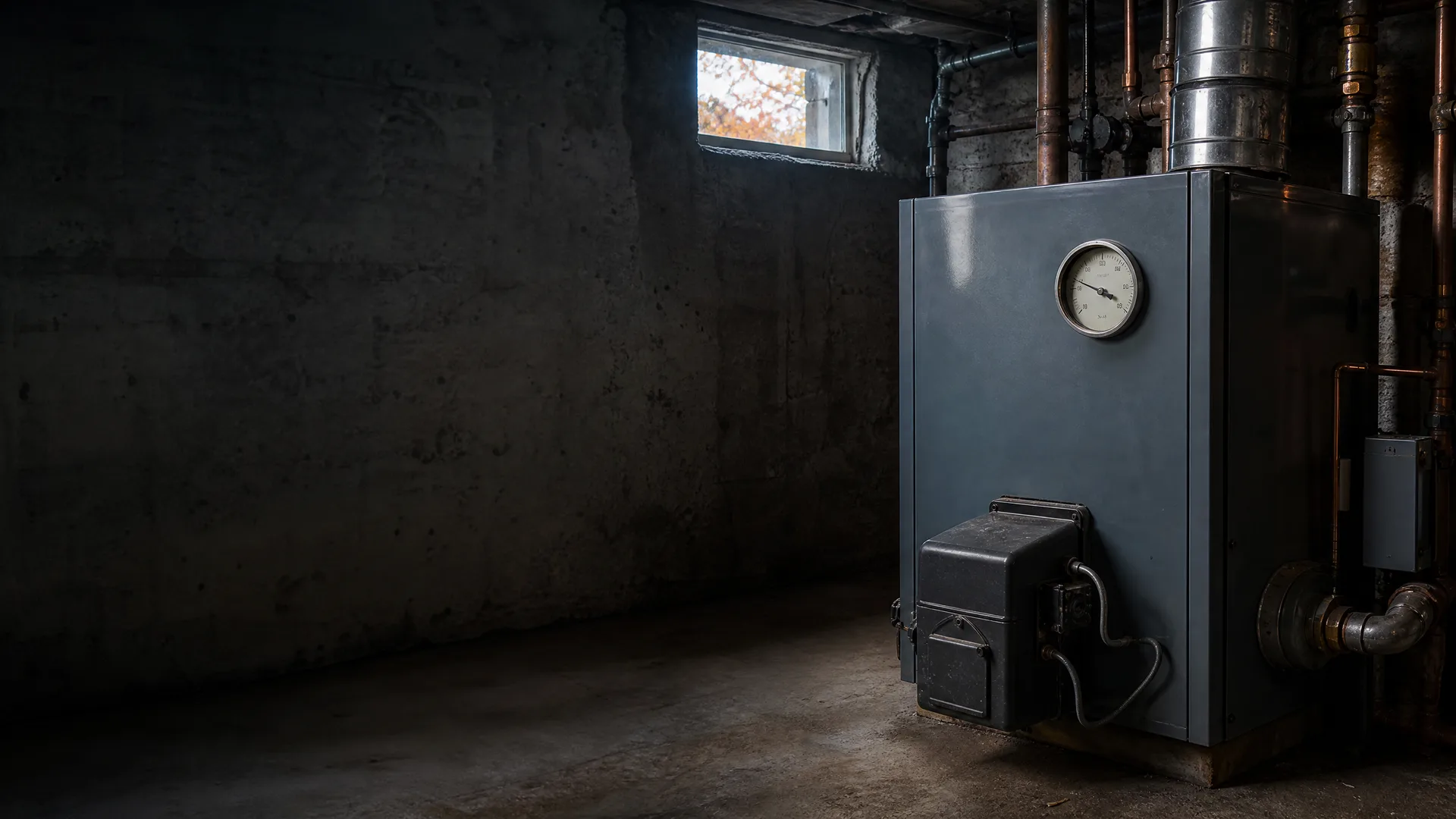
You go down to check the thermostat complaint your daughter made and the basement is cold the way it gets in October before the heat really settles in for the season. The boiler's quiet. You crouch down and look at the gauge out of habit more than worry, and the needle's sitting under 12, resting near 10. It was fine last month. Nothing's leaking that you can see, no puddle under the valve, no damp on the floor. You tap the glass once. The needle doesn't move. Upstairs the radiators haven't even kicked on yet today, and you're standing there doing the math on how a system loses water without telling anyone.
Stop chasing a boiler pro

A licensed local pro takes the request for your boiler tune-up.
No charge to send it. You decide if you hire them.
Winter nights average 24°F statewide, per NOAA. That's cold enough for your boiler to run long stretches without shutting off, and a long run is exactly when a slow pressure leak shows up. The gauge that held steady at 13 psi in October can drift down to 10 by January, a little lost each week through a fitting or a bleed valve that doesn't seat quite right. You'll notice it as radiators that used to heat evenly now run lukewarm at the far end of the house, or a boiler that short cycles instead of holding a steady burn on the coldest nights.
NOAA nClimDiv 1991-2020 county normals weighted by homes
Why does your boiler keep losing pressure
You top it off, it holds for a week or two, then the gauge is low again. That pattern points to a leak somewhere in the loop, maybe a small weep at a fitting or a valve that's not seating right, even if you can't find a puddle anywhere. You might hear gurgling from the pipes or knocking from the radiators, that's air getting into the system because the water level dropped enough to let it in. Rooms that used to heat evenly now have one that stays cold while the rest of the house is fine. Left alone, a boiler that keeps running low on pressure will cycle more to make up for it, and that shows up on your gas bill before it shows up as a bigger repair.

Water drains out through a weep or a loose fitting somewhere in the loop.
Pressure on the gauge drops below the normal 12 to 15 psi range.
Air works into the lines in place of the lost water.
The boiler knocks and gurgles as it fires against trapped air.
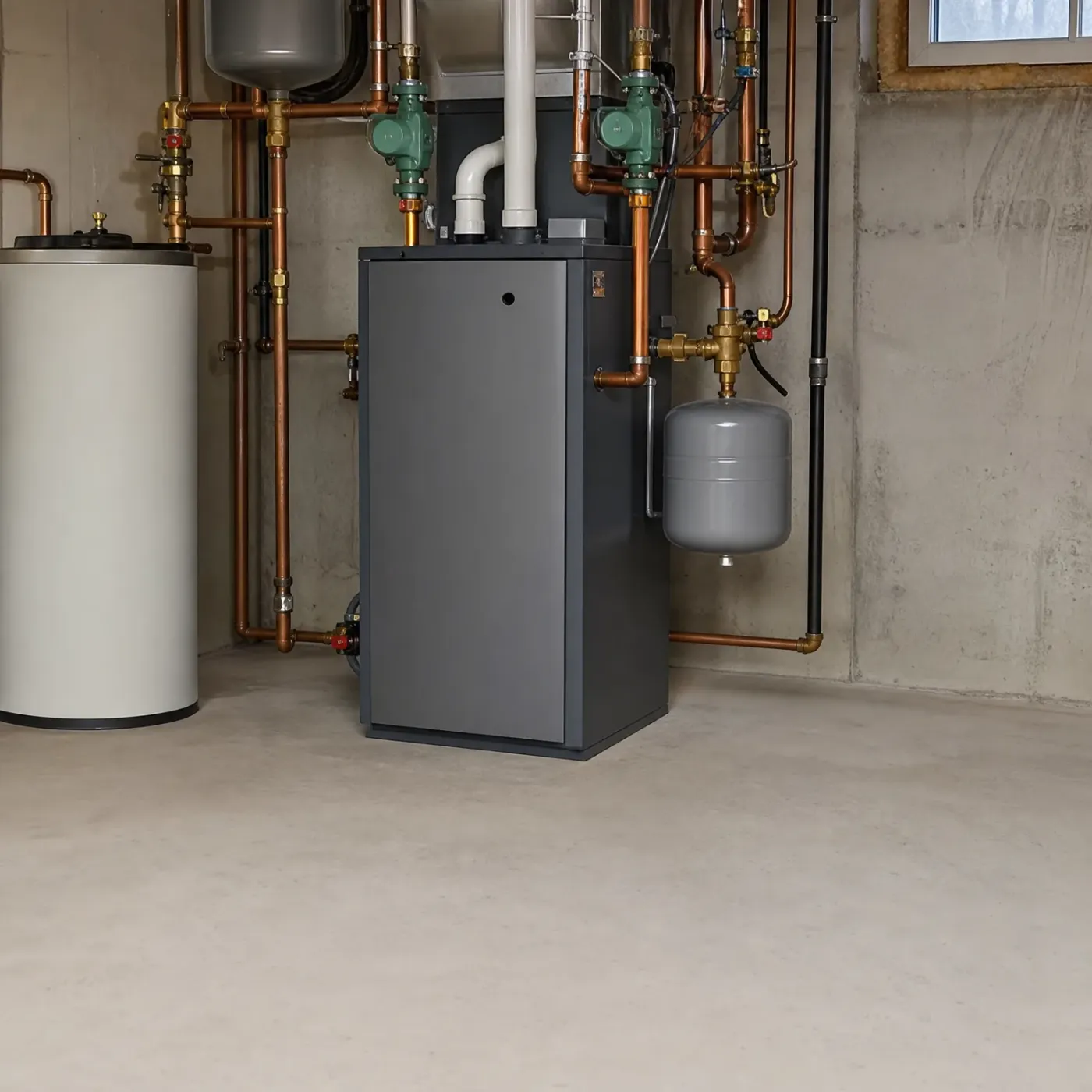
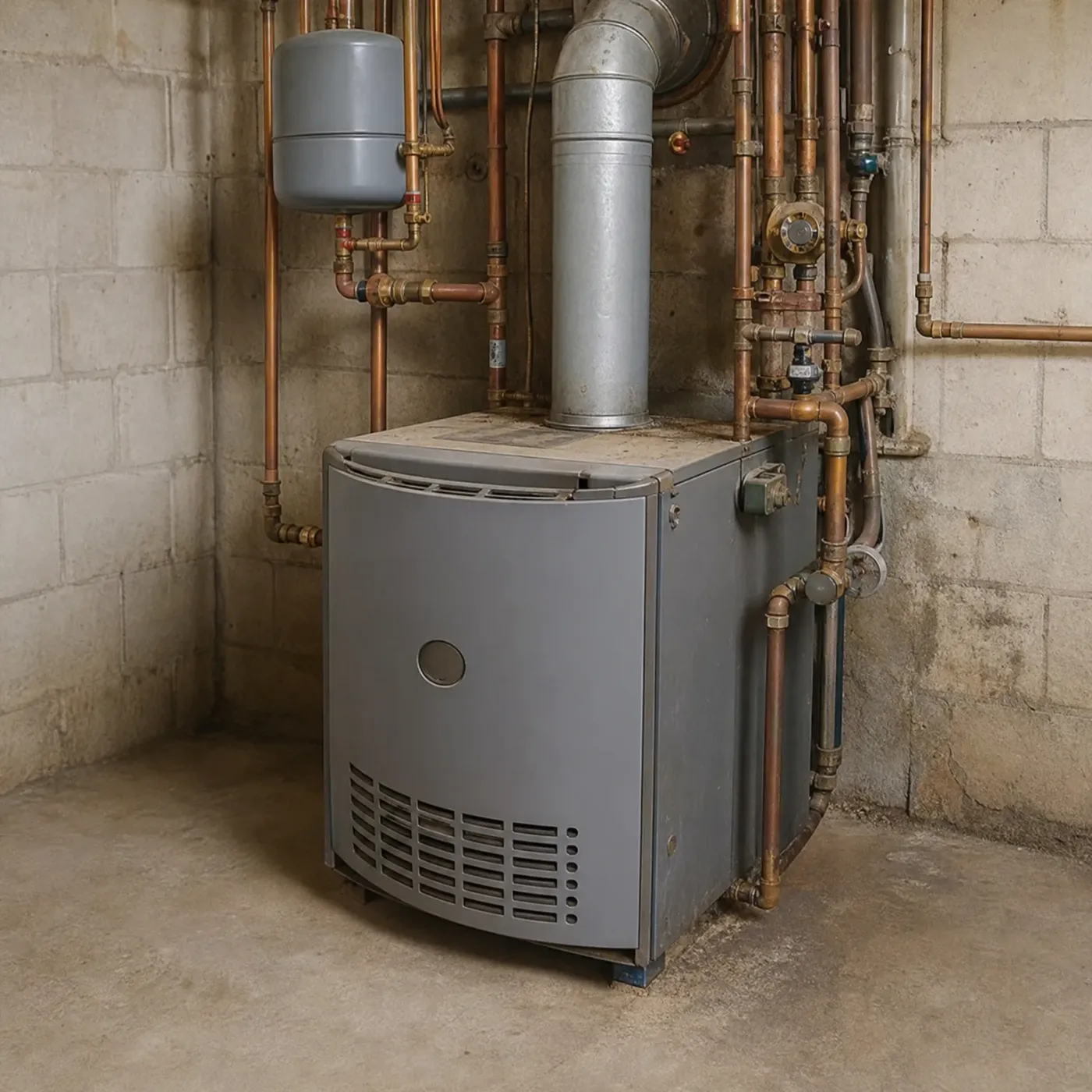
Winter nights average 24°F statewide
24°F is the average, so plenty of nights drop lower, and your boiler answers by running longer stretches without a break. Those long runs are when a slow leak gets found, since the gauge has no chance to coast before the next cycle starts.
NOAA nClimDiv 1991-2020 county normals weighted by homes
What your boiler pressure tells you
- A cold boiler should hold between 12 and 15 psi, and that number should climb a few pounds once the burner runs.
- A gauge reading under 12 psi cold usually means the loop has lost water somewhere along the line.
- The pressure relief valve opens on its own past 30 psi to protect the boiler, and that's a sign something upstream needs attention.
- A pattern of topping off and losing pressure again within a week or two points to a leak, not a one-time fluke.
- Long winter runs give a slow leak the best chance to show up on the gauge.
- Checking the gauge regularly catches a small leak before it turns into air in the lines and a boiler that knocks.
The number on the gauge is the simplest check you have. Cold, it should sit between 12 and 15 psi. Once the burner fires and the water heats up, that number climbs a few pounds, and that rise is just how the system behaves when it's working right. The trouble starts when the resting number itself is wrong. Under 12 psi cold means the loop is short on water, whether that's from a weep at a fitting, a valve that isn't seating, or something else along the line you can't see from the basement. One low reading on its own might be nothing. But if you've topped it off and you're back to checking it again in a week or two, that's not bad luck. That's a leak, and it's going to keep draining pressure until someone finds where the water's going. Left alone, the lost water gets replaced by air, and air in the lines is what turns a quiet boiler into one that knocks and gurgles through a cold January night. On the other end, a relief valve opening past 30 psi is the boiler protecting itself from pressure that's built up too high upstream. Either direction off that 12 to 15 psi range is the system telling you something, not nothing. Checking the gauge on a cold morning takes a few seconds and tells you which one you're dealing with before it costs you a night without heat.




Boiler Maintenance
Send one request and you're done looking
Your request stays with one local pro.