



Profile view of a bearded man wearing a dark green baseball cap and a dark gray T-shirt against a plain light background.

What size boiler a New York home needs

Step 1 of 3: Equipment

What size boiler do I need for my house in New York?

You want a straight number before someone comes out to quote the job, but boiler sizing doesn't work like buying an appliance off a spec sheet. There's no single square-footage chart that gets it right, and guessing wrong either leaves you cold in January or burns money every month after.

It's sized to your home's heat loss, not its square footage

The right size comes from a heat loss calculation, a room-by-room look at how fast your house loses warmth through its walls, windows and roof on the coldest day of the year. Two houses the same size can need different boilers depending on insulation, window age and how many walls face the wind. A boiler sized too big will short cycle, turning on and off instead of running steady, which wears it out faster and never gets the house evenly warm. One sized too small will run constantly all winter and still leave rooms cold. A contractor measures your house to find the number that matches it, not a general rule.

A smiling man in a dark navy sweater sits on a light sofa in a living room, with a glass bowl of popcorn on a wooden coffee table and bookshelves behind him.
A smiling man in a dark green sweater sits on a tan leather sofa in a dimly lit living room, with a bowl of popcorn in the foreground and a kitchen area blurred behind him.
A smiling middle-aged man in a dark shirt sits on a gray sofa in a living room, with a bowl of popcorn on a side table and shelves, a window and kitchen area behind him.
A smiling bearded man in a dark gray t-shirt sits on a gray couch in a living room, with a large glass bowl of popcorn on a wooden table in the foreground.

Why does one room never heat up right

A boiler that's the wrong size shows itself in the rooms, not on a gauge. One size too small and the far bedroom stays cold on the coldest nights no matter how long the system runs, because it can't keep up once the temperature drops hard. One size too big and you get short cycling, the boiler firing on and off every few minutes instead of running a steady stretch, which wears the burner and the ignition parts faster than they should wear. You might hear it kick on and off more than it used to, or notice the gas bill climbing without the house feeling any warmer. Left alone, a short-cycling boiler tends to need repairs sooner than one sized right.

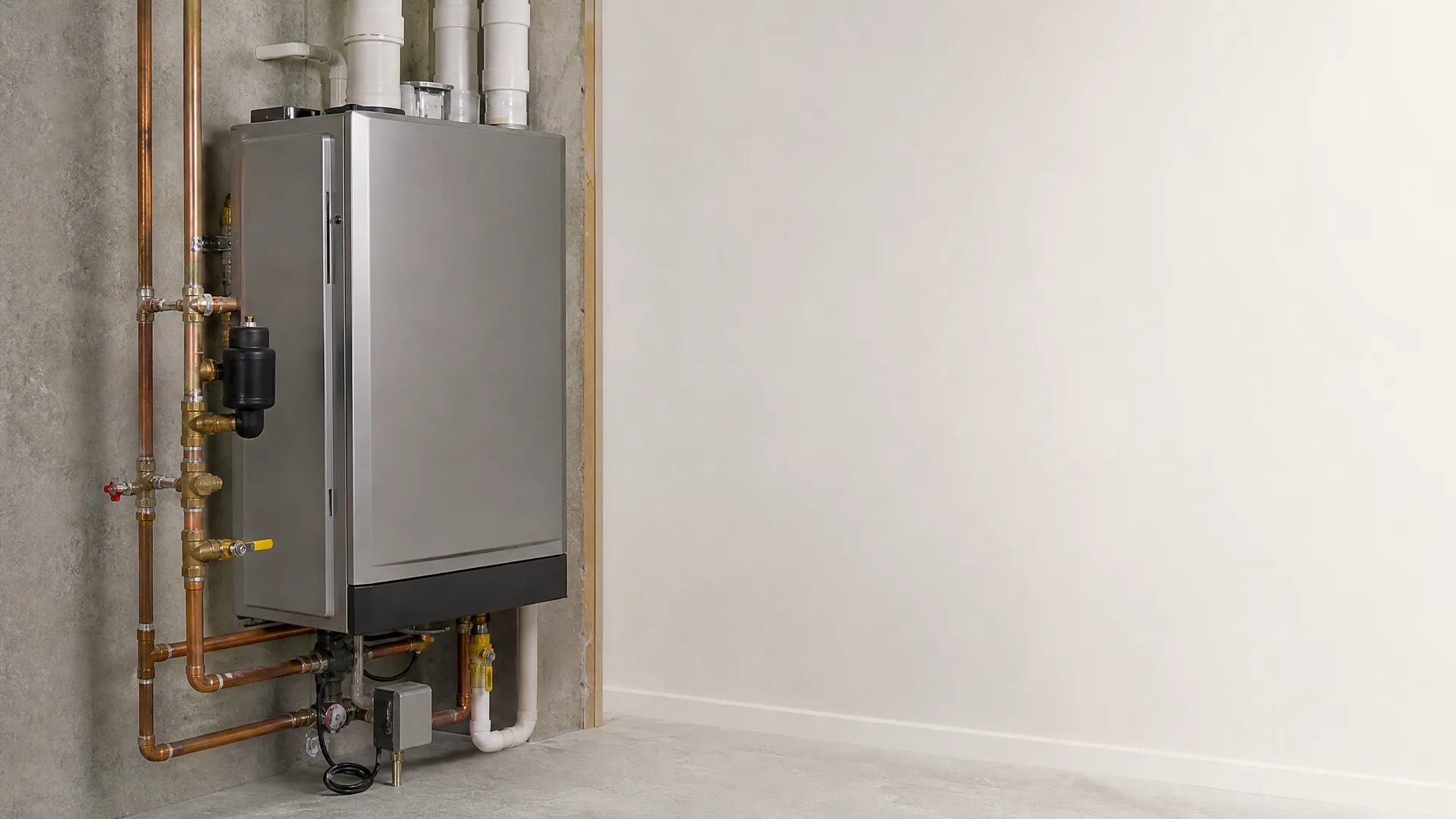
A wall-mounted grey boiler with copper pipework and white flue pipes installed against a concrete wall in an empty room with a plain pale wall to the right.

The number comes from a load calculation

A contractor sizes your boiler with a Manual J calculation, room by room. It accounts for your square footage, how many windows you have and which way they face, your insulation, your ceiling height, and how cold it gets on the worst night of a New York winter. Two houses the same size can need different boilers because one holds heat better than the other. That's why a contractor measures your house instead of asking for its square footage over the phone.

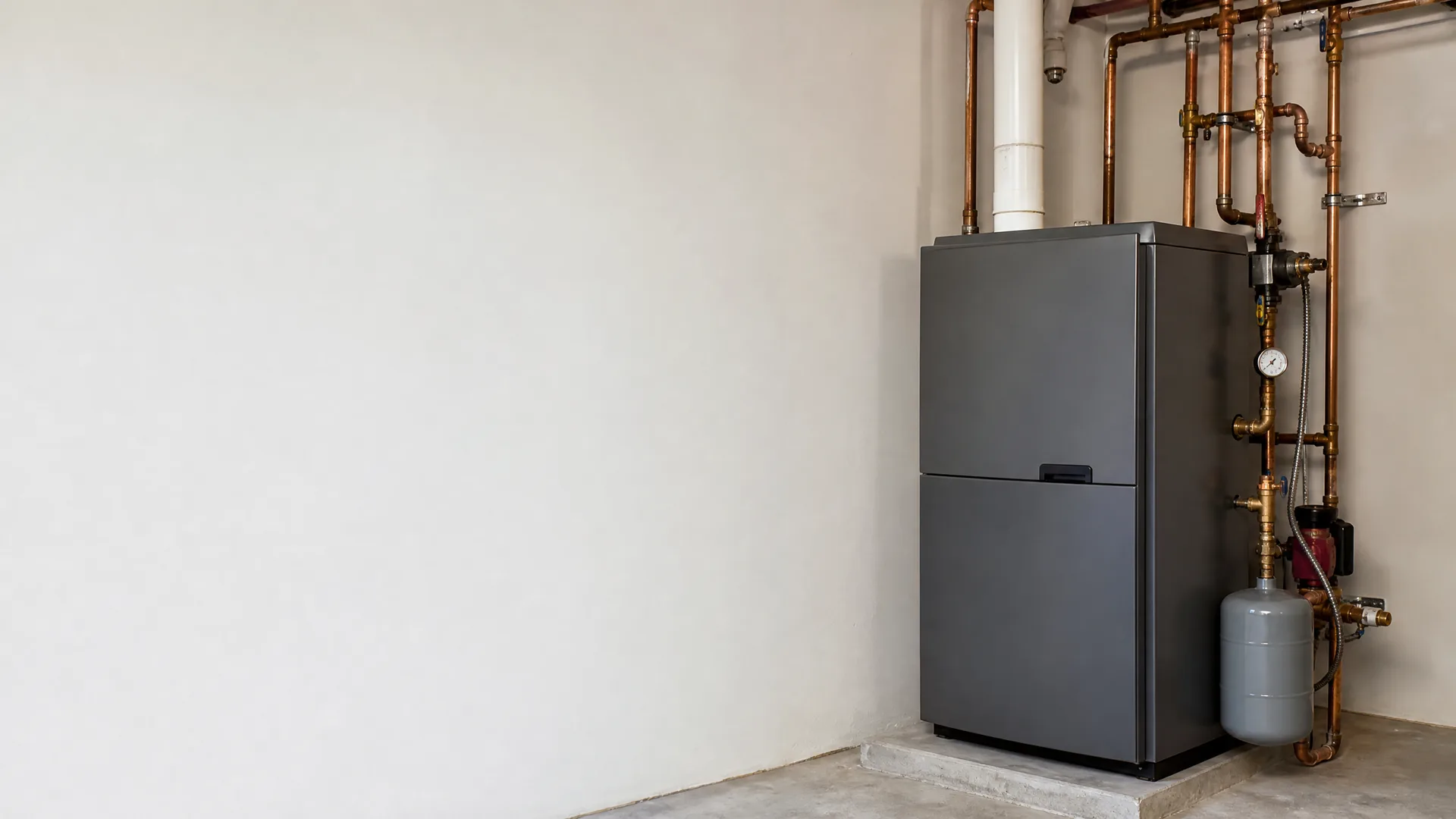
A dark grey boiler unit stands on a concrete pad against a plain light wall, connected to copper pipes, a pressure gauge, a pump and a grey expansion tank.

Oversizing costs you every month

A boiler too big for your house heats the place fast, shuts off, and starts again a few minutes later. That short cycling wears on the ignition system and the circulator pump faster than steady runtime would. It also burns more gas per hour than a properly sized unit running longer stretches, and with what New York charges for gas and electric, that difference shows up on your bill every month the boiler runs, which here is most of the year.

Winter nights average 24°F statewide

24°F is a hard number for a boiler to work against, night after night. A boiler sized right will still run long on nights that cold. One sized too small won't catch up before morning.

NOAA nClimDiv 1991-2020 county normals weighted by homes

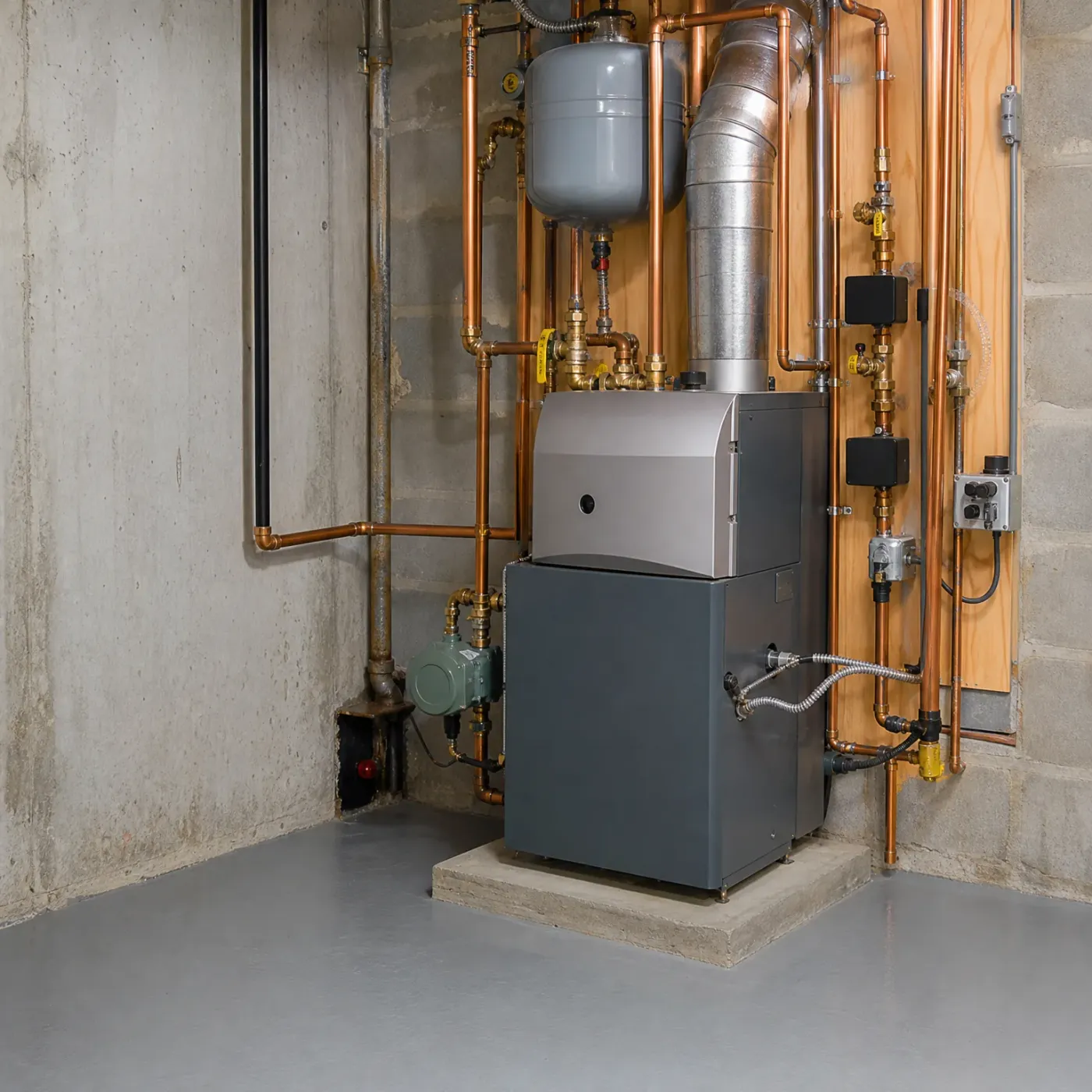
A gray residential boiler on a concrete pad in a basement corner, connected to copper piping, an expansion tank, circulator pumps and insulated flue ducting against concrete and plywood walls.

Sized right

This is what a correctly sized boiler looks like doing its job. The piping runs clean, the pressure holds steady, and the circulator pump doesn't strain to push water through the system. Every room gets what it needs because the output matches the house, not a guess.
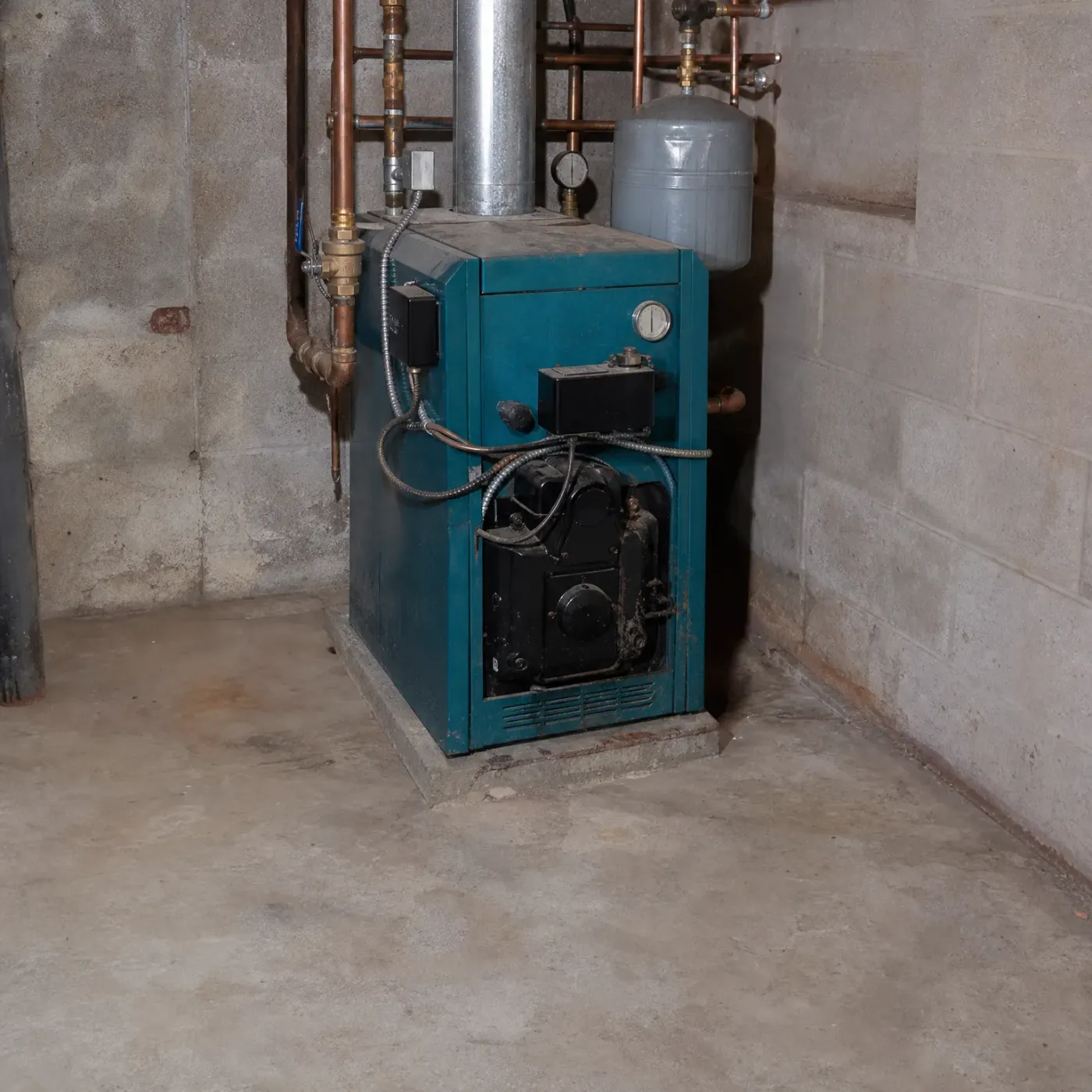
A teal boiler with a pressure gauge and black burner unit sits on a concrete pad in a basement corner, with copper pipes, a flue vent, and a gray expansion tank above against concrete block walls.

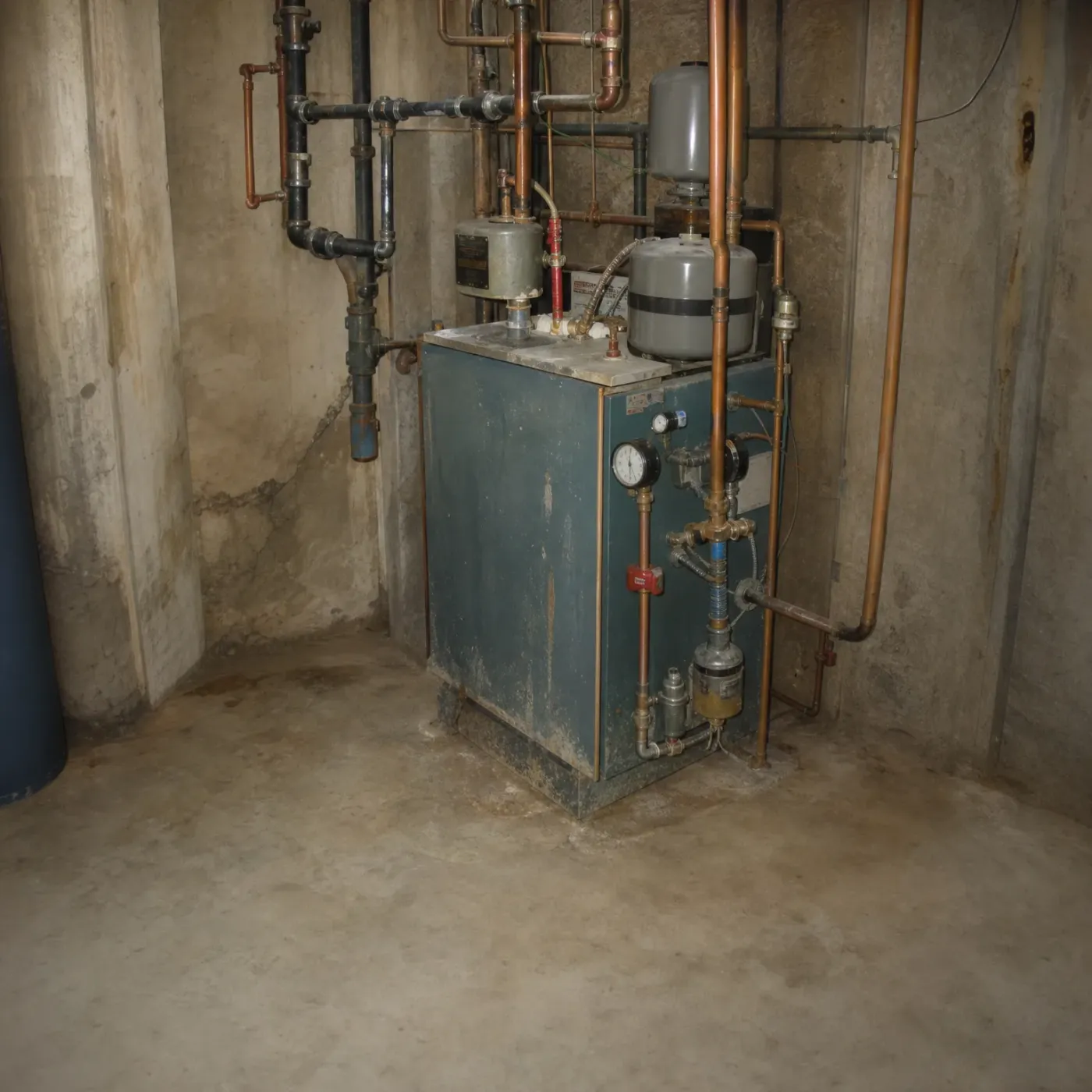
Sized wrong

An old boiler like this one often got replaced with whatever size matched what was already there, not what the house actually needs now. A gauge reading off, piping patched over the years, a unit working harder than it should. Wrong sizing wastes gas and still leaves rooms cold.

A green metal boiler with pressure gauge stands in a concrete basement corner, surrounded by copper and black iron pipes and two tank-shaped vessels.
Before you get your boiler installation
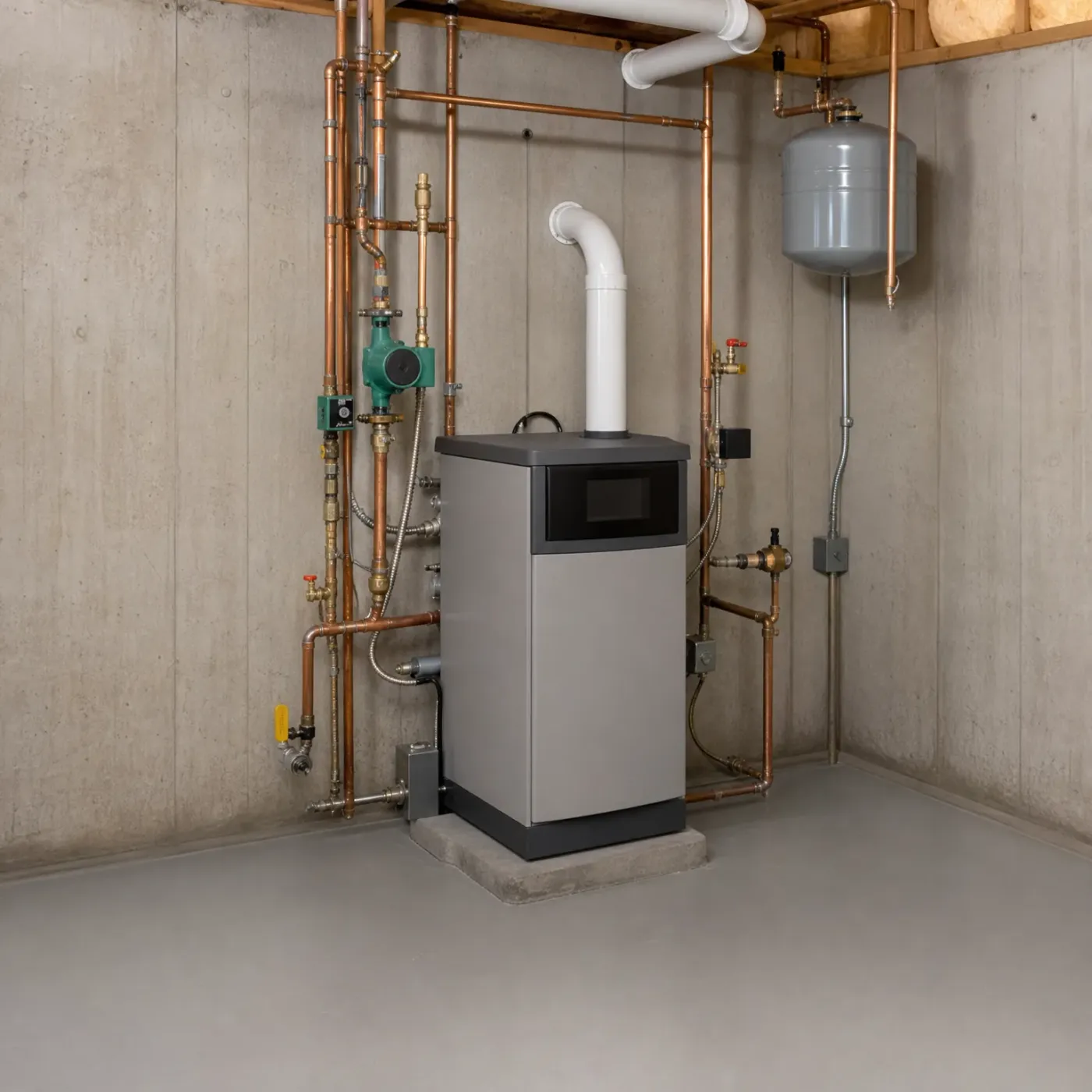
A gray floor-standing boiler on a concrete pad in a basement corner, with copper piping, a circulator pump, a white PVC flue, and a gray expansion tank mounted on the wall.
After you get your boiler installation

Send one request and you're done looking

Skip collecting and comparing quotes for the new boiler.

There's no charge for the request.

Before you get your boiler installation

Right now, if the boiler is guessed at, you're the one who finds out it's wrong. That means a cold room you keep closing the door on, or a gas bill that doesn't match how careful you've been about the thermostat. It also means you're the one who has to do something about it: find a contractor who'll actually run a load calculation instead of eyeballing the old unit's size, get through a round of calls to see who's licensed and available, and sit with a few quotes trying to tell a fair price from a lowball guess. All of that sits on you until the new boiler is in and running the way it should.

After you get your boiler installation

Once the form is sent, that search is off your plate. You're not the one calling around New York asking who does boiler installs, not the one explaining the cold bedroom story three separate times to three separate companies. Someone qualified gets matched to the job, and the sizing, the Manual J, the room-by-room accounting, gets done by a contractor who installs boilers for a living. You still have a house to heat and a winter to get through, but the part where you had to go find the right person for it is done.

A woman in a dark gray sweater reclines on a light sofa with eyes closed and a slight smile, under a textured gray blanket with an open book resting on her lap, with a lit table lamp and plant in the background.
A smiling bearded man in a navy crewneck sweater sits at a dinner table with a glass of red wine, plates and glasses in the foreground, in a dimly lit room with a lamp and framed picture behind him.

A boiler sized from a guess

You find out it's wrong after it's installed: a bedroom that never gets warm, or a gas bill that doesn't match what the thermostat says you're using.

Send my request

A boiler sized from a load calculation

Every room gets what it was built to need. The system runs the way it was designed to, even on the coldest night of the year.

Send my request

The right size for your boiler isn't a number you can look up, it's what a load calculation says once someone has gone through your house room by room. That's the only way to get a system that heats every bedroom evenly and doesn't cost more than it should on the coldest nights of the year. Right now, getting there means finding a contractor who actually runs that calculation instead of guessing off square footage, then calling around to see who's licensed, who answers, and who can give you a real number instead of a ballpark. Send the form and that search is off your plate. You won't be the one sorting through contractors, repeating your situation on the phone to whoever picks up, or weighing quotes against each other with no way to tell which one actually sized the job right. Someone qualified to run the calculation and install the right size boiler takes it from here. You still have a winter to get through, but you're not the one figuring out who can be trusted to size it correctly.

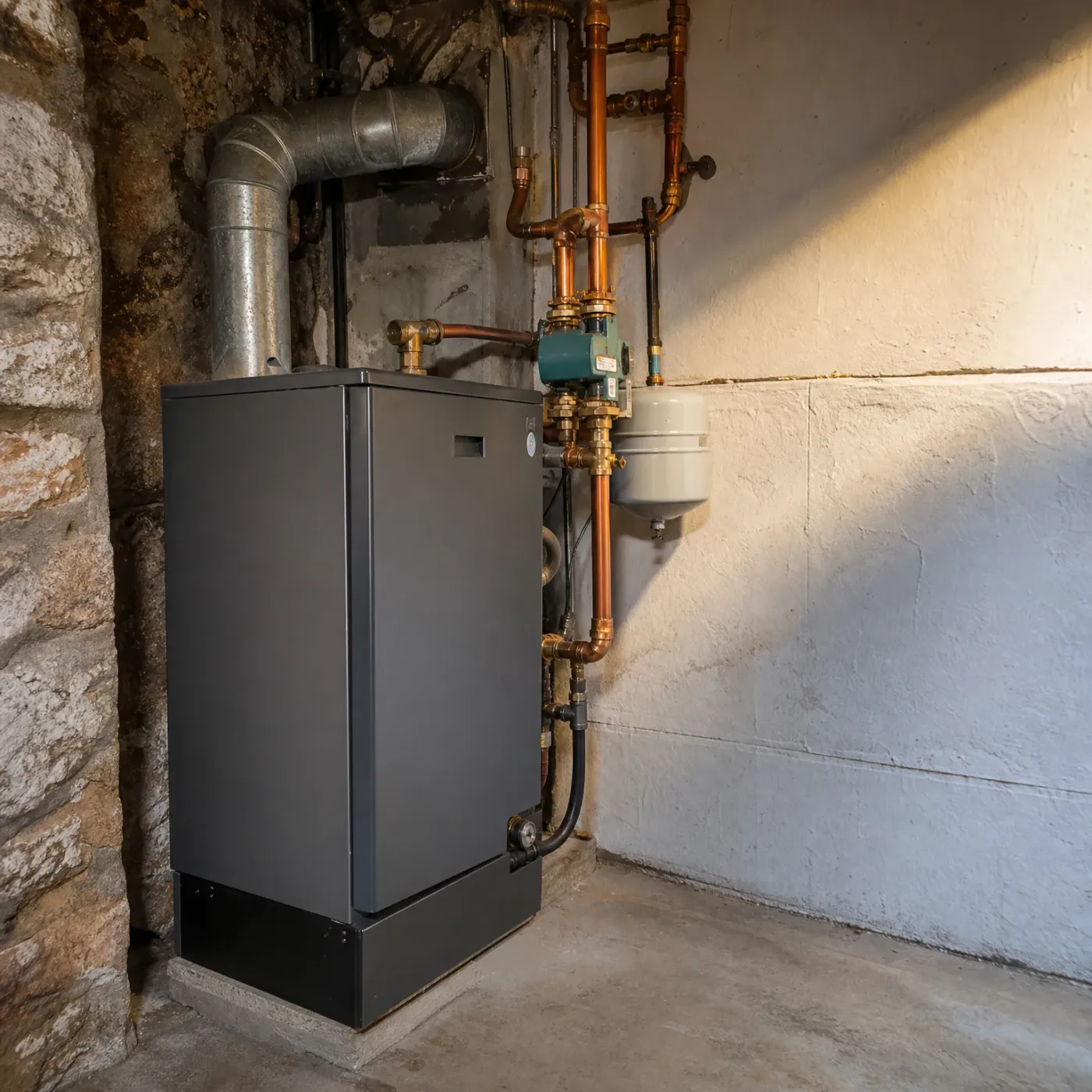
A dark gray boiler unit stands in a basement corner against a stone and painted concrete wall, connected to copper pipes, a circulator pump, an expansion tank, and a galvanized metal flue duct.

Let someone else find the pro

Skip the calls

One form replaces the calls you'd make to find a boiler pro.

Asking costs nothing, and the choice to hire stays yours.