Profile view of a bearded man wearing a black baseball cap and a dark gray T-shirt against a plain light background.

What a boiler tune-up covers before a New York winter

Step 1 of 3: Equipment

A boiler tune-up before winter means a technician checks the parts that keep your system safe and efficient once it's running every day. That includes testing the pressure relief valve, checking the combustion and flue for carbon monoxide risk, bleeding air from the radiators or baseboards, checking the aquastat and thermostat settings, and inspecting the circulator pump and expansion tank. Most New York homes run on gas boilers, so the combustion check matters most: a boiler burning gas poorly wastes fuel and can leak carbon monoxide into the house. Catching a worn part now, like a failing circulator pump, means it gets replaced on a mild October afternoon instead of during a January cold snap when you have no heat and every other boiler in town has failed too. The tune-up also gives you a clear read on whether the system can handle the winter ahead or needs a repair first.

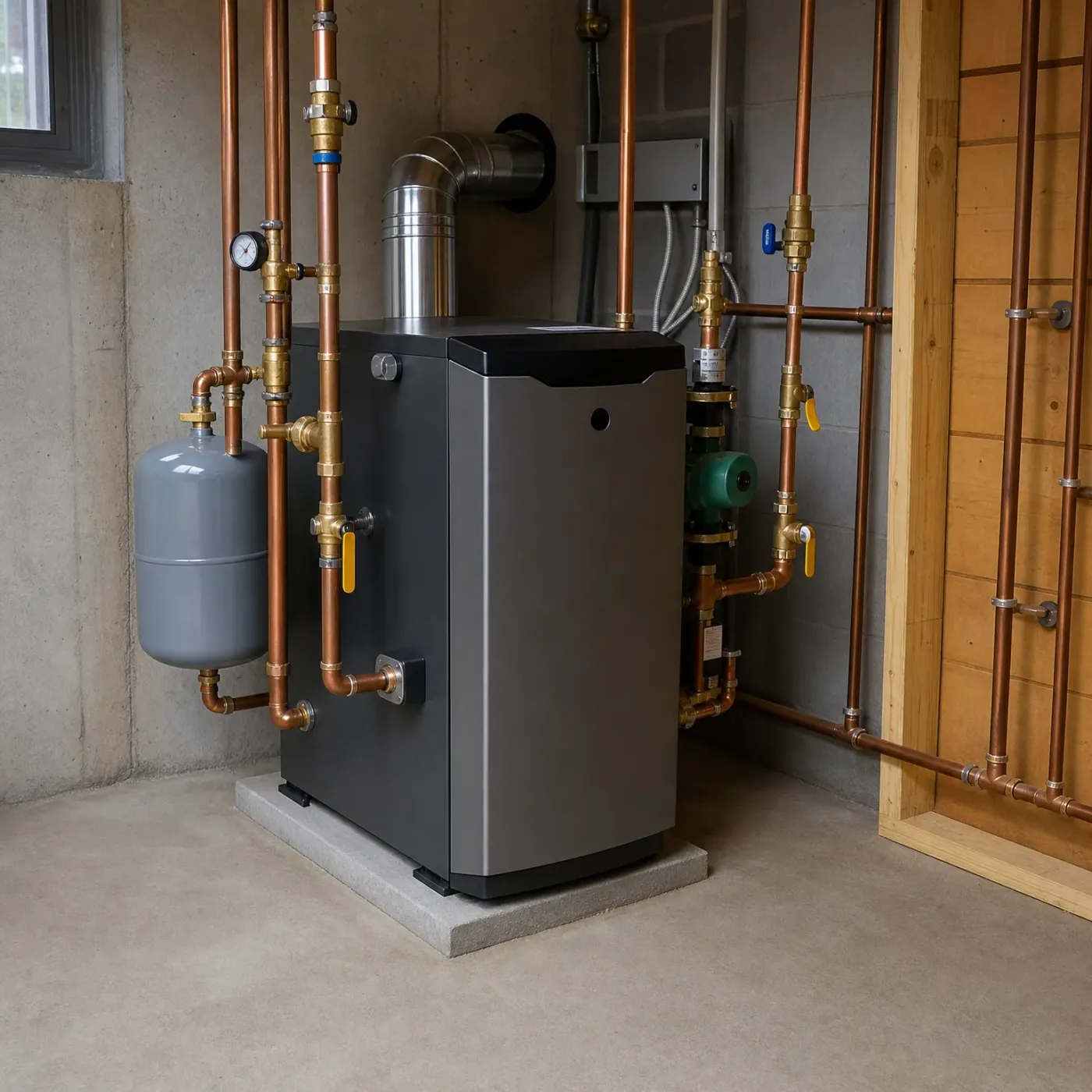
A dark gray floor-standing boiler on a concrete pad in a basement, surrounded by copper piping, brass valves, a gray expansion tank, a circulator pump, and a metal flue pipe against concrete block walls.
A boiler like this holds steady pressure and clean combustion because something was checked before the cold set in.
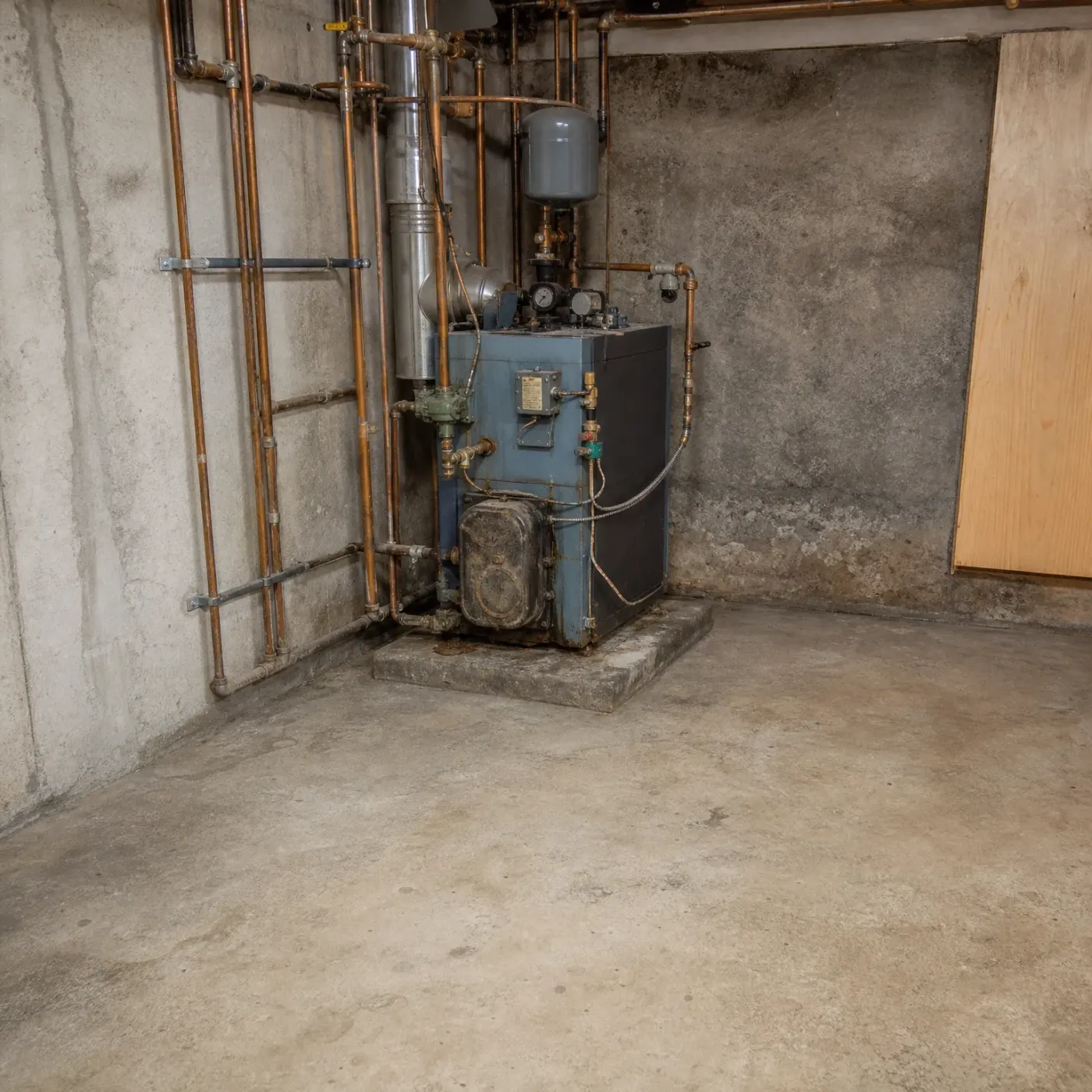
A blue boiler on a raised concrete pad in a basement corner, with copper and steel pipes, a gauge cluster, an expansion tank, and a metal flue running up the bare concrete walls.
A boiler like this gets left to run on its own until a part fails on the coldest night of the year.

A tune-up starts with the pressure relief valve. A technician opens it to confirm it reseats correctly, because a valve that sticks lets pressure climb with nowhere to go. Next comes the combustion chamber and flue, looked over for cracks or blockage. A cracked heat exchanger can push carbon monoxide into the house, so this step matters more than most. Radiators or baseboards get bled next, clearing air pockets that leave some rooms warm and others cold. The igniter or pilot gets a look too. A flame that burns weak or uneven can cause the burner to shut down partway through a cycle, usually at the worst time. The low water cutoff gets tested on its own, confirming the boiler shuts itself off if water runs low, which keeps the heat exchanger from firing dry. Last is the circulator pump, checked for noise and steady flow. A pump that's failing won't move water evenly, and the rooms furthest from it feel that first.

What Gets Checked Before Winter

  • A technician checks the pressure relief valve by testing that it opens and reseats at the correct pressure, since a stuck valve can let pressure build unchecked.
  • The combustion chamber and flue get inspected for cracks or blockage, because a cracked heat exchanger can let carbon monoxide into the house.
  • Air gets bled from the radiators or baseboards so the system doesn't trap pockets that keep rooms from heating evenly.
  • The igniter or pilot assembly is checked for a clean, steady flame, since a weak flame signal can shut the burner down mid-cycle.
  • Low water cutoff is tested to confirm the boiler shuts off if water level drops, which protects the heat exchanger from running dry.
  • The circulator pump is checked for noise and proper flow, since a failing pump leaves some rooms cold while others overheat.
A man in a blue sweatshirt reclines with closed eyes in a brown leather armchair in a living room with a bookshelf, houseplant, sofa, window, and a side table holding newspapers and a dark mug.
A bearded man in a gray pullover reclines with closed eyes on a brown leather sofa in a sunlit room with a window, framed picture, potted plant, and a wooden cabinet holding papers and a dark mug.
A man in a gray sweater leans back with closed eyes in a brown leather armchair beside a wooden side table holding a dark mug and a folded newspaper, with bookshelves and a window seat behind him.
A man in a green sweater reclines in an armchair with his eyes closed and a slight smile, beside a window with plants, a small table holding a mug and folded newspaper, and bookshelves behind him.

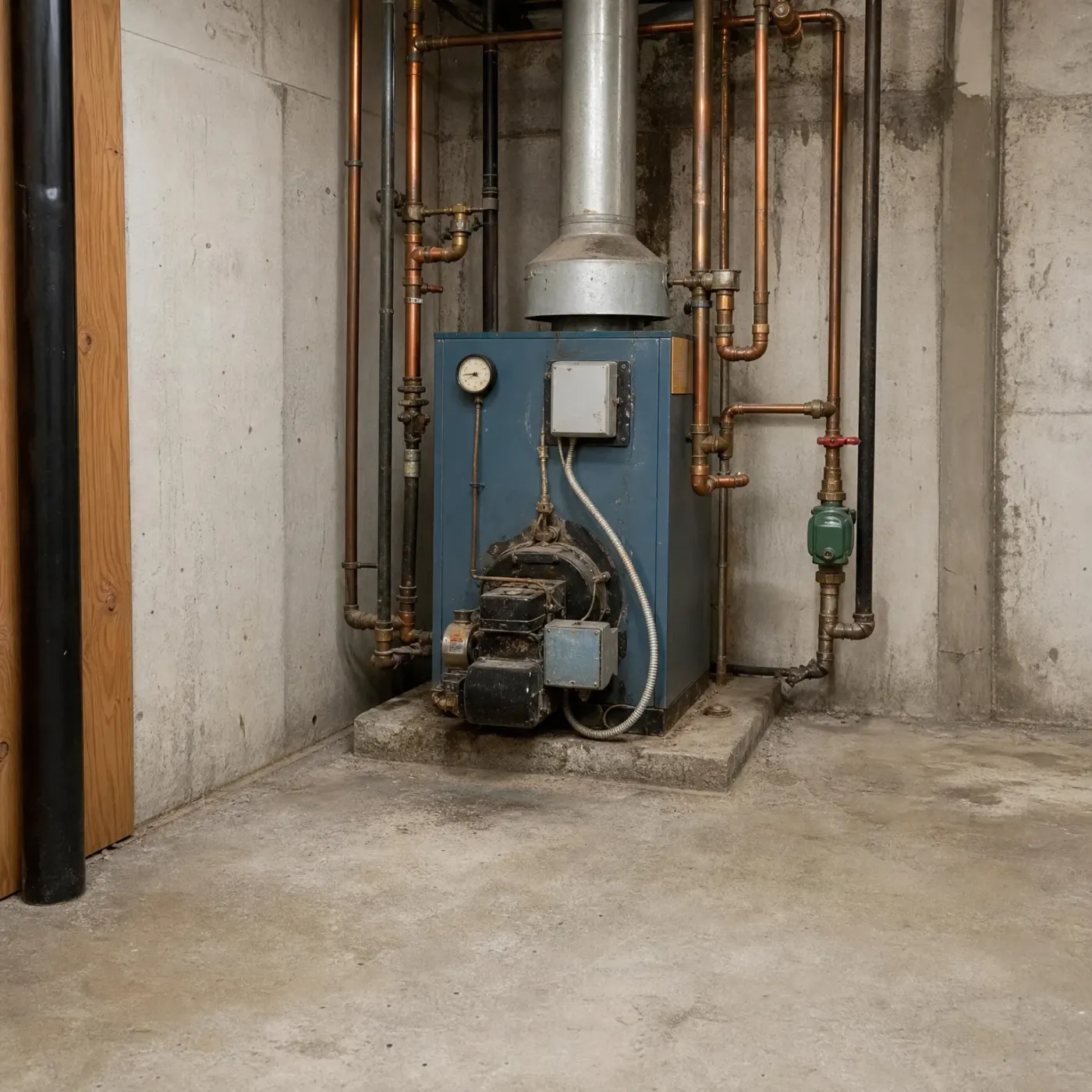
A gas boiler that runs for months straight depends on clean combustion to keep carbon monoxide out of the flue gas instead of the air in your home.

That's why the combustion check isn't optional. It's the one test that tells a technician the boiler is burning fuel the way it's supposed to, not just that it's running.

A blue oil-fired boiler with a pressure gauge, burner unit and metal flue sits on a concrete pad in a basement corner, surrounded by copper and black pipes against bare concrete walls.
Before you get your boiler maintenance
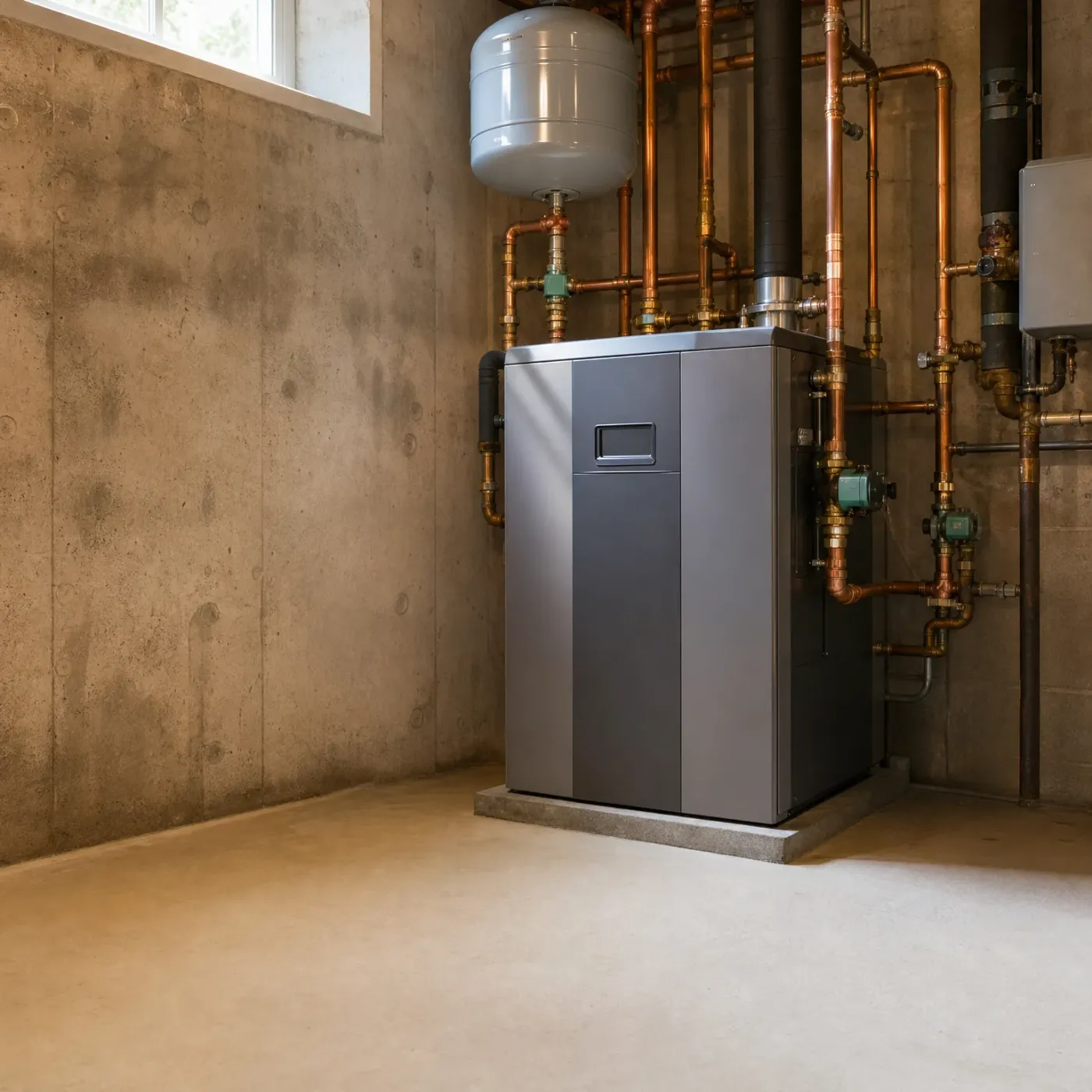
A gray boiler unit on a concrete pad in a basement corner, connected to copper piping, circulator pumps, and a ceiling-mounted expansion tank against bare concrete walls.
After you get your boiler maintenance

One cold snap away

If the pressure relief valve or a corroded flue goes unchecked, the failure usually shows up on the night you need heat most, not before.

Hand off the search

One visit, before January

A technician catches a cracked heat exchanger or a stuck valve while it's still an easy fix, not an emergency call in the middle of a cold night.
Hand off the search

Tune-Up or Wait and See

With a tune-up

  • A technician finds a weak igniter or a corroded flue connector in October, with time to order the part before a cold snap puts you on a waiting list.
  • The boiler cycles the way it was designed to, so it isn't working harder than it needs to against a gas bill that's already high here.
  • Bleeding air from the radiators or baseboards before winter means a room that was running cold gets properly heated once the system is working every day.
  • A tested pressure relief valve means you aren't finding out in January whether it actually opens when it needs to.
  • The combustion check gives you an answer, not a guess, about whether the boiler is burning gas cleanly before it's run every day for months.
  • You know going into winter whether the boiler is sound, instead of finding out from a system that stops on the coldest night.

Without a tune-up

  • The first sign of a problem is often the boiler not firing at all, on a morning when the house has already gone cold overnight.
  • A corroded flue or a cracked heat exchanger can sit unnoticed through summer and only show itself once the boiler is running daily.
  • Trapped air in the radiators means some rooms stay cold no matter how long the boiler runs, and nothing about the system tells you why.
  • A pressure relief valve that's stuck goes unnoticed until pressure builds past where it should, with no test having caught it earlier.
  • Inefficient combustion wastes gas all winter without tripping any alarm, so the only sign is a bill that's higher than it should be.
  • When something does fail, it's whatever contractor has an opening that day, not someone who already knows your system.
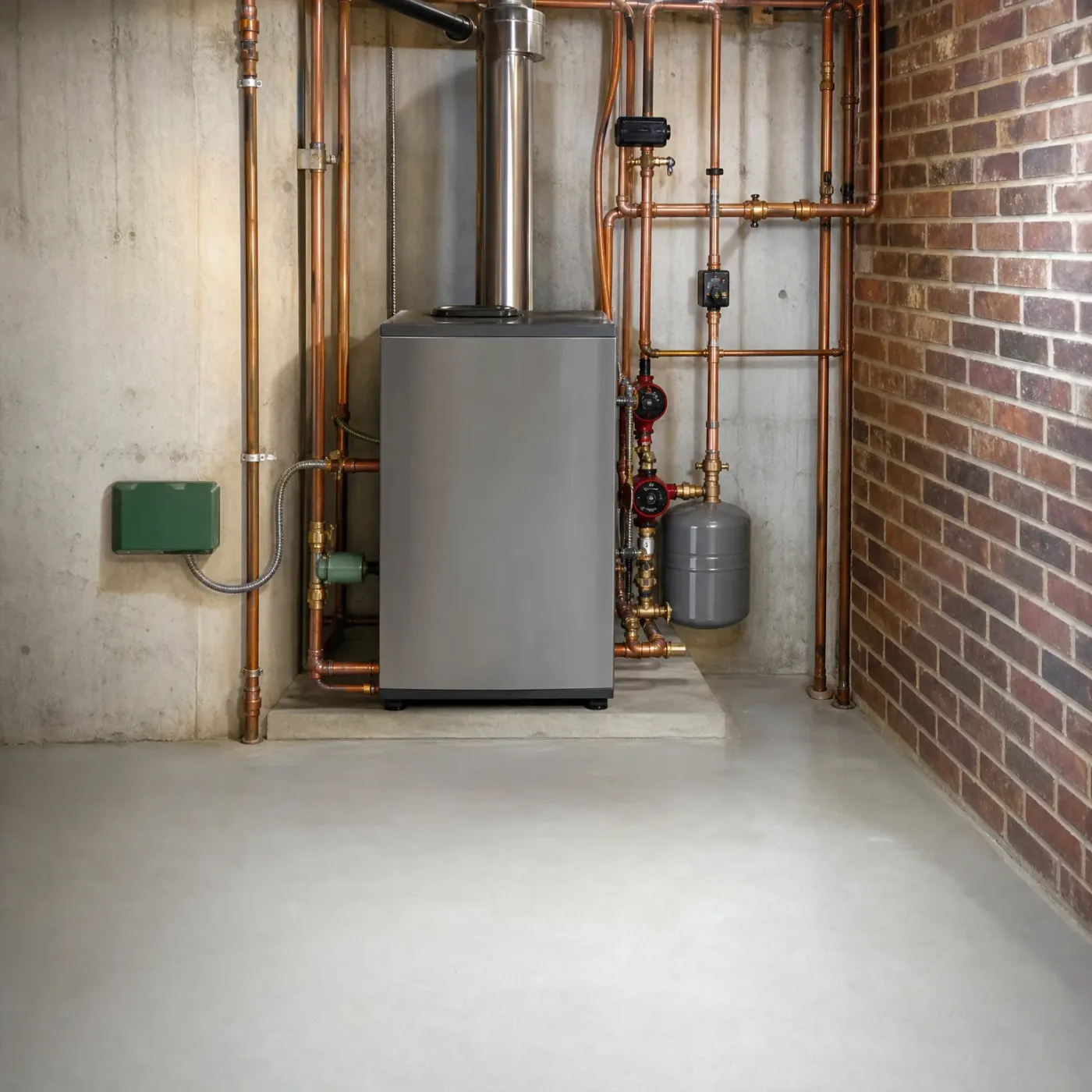
A gray boiler on a concrete pad in a basement, connected to copper piping, valves, pumps and a gray expansion tank, with a concrete wall on the left and a brick wall on the right.

Checked before the cold

This is what a boiler looks like after someone has gone through it. The pumps, the fittings, the expansion tank, all of it accounted for and left in working order. Pressure holds steady because nothing in that room was guessing.
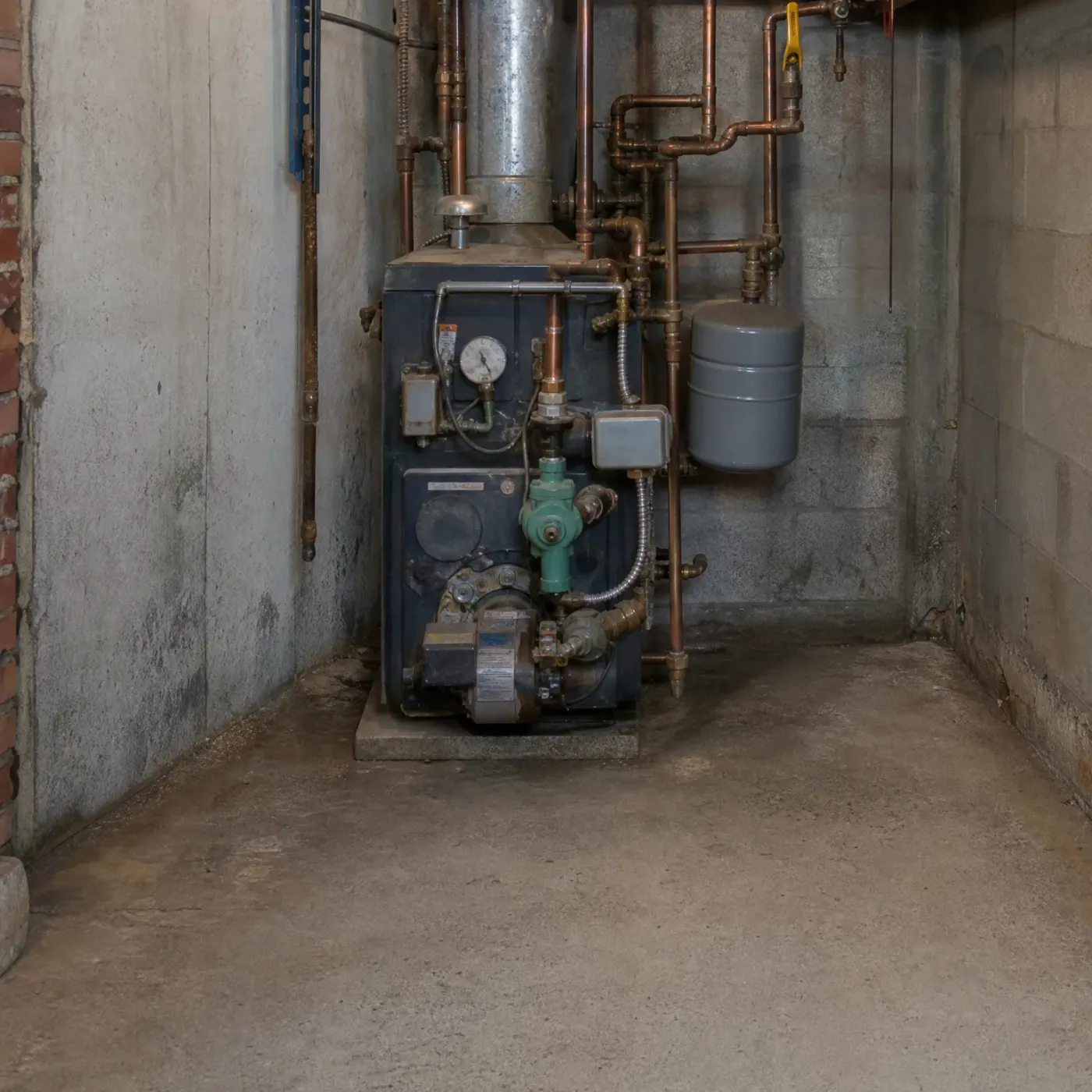
A dark cast-iron boiler with copper piping, pressure gauge, and a gray expansion tank sits on a concrete pad in a basement corner with concrete block and brick walls.

Left to run alone

Nobody has been down to this one in a while. The gauge, the pump, the flue pipe are all still doing their job, for now. An older unit like this running unchecked into winter is how a small problem turns into a cold house.

Why does your boiler sound different lately?

You might hear a bang or a gurgle when it kicks on, or notice the radiators take longer to get warm than they used to. Maybe the pilot light looks more yellow than blue, or there's a faint burning smell the first few times you run it each fall. The pressure gauge might be creeping below where it usually sits, or climbing past it. None of this means the boiler is about to fail tonight. But a boiler that's been ignored tends to show these small signs before it shows a big one, and a cracked heat exchanger or a stuck valve doesn't announce itself any louder than a gurgle did.


An older man with gray hair and a beard leans back on a beige sofa with his eyes closed, in a sunlit room with potted plants, a wicker chair and large windows behind him.
A woman in a cream knit sweater sits in an armchair with her eyes closed and a slight smile, beside an open window showing orange autumn foliage, with a mug, books and a lit candle on a small side table.

Finding a pro stops being your job

Your request goes to one pro, not a list of companies.

You only hire the pro if you want to.
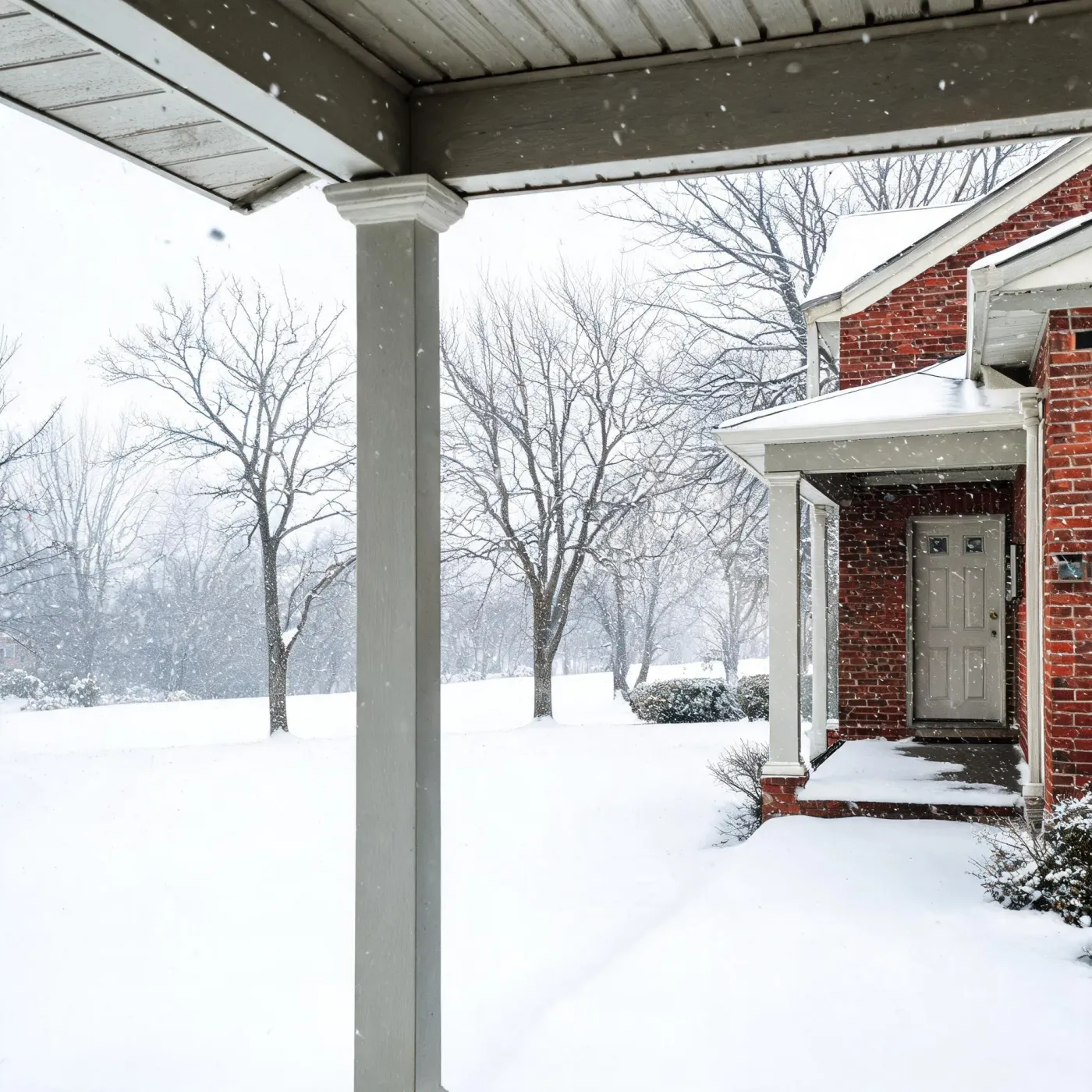
View from under a covered porch with a white column toward a red brick house entrance with a gray door, surrounded by deep snow, bare trees, and falling snowflakes.

Statewide, winter nights average 24°F, according to NOAA climate data. That's below freezing for most of the night, every night, from December through February. Your boiler isn't cycling on and off anymore at that temperature. It's running long stretches to keep up, and the burner sees more hours of work than it does in a mild cold snap. That's also when a weak igniter or a flue that isn't drawing right tends to show itself, because the system has no slack left to cover for it. You'll notice it as a boiler that takes longer to bring the radiators up to temperature, or one that seems to run almost constantly once it gets dark.

NOAA nClimDiv 1991-2020 county normals weighted by homes

Why does a boiler need bleeding before winter if it ran fine all summer?

A boiler doesn't run much from May through September, so if yours fired up fine back in April, it's easy to assume nothing's changed. But a boiler that sat idle for months isn't the same as one that was running steadily, and the quiet months are exactly when air works its way into the system.

Air collects in the radiators while the boiler sits unused, and it has to be bled out before the system can heat evenly again

Water expands and contracts as the boiler heats and cools, and over months of starting and stopping, small amounts of air get pulled into the system. That air rises and collects at the top of each radiator. A radiator with air trapped inside stays cool at the top even while the bottom gets hot, so the room takes longer to warm up and the boiler runs longer to make up for it. Bleeding each radiator lets that air out and lets water fill the space, so heat moves through the whole radiator instead of just part of it. It's a five-minute job with a radiator key, done before the system is running every day.
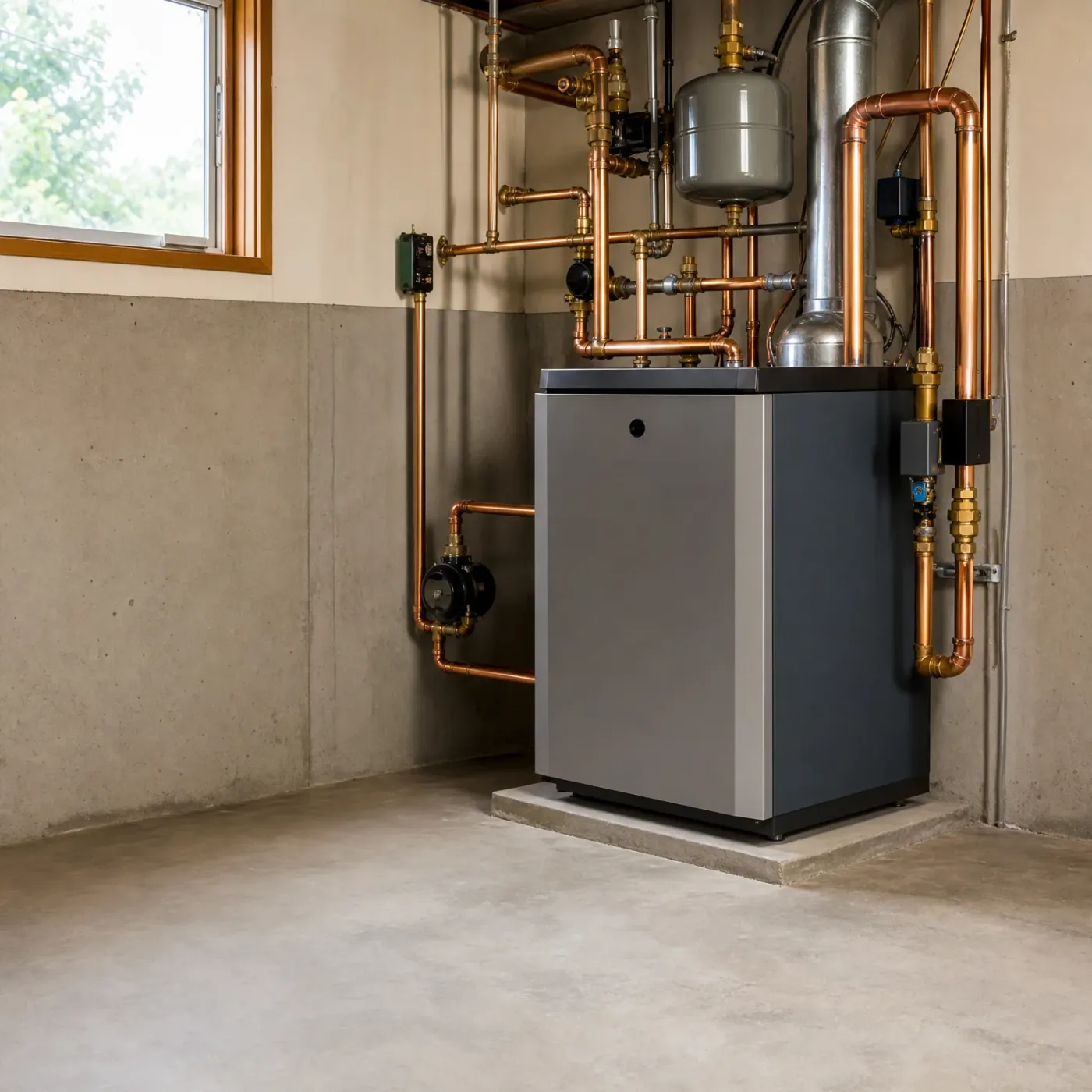
A gray floor-standing boiler on a concrete pad in a basement corner, connected to copper piping, brass valves, a circulator pump, an expansion tank, and a metal flue, with a window at upper left.

Set up to run clean

This is a boiler someone has already gone through. Copper lines, the circulator pump, the expansion tank, all of it feeding the flue straight up and out. Combustion runs clean because the chamber was inspected, not assumed.
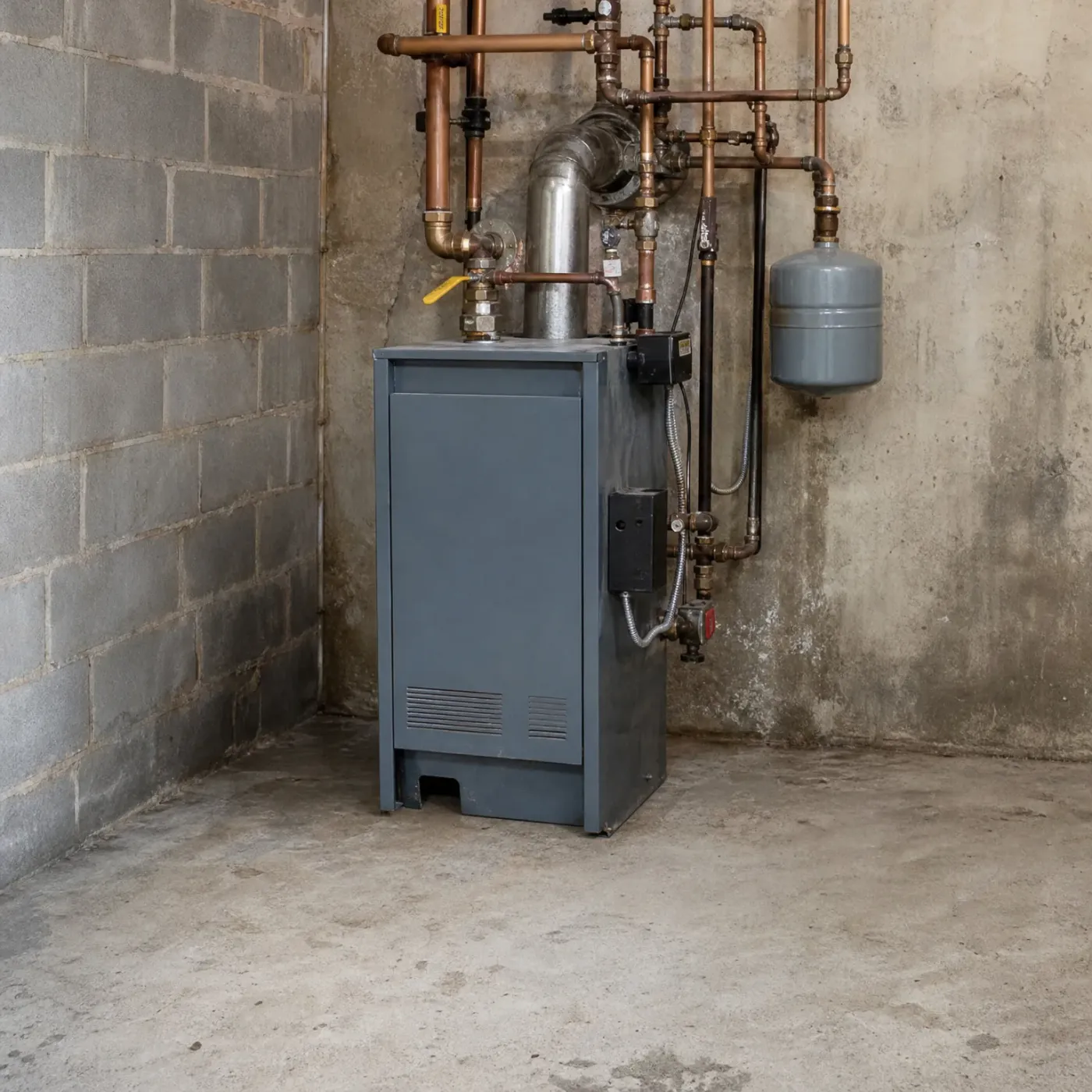
A gray floor-standing boiler in a basement corner with copper and black piping above it, a flue vent, and a gray expansion tank mounted on the concrete wall beside a concrete block wall.

Left to figure it out alone

Same kind of unit, same copper overhead, same expansion tank on the wall. Nobody has opened this one up yet this year. It will run fine until the night it doesn't, and by then you're not looking at a tune-up anymore.

Winter nights average 24°F statewide

At 24°F, your boiler holds a long burn instead of short cycles, so it leans on the same pressure relief valve and flue connection for hours at a stretch. A part that was already weak doesn't get a break to recover. That's the load a tune-up checks for before the cold settles in.

NOAA nClimDiv 1991-2020 county normals weighted by homes

Where your boiler stands now

  • A boiler tune-up before winter checks the pressure relief valve, the combustion chamber, the flue, and the air trapped in your lines, so none of it is left to guess.
  • The parts most likely to fail on a cold night are the same ones a technician tests in October, while there's still time to order a replacement.
  • A local contractor who works on boilers all season knows which parts in New York systems tend to wear first.
  • One contractor takes on the job, so you're not fielding calls from a handful of companies before anyone's even looked at your boiler.
  • Nothing about this changes what the boiler does, it just confirms the valve, the flue, and the pressure are what they should be before December.
  • A system checked now holds its pressure and keeps burning clean through the months it runs hardest.

A boiler tune-up before winter comes down to a short list of checks: the pressure relief valve, the combustion chamber, the flue, the air in your lines. Each one gets tested, not assumed, while there's still time to act on what a technician finds. That's the whole point of doing this in October instead of January.

The contractor who comes out knows New York systems because that's what they work on all season. They've seen which valves stick, which flue connectors corrode, which parts give out first once a boiler starts running long stretches instead of short cycles. That's not a guess about your house. It's what shows up again and again in homes that heat the way yours does.

You send one request and one licensed, local contractor takes it on. Not three companies calling within the hour, not a list to sort through. Just the person who's going to look at your boiler, doing the looking.

None of this changes what your boiler does. It still heats the house the same way it always has. What changes is whether the valve opens at the right pressure, whether the flue is clear, whether the chamber is burning clean. Those are the things that decide whether this winter goes the way last winter did, or whether something gives out on the one night you can't afford it to.


A curving paver walkway runs alongside a house with beige lap siding and a white-trimmed window, bordered by low shrubs, grassy plants, and trees in sunlight.
A dark-framed casement window with divided upper panes set in a stucco wall beside a stone-clad section, with hydrangeas, hostas and trimmed shrubs in a mulched bed above a lawn.
White horizontal lap siding wall with a single six-pane double-hung window, above a mulched bed of hydrangea shrubs with browning blooms, bordered by mown grass in low sunlight.
Interior corner with tan plaster walls, a potted olive tree in a large terracotta urn beside a floor-to-ceiling window, and a wooden bench with a beige cushion on a herringbone brick floor partly covered by a woven jute rug.
A wooden bench beneath a window holds a green linen cushion and a fringed cream throw, with a woven basket stored underneath on a wood plank floor.

Let someone else find the pro

The pro who reaches out is licensed in New York.

Find a licensed pro

Asking costs nothing, and the choice to hire stays yours.