




A white barn with a silo and outbuildings sits on a grassy hilltop, with wooded ridges showing autumn color behind and an overcast sky above.Hand it over

Is a high-efficiency boiler worth it in New York

Send the form and the search for an installer is over.

A gas boiler that's getting old runs longer to hold the same temperature, and in New York that shows up fast on the bill, since power and gas here cost more than most of the country already. You're asking the right question. A high-efficiency boiler can cut what yours burns to heat the house, especially if the one you have now is old enough that it's working harder than it used to.

Whether it's worth it for your house depends on things specific to your setup, like the boiler's age, its condition, and what your heating bills have looked like the past few winters. That's what the rest of this page walks through.

But once you know the answer, the next question is who installs it. That part doesn't have to sit on your list. Send the form on this page and a licensed contractor local to your area takes it from there. Not a call center reading from several companies' lists, one contractor who works on boilers in New York homes all winter and knows which ones tend to fail and why.

From there it's off your plate. You're not the one tracking down quotes or chasing someone back. You sent the details once, and the next step is theirs to carry, not yours.

Is a high-efficiency boiler worth it in New York

Your boiler is older and the gas bills keep climbing, so you're trying to figure out if replacing it with a high-efficiency model actually pays off here, or if it's just a sales pitch contractors use on anyone with an aging system.

Yes, for most New York homes that heat with gas

An old standard boiler sends a lot of heat straight up the flue and runs long cycles to make up for it. A high-efficiency model recovers most of that heat instead of losing it, so it burns less gas to hold the same temperature in your house. New York winters run long, often October through April, so a boiler here works harder and more often than one in a milder state. That means the difference between an old unit and a high-efficiency one shows up over more months, not just a few cold snaps. With gas and electric rates in New York among the highest in the country, the gap in what you burn each winter is worth more here than it would be somewhere cheaper.

  1. A standard boiler vents hot exhaust straight up a flue.

  2. A high-efficiency model cools that exhaust through a second heat exchanger first.

  3. A condensing boiler pulls extra heat from the water vapor in the exhaust.

  4. That process drains acidic condensate, so it needs a dedicated drain line.

A gray-haired man in a dark sweater sits on a light gray sofa in a living room, looking toward a sunlit window with trees outside.
A gray-haired man in a dark blue sweater sits on a light gray sofa in a sunlit living room, looking off to the side, with a potted plant, shelving unit, and large glass doors behind him.
A bearded man with graying hair in a dark green sweater sits on a sofa in a living room, looking off to the side, with a sliding glass door and a dim kitchen doorway behind him.
A gray-haired man in a dark knit sweater sits on a light gray sofa in a living room, looking toward a sunlit window, with houseplants, a lamp, and framed art in the background.

Most of this comes down to what's already in your basement or utility closet. An old boiler that short cycles all January is burning gas for small gains, and you're paying New York rates for it. Swapping it for a high-efficiency model means venting changes too: that exhaust runs through PVC pipe, not up the old masonry chimney, and where that pipe can go affects what an installer can quote you on the spot. The new unit also produces acid condensate that has to drain somewhere, and not every mechanical room already has a line for it. If your house has been resealed or insulated since the old boiler went in, a unit sized for the drafty version runs worse than it should. A standing pilot burns gas around the clock, heat or no heat. And if the heat exchanger on your current boiler has started to crack, that's not just an efficiency problem, it's exhaust that can end up back inside the house. An installer who works on these in New York basements every winter knows which of these show up in your situation and which don't.

What This Looks Like In Your House

  • An old boiler that short cycles through January puts a bigger dent in a gas bill already higher than most of the country.
  • Vent pipe runs through PVC instead of a masonry chimney, so where that PVC can route changes what the installer quotes you.
  • The acidic condensate a high-efficiency boiler produces needs a drain nearby, which some basements and utility closets don't have yet.
  • A boiler sized for a drafty old system runs short, inefficient cycles in a house that's since been sealed up or insulated.
  • If yours still has a standing pilot, you're paying for that flame nonstop whether or not you're calling for heat.
  • A cracked heat exchanger on an old unit can push exhaust back into the house instead of out the flue.
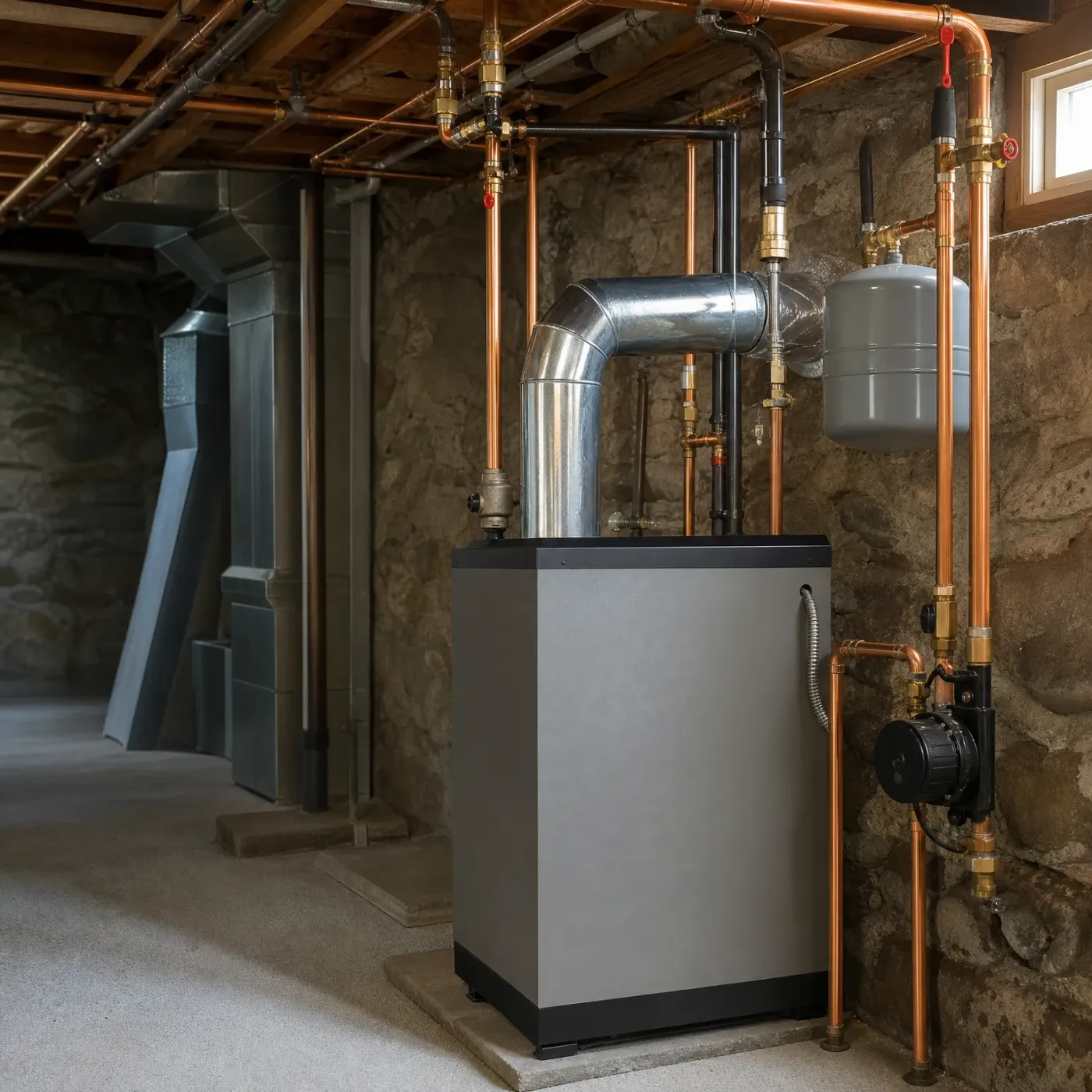
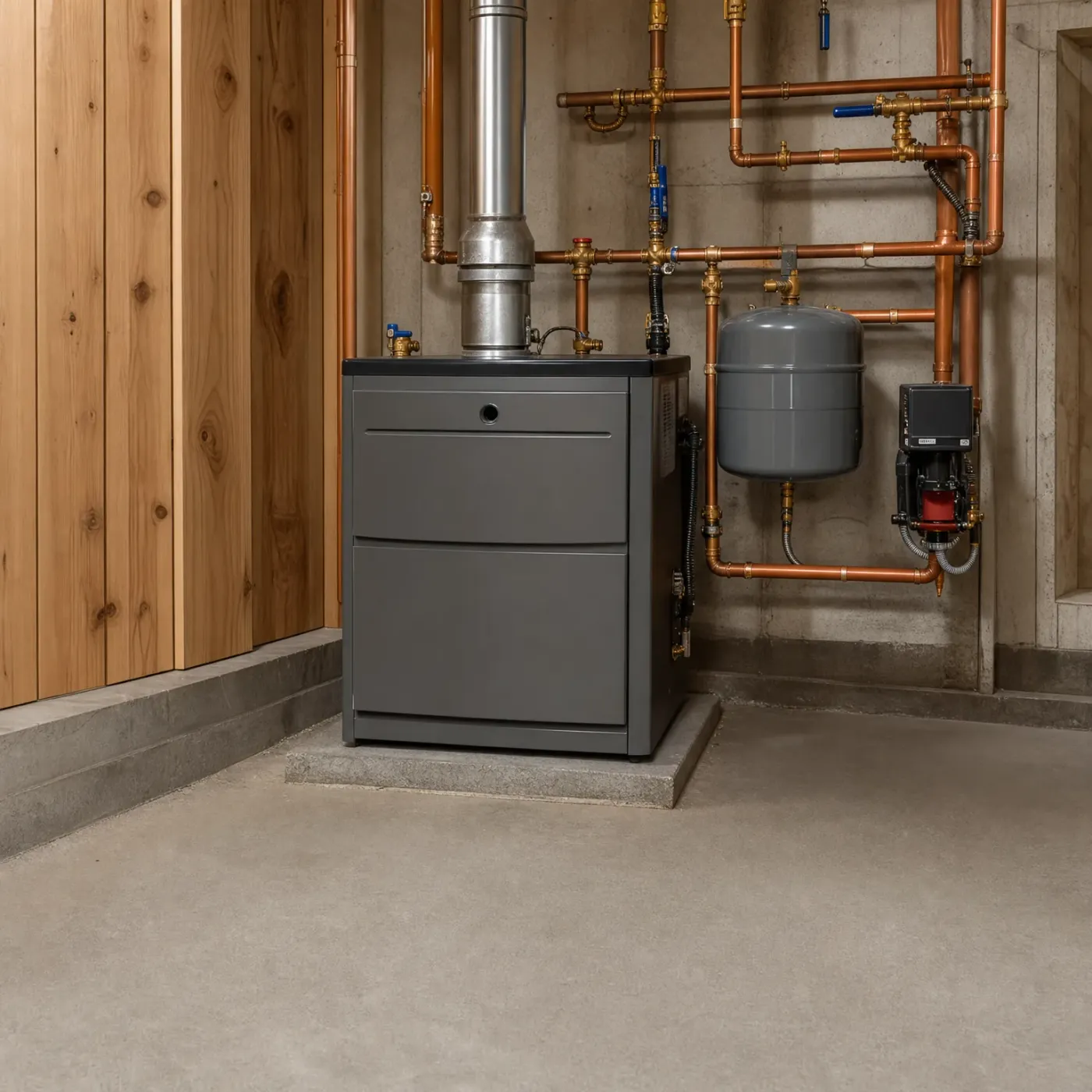
A gray boiler on a concrete pad in a basement, with a metal flue pipe and copper piping, brass valves, a gray expansion tank and a circulator pump mounted on the concrete wall beside wood paneling.
An old boiler that's still running keeps the pipes and expansion tank fed without drama, but it's doing that by burning more gas than a condensing model would to hold the same heat.
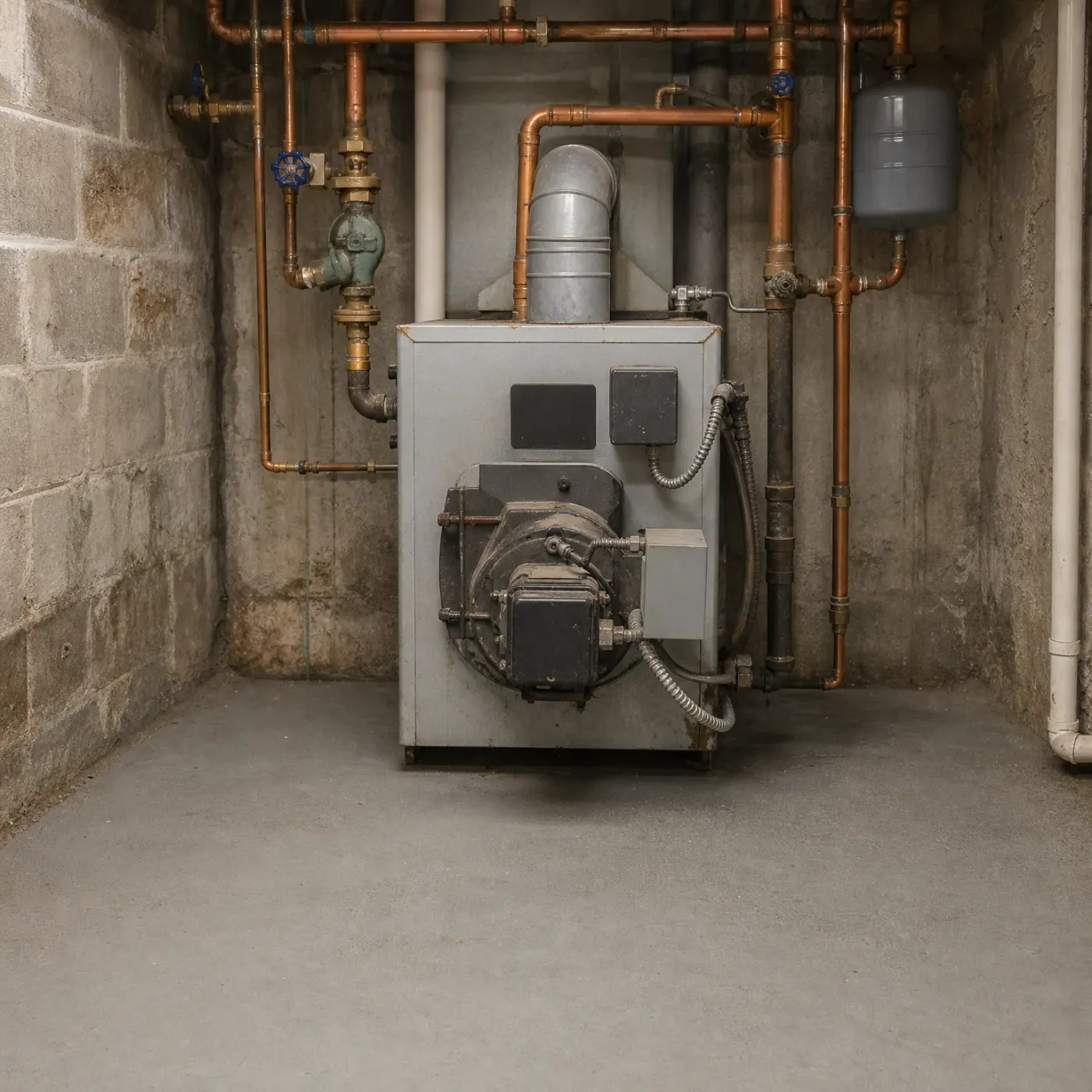
A gray boiler with a flue pipe and burner unit stands against a concrete block basement wall, surrounded by copper and steel piping, valves, and a gray expansion tank, on a bare concrete floor.
Once the heat exchanger or a valve on an older boiler like this starts to go, you're often better off pricing a new high-efficiency unit than sinking money into a repair.

Why does the boiler seem to run all the time now

You hear the burner kick on more than it used to, and it stays on longer before the radiators or baseboards actually feel warm. The room by the thermostat is fine, but a bedroom down the hall or the room over the garage stays cold no matter what the dial says. You might notice a faint burnt or metallic smell near the unit, or rust streaks where the flue pipe meets the boiler. Water pools near the base from a slow drip at a valve. None of this means the boiler is about to fail outright, but a boiler working this hard to keep up is burning more gas to do it, and if the heat exchanger is cracked or a seal has gone, that's a safety issue a qualified installer needs to look at, not something to wait out through another winter.

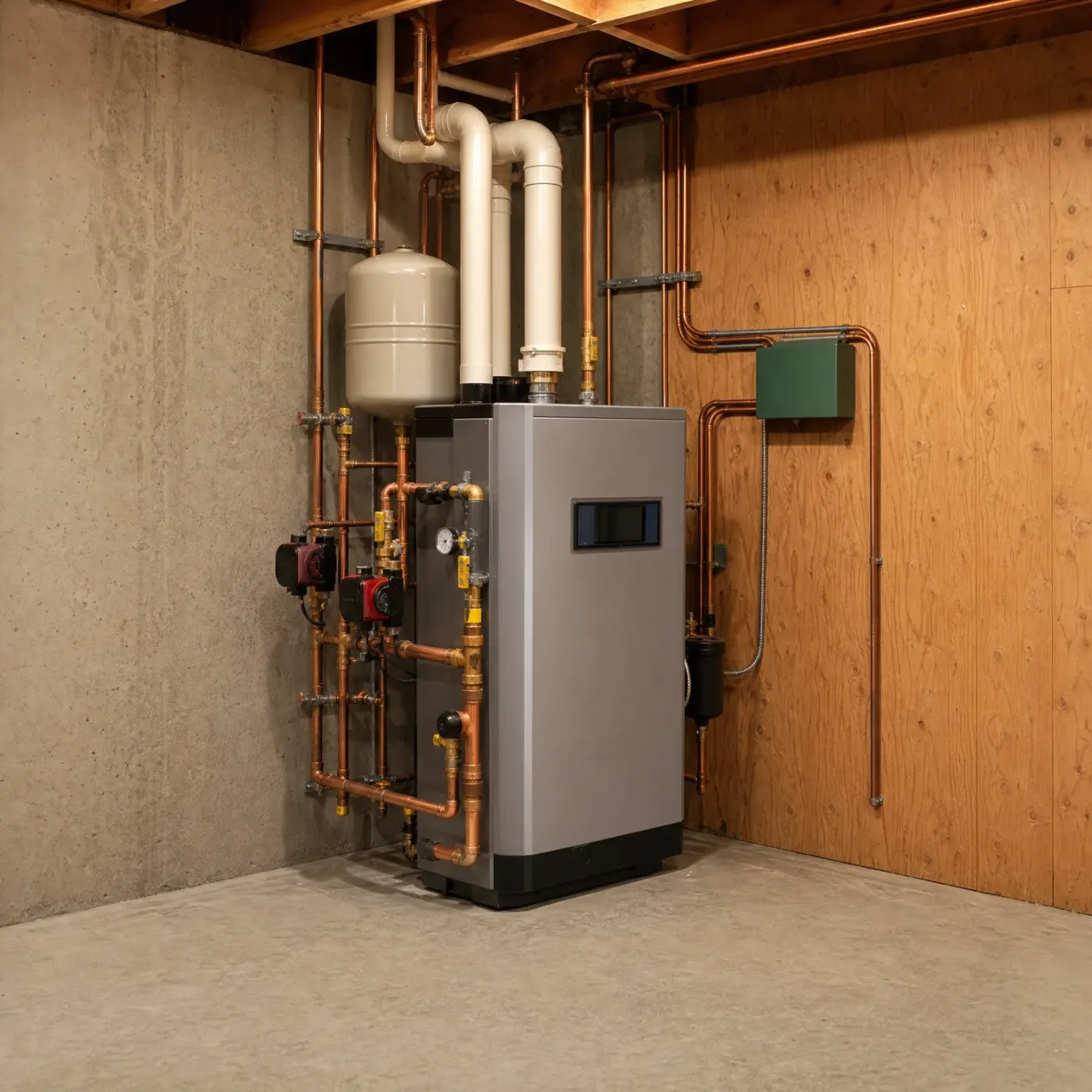
A gray floor-standing boiler in a basement corner with copper piping, two red circulator pumps, a beige expansion tank, white PVC vent pipes, concrete and plywood walls.

Running right

This is a condensing boiler doing what it's supposed to. The copper pipes, the circulator pumps, the pressure gauge all sit where an installer can get to them, and the PVC flue overhead tells you it's pulling extra heat out of the exhaust before that heat leaves the house. A setup like this holds its pressure and keeps the expansion tank steady without the burner running long to make up for it.
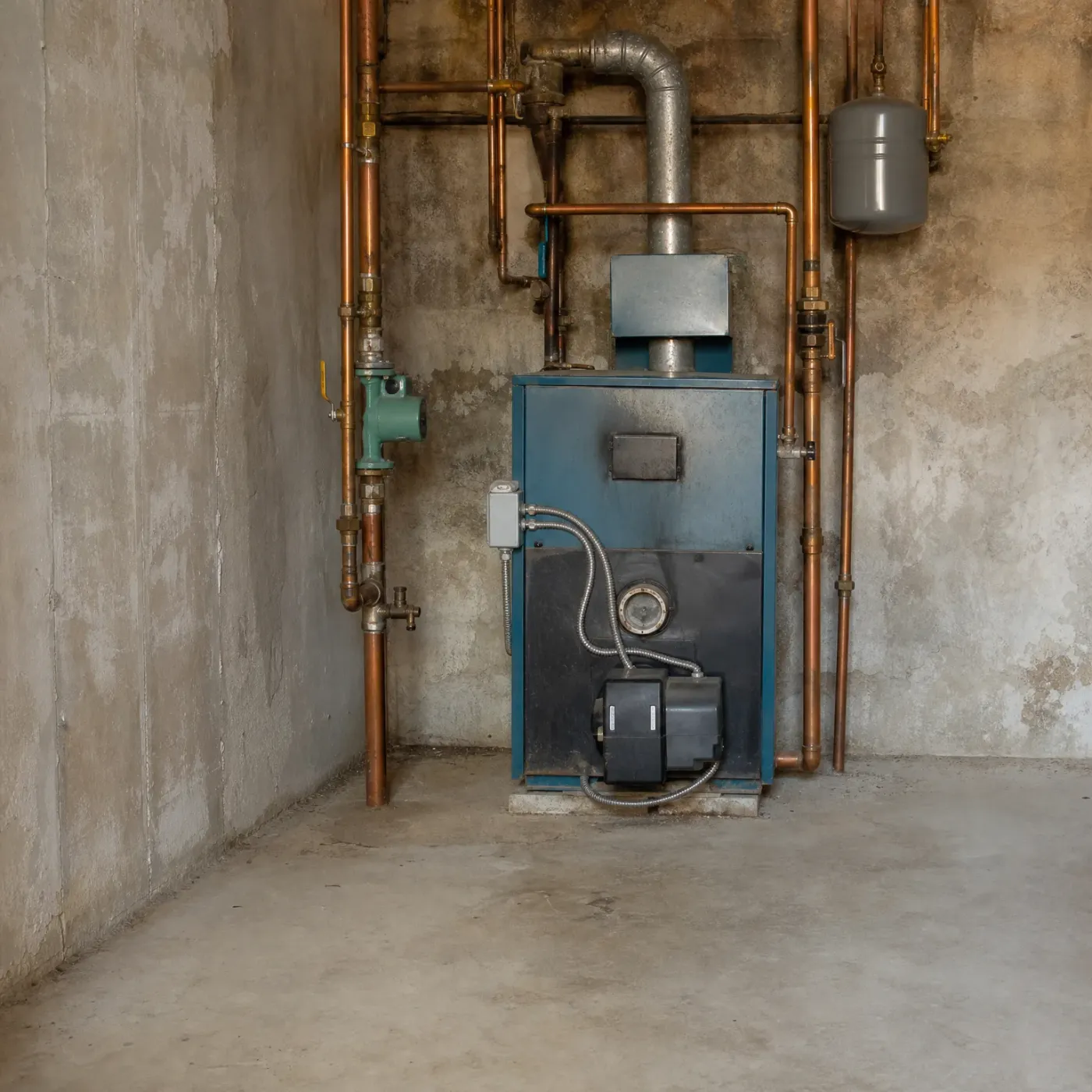

A blue residential boiler with a metal flue, pressure gauge and burner unit stands against a stained concrete basement wall, surrounded by copper pipes, a green circulator pump and a gray expansion tank.

Running on borrowed time

The bare concrete wall and galvanized flue are the giveaway here. This boiler still fires, the circulator pump still turns, but a flue like that is venting straight up and taking heat with it that a condensing model would keep. Flexible fuel lines and a blue steel housing like this usually mean the unit's been in the basement a long time, and it's costing more gas each winter to do the same job.

A middle-aged woman with shoulder-length dark hair, wearing a gray cardigan over a cream top, sits in an upholstered armchair and looks toward a sunlit window, with a shelf holding framed pictures and a plant behind her.
A woman and a child wrapped together in a knitted gray blanket on a couch, with the child's head resting on her shoulder and a lit table lamp and houseplant in the background.
A gray boiler unit on a concrete pad in a stone-walled basement, connected to copper piping, brass valves, a circulator pump, an expansion tank, and a metal flue vent.

It's off your list after this

One installer gets your project, so there's no bidding war over it.

Send the request and finding a pro stops being your problem.

Hand off my installation

It costs nothing to send, and you don't have to hire anyone.

Winter nights average 24°F statewide

24°F is the average overnight low across a New York winter. That's not a cold snap, that's a normal January night, which means your boiler is firing for hours at a stretch most nights, not just running through a short cold spell.

NOAA nClimDiv 1991-2020 county normals weighted by homes

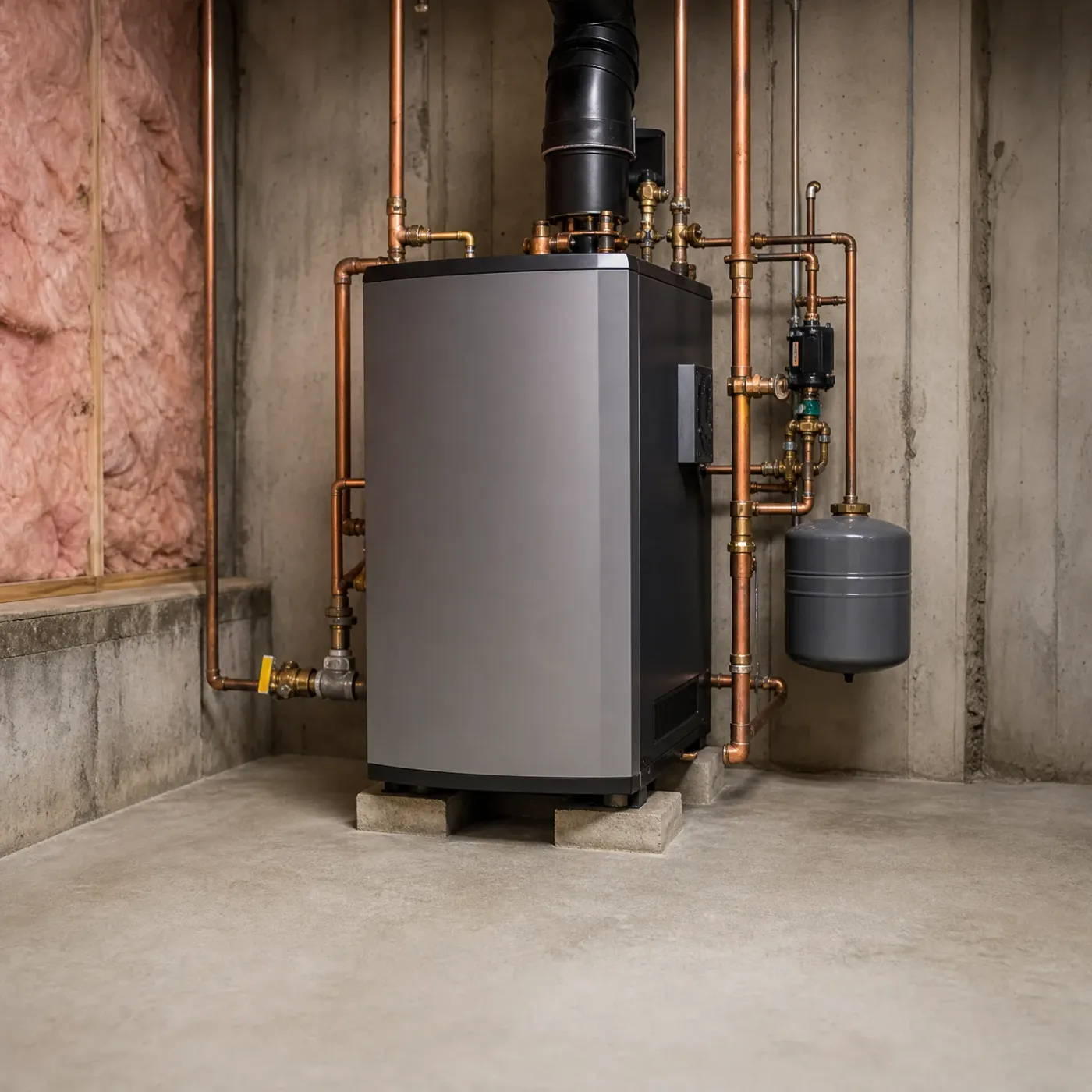
A gray and black boiler unit sits on concrete blocks in a basement corner, connected to copper piping, valves, a black flue duct, and a gray expansion tank, with bare concrete walls and exposed pink insulation at left.

Still on the job

This boiler is doing what it should. The copper pipes, the circulator pump, the expansion tank all sit where an installer can reach them, and the flue is clear. It's heating the house, just burning more gas than it needs to.

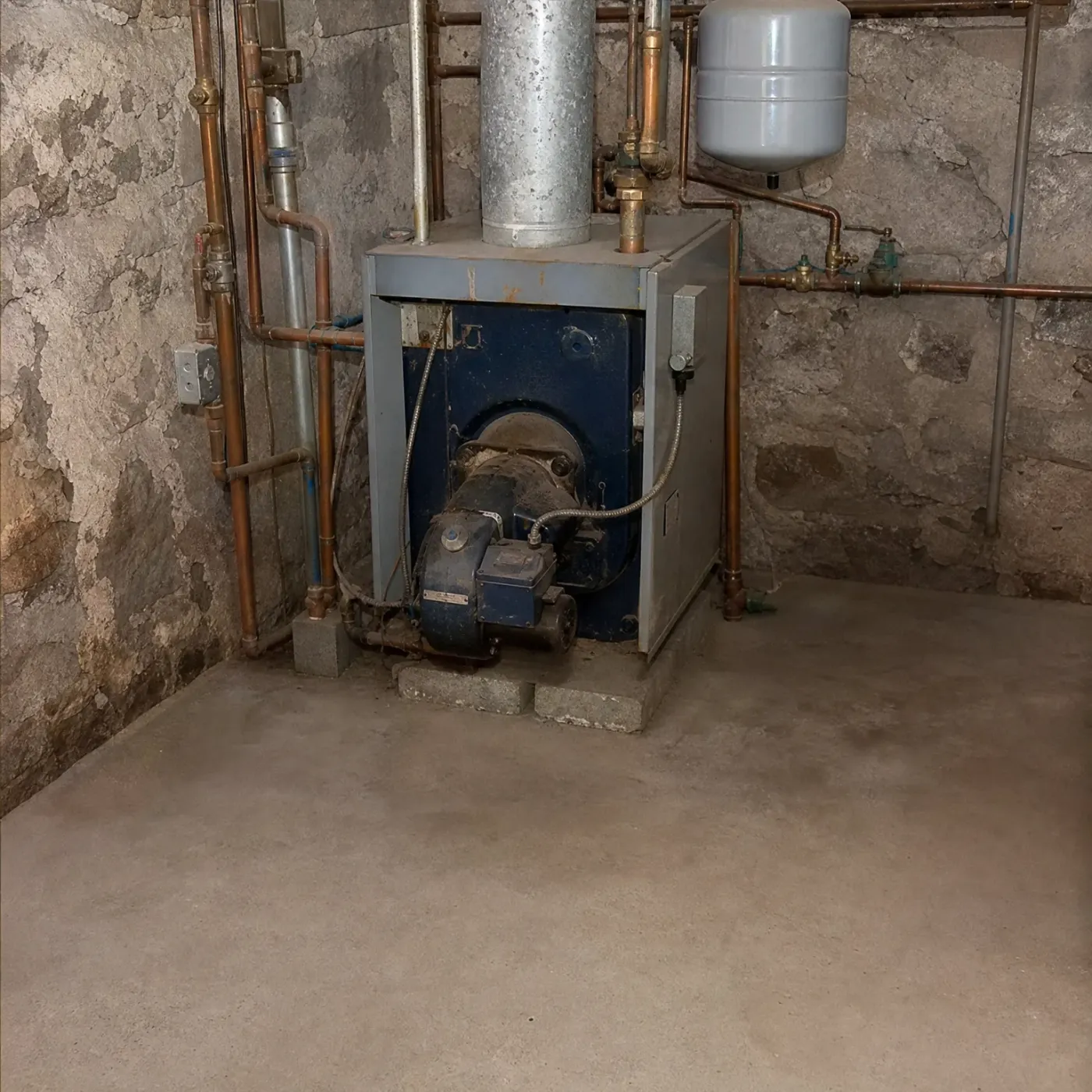
An oil-fired boiler with a blue and gray cabinet and burner sits on concrete blocks in a basement corner with stone walls, connected to copper pipes, a metal flue, and a wall-mounted expansion tank.

Running out of road

Sitting on concrete blocks in a stone-walled basement, this one has likely been there decades. A galvanized flue pipe and an aging expansion tank aren't failures by themselves, but on a boiler this old, the next one often isn't minor.

Keep It Running or Replace It

Keep the old boiler

  • No installation to schedule or pay for, and the radiators or baseboards keep working the way they always have.
  • You already know its quirks, like which room runs cold or how long it takes to warm up on a 24°F night.
  • Repairs on a standard boiler are usually straightforward since the parts and the venting are common and well understood.
  • It keeps burning more gas than a condensing model would to hold the same temperature, and that cost doesn't go away.
  • If the heat exchanger or a major valve fails, you're paying for a repair on a system that was already running at a loss.

Install a high-efficiency boiler

  • A condensing boiler pulls extra heat out of the exhaust instead of sending it up the flue, so it burns less gas for the same heat.
  • The lower gas use matters more here, since New York winters run long and the boiler fires for hours most nights.
  • Switching means PVC venting instead of a masonry chimney, so the installer has to figure out where that pipe can run in your house.
  • A condensate drain has to go in too, since the exhaust now leaves water behind instead of just heat.
  • It's a bigger job upfront than a repair, and a licensed local installer who works on these every winter is the one who knows where the venting and drain lines actually have to go in a house like yours.
  • Once it's running, the lower bills show up every month the boiler fires, not just the one month you had it installed.
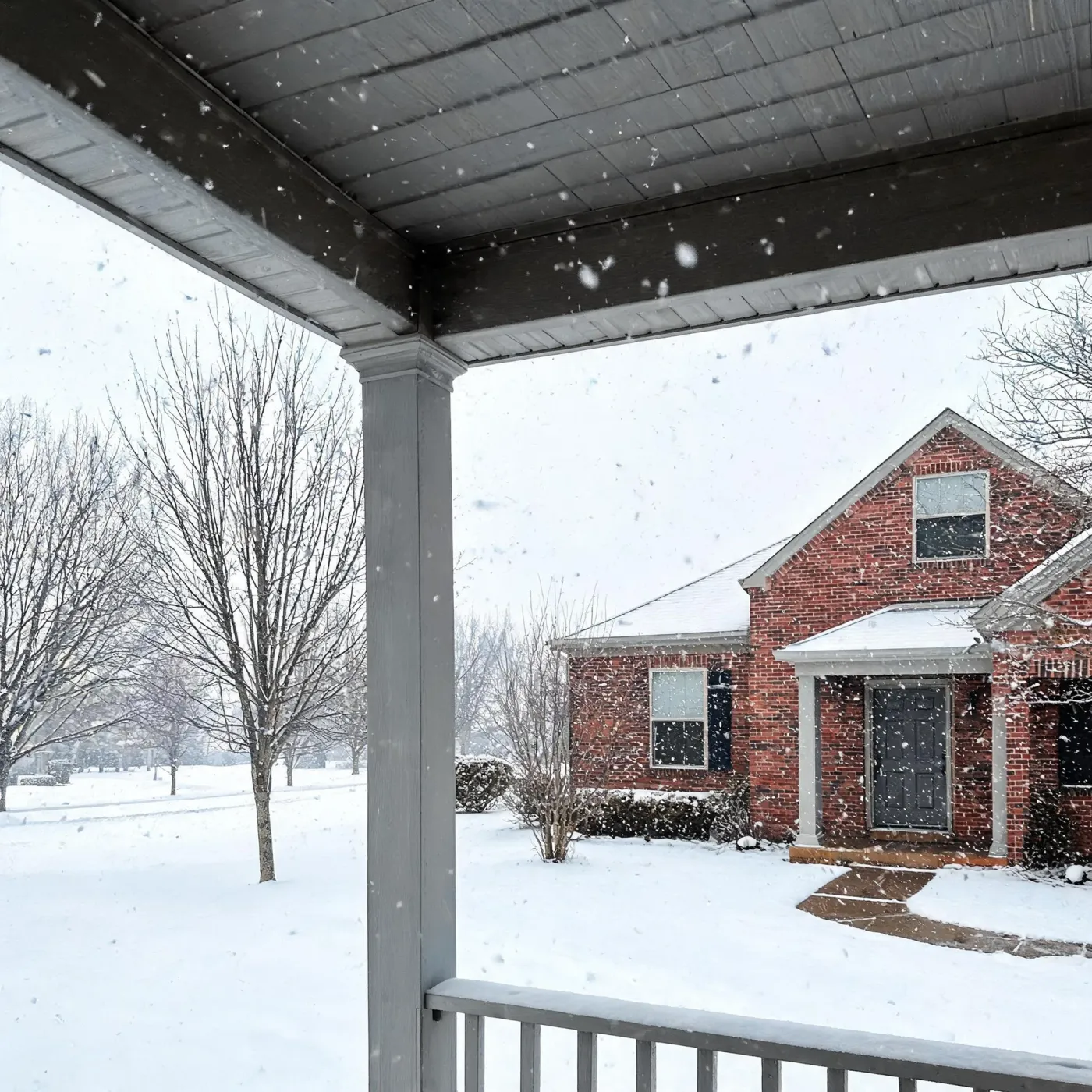
View from a covered porch with a white post and railing toward a red brick house across a snow-covered yard, with falling snow and bare trees.

That 24°F average overnight low isn't just a number on a chart. It's the temperature your burner is answering to most nights from December through February, firing long and steady instead of in short bursts. A standard boiler sends a lot of that heat straight up the flue as exhaust. A high-efficiency model keeps pulling heat out of that exhaust the whole time it runs, so the colder it is outside, the more gas that second heat exchanger is saving you. You'd notice it most on the nights the old boiler never seems to shut off.

NOAA nClimDiv 1991-2020 county normals weighted by homes

A high-efficiency boiler earns its keep in a New York winter, where a 24°F night asks a lot of whatever's in the basement. If your boiler is old enough that it's running longer to do the same job, swapping it for a condensing model is worth it here. What decides how smooth that swap goes is the venting, the condensate line, and whatever quirks your particular house has, and that's where a local installer matters more than the boiler brand. Someone who works on boilers in this area all winter has already seen how PVC venting routes through houses like yours, what the condensate drain needs to clear code, and which old boilers tend to fail first. You'll hear from one contractor, not a handful competing for your number, and that contractor is licensed to do the work in New York. That's where this stands: the boiler is worth it, and who installs it is the part that decides how it goes.

A single-story stucco house at dusk with a lit paver walkway lined by low path lights, desert plants and boulders in front, and distant mountains under an orange and blue sky.

Boiler Installation

Stop chasing a boiler pro

Step 1 of 3: Equipment
  • A beige upholstered armchair with an olive cushion sits in a sunlit corner beside a wooden side table holding a ceramic vase with leafy branches, under a framed abstract artwork, on a woven rug over a wood floor.
    • Get in touch with a local installer about a new boiler.
    • A local installer who puts in boilers gets your project.
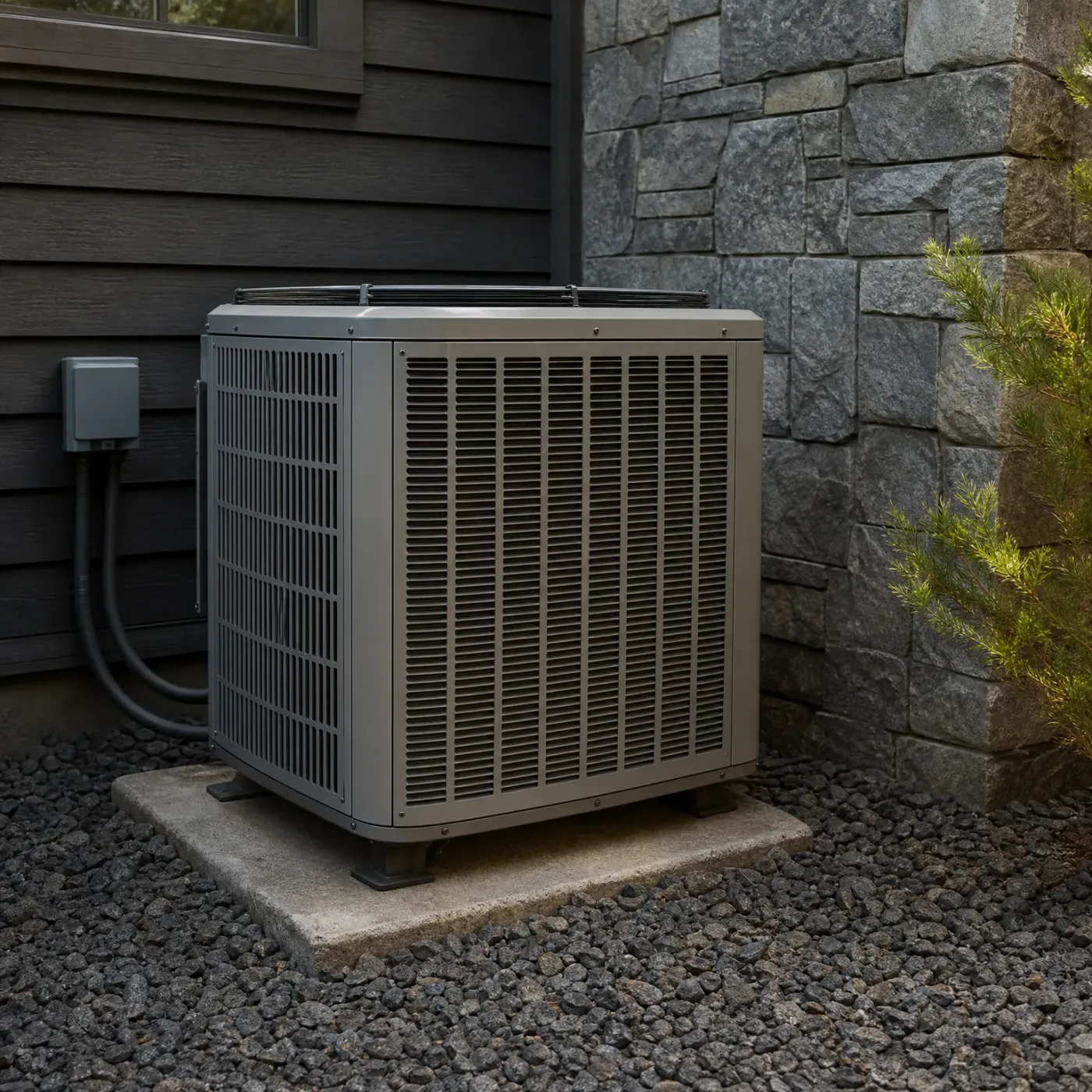
  • A gray outdoor condenser unit on a concrete pad surrounded by dark gravel, beside a dark wood-sided wall with an electrical disconnect box and a stone veneer wall with a small evergreen shrub.
    • Send it once and finding someone is no longer on you.
    • Send the form and stop researching installers for the new boiler.
  • A beige upholstered oversized armchair with a matching cushion and a knit throw draped over one arm, beside a round wooden side table holding a vase of greenery near a curtained window, with a framed landscape print on the wall and a woven rug on a wood floor.
    • Skip the round of in-home estimates for a new boiler.
    • Describe the project once instead of to every installer.
  • Sunlit living room corner with a beige upholstered sofa, cushion and knitted throw, a round wooden side table holding a white ceramic vase of leafy branches and a small wooden bowl, a framed landscape painting on the wall, and a window at right.
    • Your request stays with one local pro.
    • Your request goes to one pro, not a list of companies.