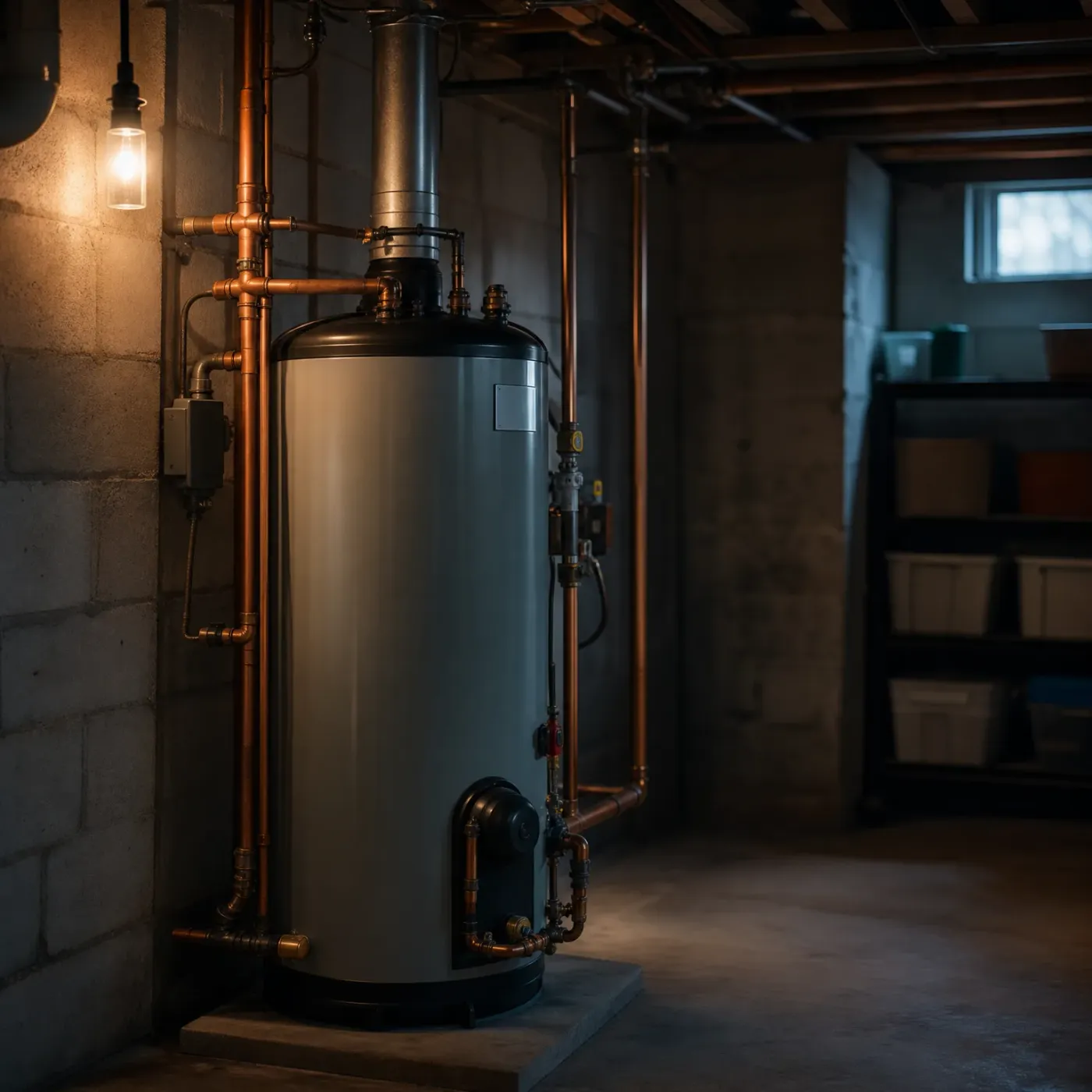




A cylindrical water heater or boiler with a flue pipe and copper piping stands on a concrete pad in a dim basement with concrete block walls, a hanging bulb at left and a shelving unit with bins at right.

One request and it's handed off

Best boiler temperature for a New York winter

Set too high and a gas boiler burns more than it needs to, with New York's power and gas rates making that an expensive habit. Set too low and the house never quite feels warm. This page gets into what temperature actually makes sense for a boiler through a New York winter, and what adjusting it involves. Skip calling around for a contractor to check your setup: send the form and let someone qualified take it from there.

Let a pro reach out

For most New York homes, a boiler set between 68 and 70 degrees on the thermostat, with the water temperature itself (the aquastat setting) around 160 to 180 degrees, covers a cold winter without wasting gas. The water temperature matters more than people think. A boiler heats water to that aquastat setting and circulates it through your radiators or baseboards no matter what the thermostat reads, so if the aquastat is set too high, every cycle burns more gas than your house actually needs to feel warm. Set it too low and the radiators never put out enough heat on the coldest days, so the boiler runs longer and more often trying to catch up. The right number depends on your system, your radiators, and how well your house holds heat once it's warm. A boiler that's been maintained and calibrated for your home gets you the lowest setting that still keeps every room comfortable through January and February.

A man in a navy sweater reclines with closed eyes in a beige armchair in a living room, with a lamp, wooden cabinet, bookshelf, potted plant, and a side table holding a newspaper and mug nearby.
A man in a blue henley shirt reclines on a leather chair with his eyes closed, beside a window, a houseplant, a side table with a newspaper and a dark mug.
A man in a gray sweatshirt reclines with his eyes closed in a dark leather chair, with a bookshelf behind him and a side table holding folded newspapers, a mug, and a potted plant by a window.
A man in a blue sweater leans back on a brown leather chair with his eyes closed and a slight smile, in a room with bookshelves, framed pictures, a potted plant by a window, a folded newspaper and a dark mug on a table.

Why the water temperature matters more

The thermostat only tells the boiler when to fire. The aquastat setting decides how hard it works once it does. A boiler pushing out water at 180 degrees heats your radiators or baseboards fast and then shuts off. One running at 140 degrees takes longer to get a room warm, and on the coldest days it may not keep up at all. That's why two houses set to the same 68 degrees on the thermostat can burn very different amounts of gas, depending on where the aquastat sits.

A number you can check yourself

Most residential boilers have an aquastat dial right on the unit, usually marked in degrees, with a high and low setting if it has one. If yours is set above 180, you're likely paying for heat the radiators don't need to do their job. If it's set below 150, that's often why a room upstairs never quite catches up on a January night. Checking the dial takes a minute, and it tells you more about your gas bill than the thermostat ever will.

Winter nights average 24°F statewide

At 24°F overnight, your boiler is firing often, not running once and coasting. That's what makes the aquastat setting matter: it decides how hard the boiler works each time it kicks on through a night that cold. Leave it too low and those long nights are when you'll notice the house not holding heat.

NOAA nClimDiv 1991-2020 county normals weighted by homes

Running it steady all day

Set the thermostat where you want it and leave it there from morning to night. The boiler fires in short bursts as the house loses heat, and the aquastat never has to work from a cold start. On a January day in New York, that steady cycling is usually gentler on the boiler than a big swing, and the house stays even room to room. The tradeoff is that it's heating an empty house at 2pm the same as it heats it at 7pm, which costs something if nobody's home most of the day.


Setting it back overnight

Dropping the thermostat 5 to 8 degrees while you sleep and letting it climb back before you're up asks the boiler to recover that difference on a cold morning, which means it runs longer and pushes harder right when outdoor temperatures are often at their lowest. Done right, it still saves gas over the week. Done with too deep a setback on a night near 10 or 15 degrees outside, recovery can take long enough that the house feels cold well into the morning, and some older systems struggle to catch up before everyone's left for the day.

A gray-haired man in a blue quarter-zip sweater sits in an armchair with his eyes closed, beside a large window with bare trees outside and a potted plant and lamp nearby.
A woman in a cream knit sweater sits in an armchair with her eyes closed and head tilted back, beside a window showing orange autumn foliage and a wooden side table with a mug.

Done looking for a boiler pro

Getting the aquastat and the thermostat dialed in right is one thing. Knowing whether your boiler is actually running the way those settings assume it will is another. A dirty burner or a scaled heat exchanger can keep a boiler firing longer than it should at any setting, and from the thermostat you'd never see it happening, only the gas bill at the end of the month. A maintenance visit is where that gets checked and corrected. Finding someone for that usually means searching around, calling a few contractors, explaining the same thing to each one, then sitting with quotes trying to work out who's worth it. Send the request here instead and that part is off your plate. One contractor gets it, not five, and there's no cost or obligation to ask. With a New York winter already asking enough of your boiler, and enough of your gas bill, that's one less thing you're stuck figuring out on your own.

A closed silver laptop and a glazed ceramic mug on a wooden table, with a blurred kitchen counter, potted plant, cutting board and window in the background.

68 to 70, aquastat at 160 to 180, and leave it alone

That's the range that gets a New York winter covered without running the gas bill up. The thermostat tells the boiler when to fire. The aquastat decides how hard it works once it does. Both have to be right, not just one of them.

A boiler running a dirty burner or a scaled heat exchanger will ignore good settings anyway, and there's no way to see that from the thermostat on your wall. Finding a licensed plumber or HVAC contractor for that kind of check means calling around, explaining the same thing more than once, and sorting through quotes before you know who's actually available. Send the form and that part is off your plate. Someone qualified gets in touch, and you go back to just living in a warm house.

Interior corner of a living room with a beige upholstered sofa and dark cushion in the foreground, a ceramic vase of leafy branches on a dark side table by a curtained window, a framed picture on the wall, and a wood-surround fireplace at right.
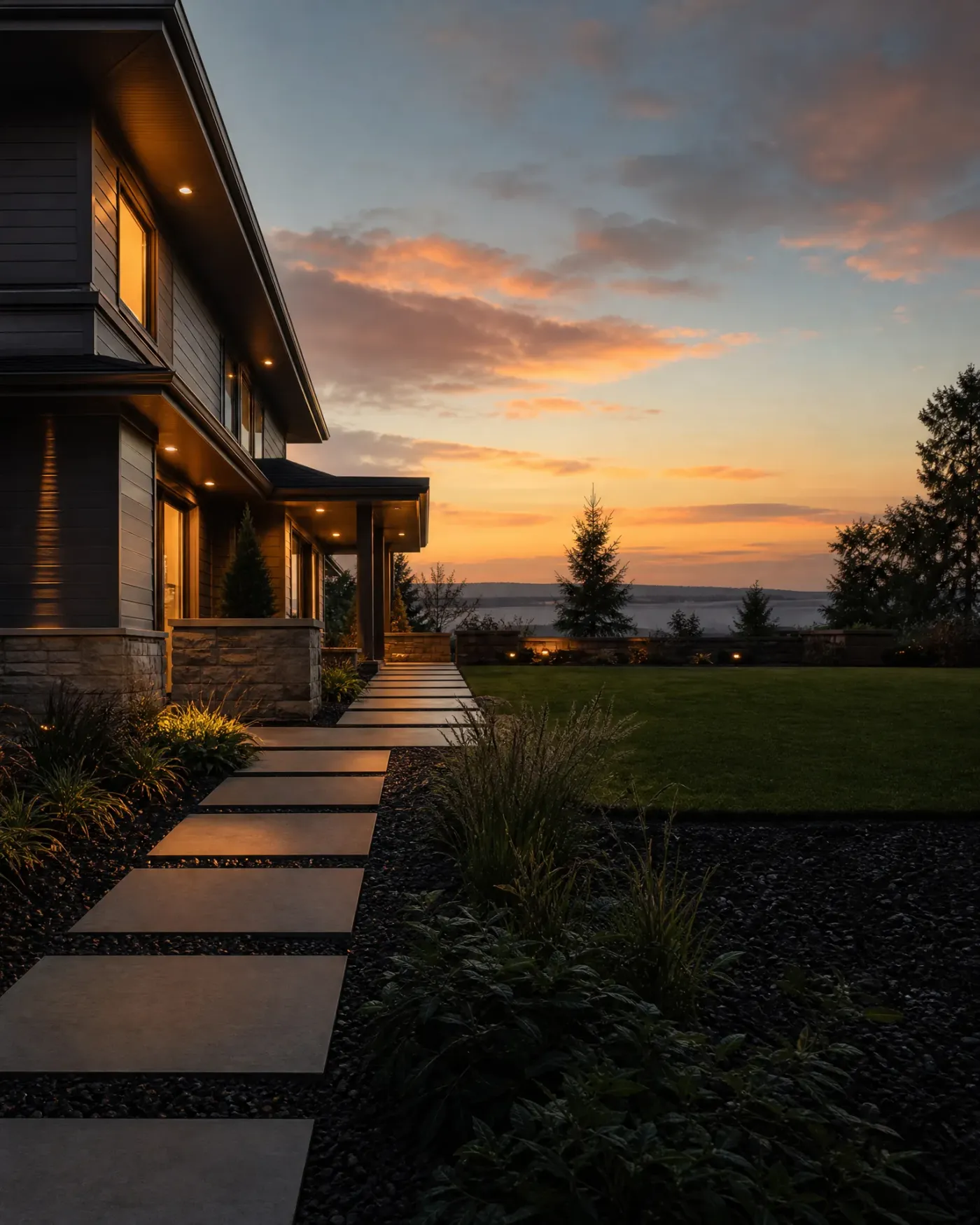
A modern two-story house with dark siding and stone base at dusk, with lit soffit lights, a path of large rectangular pavers set in dark gravel, planting beds, a lawn, and an orange and blue sunset sky above distant trees and water.

Boiler Maintenance

It's off your list after this

Step 1 of 3: Equipment
  • A brown leather and wood armchair with a cream knit throw sits in a corner beside a woven basket holding a dark cushion, under a framed mountain photograph, with a wood-trimmed window showing yellow and green foliage.
    • A local pro who services boilers gets in touch about the tune-up.
    • Describe your boiler job, and a local pro who handles it gets in touch.
  • A dark wood dresser against a pale wall holds a ceramic vase of eucalyptus branches, a stack of books with a wooden bowl, and a woven basket, with a framed landscape painting above and a woven basket holding a knit blanket on the floor beside a window.
    • Send the form, and lining up the boiler tune-up stops being yours to chase.
    • Send the request and finding a pro stops being your problem.
  • A window seat with beige linen and brown textured cushions, a chunky knit blanket, and an open book, beside a window showing blurred yellow autumn foliage.
    • Fill out one form instead of calling around for a boiler tune-up.
    • Fill out one short form instead of calling around.
  • A cream upholstered armchair with a rust-colored pillow and knit fringed throw sits beside a window with a ceramic vase of orange-leafed branches on the sill, overlooking autumn trees and leaf-covered ground.
    • A licensed local pro takes the request for your boiler tune-up.
    • Your request stays with one local pro.